
Hana Financial Sets a Record 3.76 Trillion Won Profit as Korean Banks Prove Fees Can Replace Margins
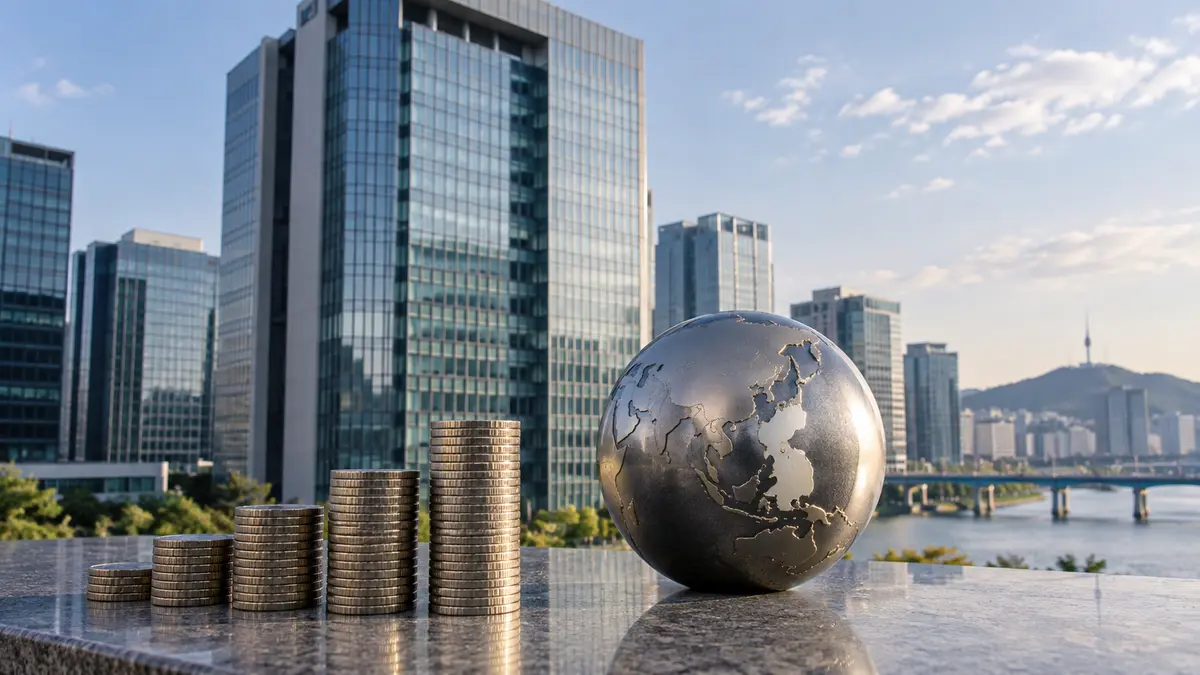
Hana Financial Group, one of the four major financial holding companies of South Korea, reported on 4 February 2025 a record annual net profit of 3.76 trillion won (US$2.6 billion) for 2024, up 8.7 percent on the year, achieved - notably - despite falling interest income. The driver was everything around lending: a diversified business portfolio and fee income that jumped 15.2 percent. The group paired the result with the largest share buyback in its history.
The record in numbers
Hana's 2024 net profit reached 3.76 trillion won, the group's highest-ever annual figure, according to Yonhap. Operating profit rose 3.4 percent on-year to 4.85 trillion won, while annual revenues jumped 17.1 percent to 81.62 trillion won. In the fourth quarter alone, net profit reached 514 billion won, up 15.7 percent from a year earlier - an accelerating exit from the year.
The composition of the profit is the analytically important part. Interest income - the traditional engine of Korean banks - actually fell 1.3 percent on-year to 8.76 trillion won, reflecting pressure on net interest margins as the Bank of Korea moved toward easing and competition for deposits intensified. Noninterest income, such as commission fees, jumped 15.2 percent to nearly 2.7 trillion won. In other words, Hana set its profit record in a year when spread-based banking made less money, not more: the record was manufactured by fees, trading and the group's non-bank affiliates.
What "diversified portfolio" means here
Hana Financial attributed the record to a diversified business portfolio - group language for a profit base spread across banking, cards, insurance, asset management and securities affiliates rather than concentrated in the lending book. The 17.1 percent revenue growth against 3.4 percent operating profit growth shows how the diversification works in practice: the group is buying and building revenue lines whose margins are thinner than legacy lending but whose volatility is uncorrelated with the rate cycle.
The shareholder-return response
The board paired the record with the largest-ever capital return in the group's history: a plan to buy back and cancel 400 billion won worth of its own shares to boost shareholder value. Cancellation matters as much as size - retired shares permanently concentrate future dividends and book value across a smaller equity base, the mechanism at the heart of South Korea's "value-up" push for chronically discounted financial holdings.
The sector signal

- Record set against the rate cycle: net profit +8.7 percent even as interest income fell 1.3 percent - fee and non-bank income carried the result.
- Scale of the group year: revenues of 81.62 trillion won (+17.1 percent) and operating profit of 4.85 trillion won (+3.4 percent).
- Q4 momentum: 514 billion won of net profit, up 15.7 percent on-year, suggesting the fee-driven model strengthened through the year.
- Capital return: 400 billion won buyback-and-cancel, the group's largest ever, aligning it with the value-up agenda.
Hana's peers moved in the same direction: days later Woori Financial Group reported 2024 net profit of 3.09 trillion won, up 23.1 percent on rises in both interest and non-interest income, its second-largest ever result. Read together, the February 2025 disclosures from Seoul describe a Korean banking sector whose profits no longer depend on the margin cycle alone - and whose boards have begun answering the country's valuation discount with cancellations rather than promises.
What to watch next
Three questions follow from the record. Whether noninterest income keeps growing fast enough to offset further margin compression as easing proceeds. Whether the 400 billion won buyback becomes a standing policy rather than a one-off celebration of a record year. And whether peers - and the sector's largest groups yet to report at Hana's disclosure time - match the cancellation-first approach, which would turn a single group's capital decision into a structural re-rating catalyst for Korean financial holdings.
Just Published

European housing prices and rents

Schneider–PTC: the industrial data integration test behind the deal

Avio USA starts work on its Virginia manufacturing site
One equity market, two currency measures

Russia’s draft budget raises spending and borrowing plans

Russia Sets the 2027 Minimum Wage at 28,935 Rubles, Up 6.8%, on the Way to 35,000 by 2030
Partner news digest
 Qatar LNG expansion: readiness, financing and the production test
 Pennon’s capital plan: turning finance into better water outcomes
 Italy’s diesel relief gap: taxes, price ceilings and implementation
 EU–China hybrid trade: from understanding to measurable implementation
 Schneider–PTC: the industrial data integration test behind the deal
 IKEA’s hybrid resale model: buyback, marketplace liquidity and furniture logistics
 Banking AI beyond the ranking: capability, execution and evidence of value
 Fishing labour beyond the product label: practical protection
 Rhenus and the Middle Corridor: terminals need coordinated connections
 Royal Mail restructuring: the test is reliable delivery
 Fuel Finder on Google Maps: when price transparency becomes useful competition
 Samsung’s memory profit surge: what the preliminary record explains
Leave a comment