
Russia’s draft budget raises spending and borrowing plans

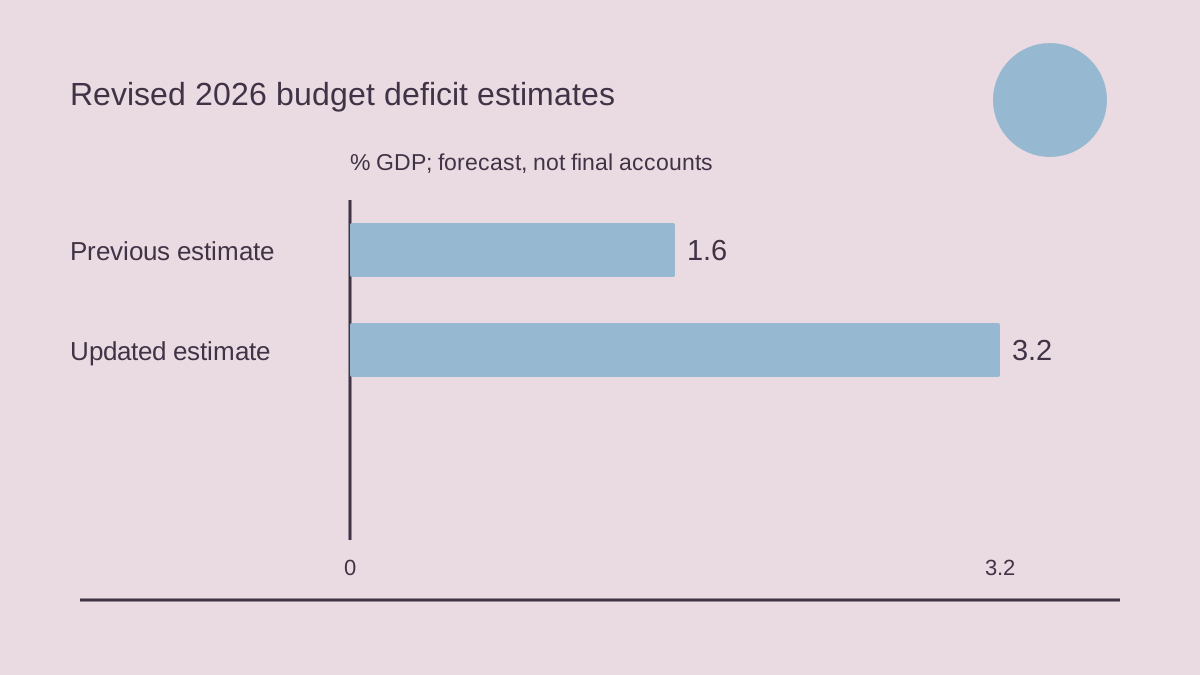
Reuters reported on 28 September 2026 that government documents raised Russia’s estimated 2026 budget deficit to 3.2% of GDP from 1.6%. The documents put spending at 48.6 trillion roubles, an increase of 13.2%, and net borrowing at 5 trillion roubles, up 26%. These are estimates and plans described in the report, not completed annual accounts.
A revised estimate has a defined comparison basis
The change from 1.6% to 3.2% compares two estimates for the same year's deficit as a share of GDP. It is different from comparing realised deficits in two successive years. The distinction matters because a revised forecast changes the expected outcome before the full period has ended. It should not be presented as proof that the final annual accounts already show the announced result.
The two deficit estimates differ by 1.6 percentage points. That unit must remain separate from a percentage change and from a cash amount in roubles. A GDP ratio, an expenditure total and a borrowing plan answer different questions. Placing them together in a report does not make them interchangeable or allow the deficit to be calculated by adding those figures.
Spending, borrowing and deficit remain separate measures
Expenditure describes planned government outlays, while borrowing concerns financing. The deficit compares expenditure and revenue under the relevant accounting framework. Consequently, a reader needs the period, definition and status of each figure before making a comparison. A borrowing announcement alone does not provide a complete account of the budget balance.
- Retain the year and unit for every measure.
- Distinguish an updated forecast from an observed result.
- Compare like definitions and matching periods.
- Read later legislative and financial publications separately.
A document reported before adoption is a planning record
The figures appeared in reporting about the government's budget preparation. A proposal, legislative approval and execution of spending represent different stages. Further decisions and later accounts can change the assessment of the announced plans. The report therefore provides a dated view of the planning process; it does not establish that each proposed measure has already taken effect.
This separation also helps readers compare subsequent announcements. A later statement can confirm, revise or replace an earlier estimate, but it should be identified with its own date. Retaining the earlier report's status avoids turning a forecast into a historical result merely because time has passed. The published numbers remain useful when their units and planning context are preserved.
Just Published

European housing prices and rents

Schneider–PTC: the industrial data integration test behind the deal
Avio USA starts work on its Virginia manufacturing site

One equity market, two currency measures
Russia’s draft budget raises spending and borrowing plans

Russia Sets the 2027 Minimum Wage at 28,935 Rubles, Up 6.8%, on the Way to 35,000 by 2030
Partner news digest
 Qatar LNG expansion: readiness, financing and the production test
 Pennon’s capital plan: turning finance into better water outcomes
 Italy’s diesel relief gap: taxes, price ceilings and implementation
 EU–China hybrid trade: from understanding to measurable implementation
 Schneider–PTC: the industrial data integration test behind the deal
 IKEA’s hybrid resale model: buyback, marketplace liquidity and furniture logistics
 Banking AI beyond the ranking: capability, execution and evidence of value
 Fishing labour beyond the product label: practical protection
 Rhenus and the Middle Corridor: terminals need coordinated connections
 Royal Mail restructuring: the test is reliable delivery
 Fuel Finder on Google Maps: when price transparency becomes useful competition
 Samsung’s memory profit surge: what the preliminary record explains
Leave a comment