
Battle for Survival: French Winegrowers Demand a Rescue Before a Fifth of Farms Close
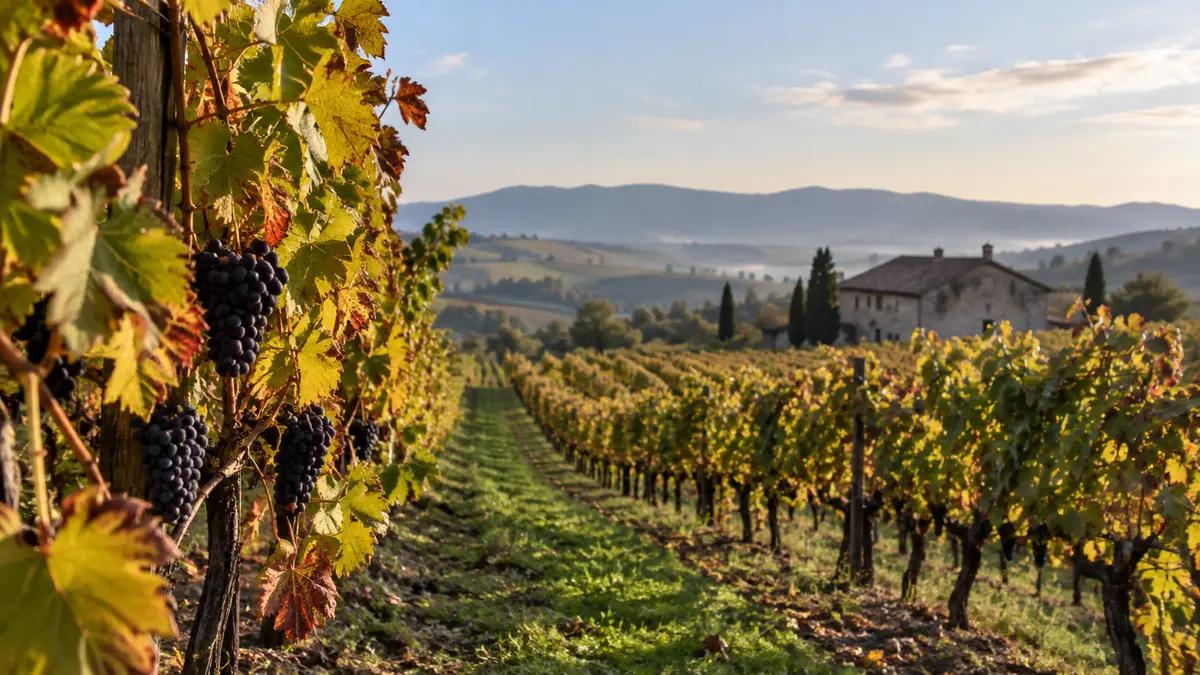
French winegrowers went into a crisis meeting at the agriculture ministry in late November 2025 demanding a rescue package: after five years of stacked shocks — tariffs, Covid, hail and heatwaves, war-driven costs and a sales slump — the president of the independent winemakers' syndicate said urgent action was needed to save up to a fifth of the country's producers.
A sector on its last legs
The language from the vineyards was unusually direct. Jean-Marie Fabre, president of the independent winemakers' syndicate and a fourth-generation grower in Fitou near the Spanish border, told The Guardian that growers are putting their final efforts into a battle for survival, that the situation is dramatic and that the government has to do something. Abandoning the sector, he argued, would be like the German government saying it no longer cares about its car industry. Several thousand winegrowers demonstrated in the southern city of Beziers on November 15, calling for a rescue package to compensate harvests hit by bad weather, rising costs and falling sales.
The production backdrop frames the anger: earlier in November the ministry of agriculture predicted 2025 output at 3.6 billion litres, the same volume as 2024, which was itself considered a disastrous year. Some of the harvests were among the worst in 70 years.
Five years of stacked shocks
Fabre lists five setbacks outside growers' control over the last five years: Donald Trump's 15% tariffs on imports of wine and spirits; the Covid crisis; harvests decimated by heatwaves and hail; Russia's war in Ukraine, which increased costs by a third; and a dramatic slump in sales at home and abroad. Each shock alone would be manageable; stacked, they have depleted the cash reserves that carry a farm between vintages. We have never before had such a series of crises, Fabre said; it is not because the wine is not good, and not due to one cause, but without cash reserves the sector cannot survive.
The export side tells the same story in one market. Bordeaux's grand cru wine exports to China fell a year ago to their lowest in a decade, and a Bordeaux wine council report this year put regional exports to China at half their 2017 level. In July, Beijing imposed a 32.2% customs tax on many imports of wine-based spirits from the European Union; only three major French companies — LVMH, Pernod Ricard and Remy Cointreau — were exempted from the duty.
The Aude testimony
Damien Onorre, president of the Aude winegrowers' union, described three years of droughts and heatwaves above 40C to Le Monde: he has lost half of his production over the period, and the Aude department has seen its wine production almost halve to 2 million hectolitres over the last three years. Climate is not a background variable in this crisis; it is one of its principal authors.
The demands on the table

Fabre met agriculture minister Annie Genevard on November 6 to outline the industry's demands ahead of the crisis meeting. Central among them is compensation for ripping up vines: under a plan introduced last year, 27,000 hectares have been uprooted with compensation of 4,000 euros per hectare, and Fabre says another 35,000 hectares could go. In Bordeaux, 12,000 hectares of vines have already been destroyed under a similar scheme. The money would also be used to distil unsold wine into biofuel. The winemakers additionally want to call on the European crisis reserve, which Portugal used last year to fund a distillation programme; French growers say their appeal has gone unanswered.
The stakes are macroeconomic. A Le Monde-reported survey by FranceAgriMer, the national body overseeing food and drink production, found that 20% of French winegrowers were considering shutting their business, a wave that could cost as many as 100,000 jobs. France's wine and spirits industry turns over an estimated 92 billion euros a year, ranks among the country's three main industrial sectors alongside aeronautics and luxury goods, and directly or indirectly employs more than 440,000 people. The National Association for Agriculture Employment and Training calls it a pillar of the economy and a source of jobs.
What the sector watches next
- The outcome of the ministry crisis meeting and whether grubbing compensation is extended beyond the existing 27,000 hectares.
- Access to the European crisis reserve for a French distillation programme, after Portugal's precedent.
- The trajectory of Chinese demand and the 32.2% duty on EU wine-based spirits.
- The U.S. tariff path for wine and spirits, after the 15% rate and earlier threats of far higher duties.
- Harvest weather: whether 2026 breaks the sequence of heatwave and hail damage that halved output in departments like the Aude.
The last chance
Fabre's own estate — Domaine de la Rochelierre, 80,000 bottles a year — is small beside the 92 billion euro industry he represents through 17,000 syndicate members, but his framing captures the moment: this is the last chance, people are in a fighting mood but at the end of their tether, and they either get support or they will have to shut. A sector that survived phylloxera, two world wars and decades of falling consumption is now asking the state to pay for the removal of its own vines. Whether that payment arrives, and at what scale, decides how much of the French vineyard map survives the decade.
Just Published

European housing prices and rents
Schneider–PTC: the industrial data integration test behind the deal
Avio USA starts work on its Virginia manufacturing site

One equity market, two currency measures

Russia’s draft budget raises spending and borrowing plans
Russia Sets the 2027 Minimum Wage at 28,935 Rubles, Up 6.8%, on the Way to 35,000 by 2030
Partner news digest
 Qatar LNG expansion: readiness, financing and the production test
 Pennon’s capital plan: turning finance into better water outcomes
 Italy’s diesel relief gap: taxes, price ceilings and implementation
 EU–China hybrid trade: from understanding to measurable implementation
 Schneider–PTC: the industrial data integration test behind the deal
 IKEA’s hybrid resale model: buyback, marketplace liquidity and furniture logistics
 Banking AI beyond the ranking: capability, execution and evidence of value
 Fishing labour beyond the product label: practical protection
 Rhenus and the Middle Corridor: terminals need coordinated connections
 Royal Mail restructuring: the test is reliable delivery
 Fuel Finder on Google Maps: when price transparency becomes useful competition
 Samsung’s memory profit surge: what the preliminary record explains
Leave a comment