
The Baikal's Final Stretch: Inside UZGA's Race to Certify and Replace the An-2

Russia's light-aviation program "Baikal" has entered its final stretch: at the Innoprom industrial fair in Yekaterinburg, the head of the Federal Air Transport Agency said the LMS-901 is set to receive its type certificate in the third quarter of 2027, while the Ural Civil Aviation Plant plans to build 69 aircraft by 2035. Behind those dates sit seven years of development, a turboprop engine created from scratch, and a flight-test campaign that has only recently moved from first hops to certification preparation.
A date at last, at Innoprom
On July 6, during the session "Wings of small aviation: development prospects" at the 16th international industrial exhibition Innoprom in Yekaterinburg, Dmitry Yadrov, head of the Federal Air Transport Agency (Rosaviatsia), gave the clearest schedule statement yet for the LMS-901 "Baikal". "The 'Baikal' is now at the final stages of certification. It is planned that the aircraft will receive its certificate during the third quarter of next year," Yadrov said, placing type certification in the third quarter of 2027. At the same session he put a production figure on the program: the Ural Civil Aviation Plant (UZGA), the aircraft's developer and manufacturer, intends to build 69 aircraft by 2035, according to Kommersant's coverage of the session.
Industry and Trade Minister Anton Alikhanov added the engine dimension to the picture: certification of the VK-800 engine, which UZGA is developing, should be completed this year, he said. The minister stressed that this engine is the basis of the aircraft and that in the future it may be used on earlier models, for example the "Accord-201". The double timetable - engine certification in 2026, airframe certification in the third quarter of 2027 - frames the endgame of a program UZGA has been running since 2019.
The venue mattered as much as the message. Innoprom-2026 ran in Yekaterinburg from July 6 to 9 for the sixteenth time, with the theme "Industry 360: production without borders" and Indonesia as partner country; the exposition occupied 50 thousand square meters across all four pavilions of the Yekaterinburg-Expo center. A light-aviation session inside Russia's main industrial fair is itself a signal of where the state places the "Baikal": not in the niche of hobby aviation, but in the industrial policy of Russia.
What the "Baikal" is, and what it must replace
The LMS-901 "Baikal" is a light multi-purpose aircraft intended for local air lines and a wide spectrum of aviation works. It can carry up to 9 passengers or up to 1,500 kg of cargo, with a maximum flight range of 1,500 km and a maximum cruise speed of 250 km/h. Those parameters place the aircraft squarely in the segment that for decades has been served by the Soviet Antonov An-2 biplane - the "kukuruznik" that remains the reference point for utility flying on short, thin routes. UZGA has worked on the "Baikal" project since 2019, positioning it as a modern domestic replacement for that biplane.
The replacement task is not trivial. An-2-class machines operate from unprepared strips, serve remote settlements, and perform aviation works ranging from patrolling to cargo delivery in regions where roads and railways do not reach. A modern substitute must keep that ruggedness while adding the economics of a new turboprop: better fuel burn, modern avionics, and a production base inside the country. Hence the program's emphasis on a dedicated engine and propeller developed in parallel with the airframe, rather than an adaptation of an existing powerplant.
The flight-test record: from first hop to certification preparation

The flight-test campaign unfolded across the winter of 2025-2026. The LMS-901 performed its first flight at the end of December 2025; in that sortie the machine reached 210 km/h and an altitude of 400 m, and, according to the pilots' report, the flight proceeded normally. Then, on Sunday evening, February 22, 2026, a new article - the fifth prototype and the third flying airframe - made its first test flight at UZGA's airfield in Yekaterinburg, as Interfax reported from the plant's press service. The flight lasted 10 minutes: the aircraft flew a full circle over the airfield, reached 300 m of altitude and 190 km/h of speed, and landed in regular mode.
Before that flight, UZGA specialists had modified the machine: they reworked the nose section of the crew cabin for safety in an emergency landing, modernized the main landing gear struts, and changed the wing installation angle to exclude a tendency to premature lift-off from the runway during takeoff in gusty wind. It is precisely these changes, the company said, that the subsequent ground and flight tests are meant to validate. At the end of May 2026, UZGA flew a control flight of the LMS-901 fitted with measurement equipment at its airfield - a step consistent with preparation for certification trials, in which instrumented data rather than pilot impressions decide the outcome.
- End of December 2025 - first flight of the LMS-901: 210 km/h, altitude 400 m.
- February 22, 2026 - first flight of the fifth prototype (third flying airframe): 10 minutes, 300 m, 190 km/h.
- End of May 2026 - control flight with measurement equipment at the UZGA airfield.
- End of 2026 - planned launch of serial production; 2027 - first deliveries.
- Third quarter of 2027 - target window for the type certificate, per Rosaviatsia.
An engine built from scratch
Unlike many regional aircraft projects that adapt an existing powerplant, the "Baikal" program included creating its own turboprop. The VK-800 engine and the AV-901 propeller were developed from zero specifically for the LMS-901. The VK-800 is not a one-aircraft engine, however: UZGA is developing it for the LMS-901 "Baikal", for the UTS-800 training aircraft, for the LMS-192 "Osvey" regional aircraft developed in cooperation with Belarus, and for the re-engining of localized L-410 airplanes. Maximum power varies from 807 hp to 870 hp depending on the application.
That family logic explains why Alikhanov's engine remark matters beyond the "Baikal" itself. Certifying the VK-800 in 2026 unlocks not one but several airframe programs, and the minister's mention of the "Accord-201" as a possible earlier application shows the plant treats the powerplant as a platform product: one certified core, several aircraft around it. For a country rebuilding its civil aircraft industry under import constraints, a certified domestic turboprop in the 800 hp class is an asset independent of any single airframe's commercial fate.
Serial production, first deliveries, and the 100,000-hour rule
The production timetable stated at Innoprom reads: serial production of the aircraft is to be launched at the end of 2026, with the first deliveries planned for 2027 - the same year in which type certification is expected to complete in the third quarter. One regulatory feature shapes the fleet's early life: before entering passenger airlines, "Baikals" must log about 100 thousand accident-free hours performing aviation works. In practice this means the first machines will build their operational record in utility roles - patrolling, transport, aerial work - before the type spreads across passenger local routes.
The rule is a safety mechanism with an industrial side effect. It front-loads flight hours onto operators of aviation works, whose missions are shorter, slower and closer to home than passenger schedules, and it gives the manufacturer a stream of field data from the hardest-use segment first. For a new type with a new engine, that sequence converts the earliest, most uncertain years of service into a monitored proving ground.
Why the nine-seat segment matters
The "Baikal" targets the thinnest part of the route network: local air lines where demand is measured in single-digit passengers per flight and where infrastructure limits aircraft size and weight. The combination of 9 passengers or 1,500 kg of cargo, 1,500 km of range and a 250 km/h cruise matches the economics of such routes - small loads, short legs, frequent sorties, strips without concrete. A larger aircraft would fly half-empty; a smaller one would not pay for its crew. The nine-seat turboprop sits exactly in the gap that the aging An-2 fleet leaves behind.
The 69-aircraft figure through 2035, cited by the Rosaviatsia head, describes a production horizon rather than a market forecast: roughly seven machines a year across nine years, a modest rate consistent with a niche utility type entering service gradually and with the 100,000-hour rule pacing passenger operations. Yet the program carries strategic weight beyond its volume. A domestically certified light aircraft with a domestically certified engine reduces dependence on imported types and components in a segment where the Soviet-era fleet cannot fly forever. The VK-800 and AV-901 pair, created from scratch, is the core of that independence - and the reason the engine's 2026 certification date is as important as the airframe's 2027 date.
The certification path, step by step
Type certification is the gate between a flying prototype and a sellable aircraft, and the "Baikal" is now approaching it in visible stages. The record shows ground work and flight work interleaved: modifications to the nose section, gear struts and wing angle are validated by further ground and flight tests; a control flight with measurement equipment precedes the certification campaign proper; and the engine, the most safety-critical component, is certified on its own track, with completion expected in 2026. Rosaviatsia, as the certifying authority, then issues the type certificate - the document that allows serial production aircraft to be delivered and operated.
The sequence explains the shape of the timetable. Serial launch at the end of 2026 anticipates the certificate rather than waiting for it: production articles can be assembled while certification flights finish, so that first deliveries follow in 2027 without a further industrial pause. It also explains why the 100,000-hour rule for passenger operations sits downstream of both: the certificate opens aviation works first, and passenger local lines later, once the fleet has proven itself in utility service.
UZGA as developer and manufacturer
What distinguishes the "Baikal" program from a pure assembly project is its vertical span: UZGA develops the airframe, the VK-800 engine and the AV-901 propeller, and it manufactures the aircraft at its Yekaterinburg site, whose airfield doubles as the test base - every first flight in the record, from December 2025 to the May 2026 control flight, was flown there and announced by the plant's press service. The same engineering core feeds adjacent products: the UTS-800 trainer, the LMS-192 "Osvey" regional aircraft and L-410 re-engining all draw on the VK-800 family.
That vertical span is a hedge as much as a strength. It concentrates competence - one team carries the aerodynamics, the powerplant and the propeller control laws - and it concentrates risk: a delay in any of the three moves the whole aircraft. The 2026 engine certification is therefore the program's critical path item, and Alikhanov's insistence that the VK-800 is "the basis of the aircraft" reads as a statement of priorities: secure the powerplant certificate first, and the airframe certificate in the third quarter of 2027 becomes a manageable final step rather than a gamble.
Outlook: a schedule with little slack
The timetable voiced in Yekaterinburg leaves limited margin: engine certification this year, serial launch at the end of 2026, first deliveries and the type certificate in 2027, then a ramp toward 69 aircraft by 2035. Each step depends on the previous one, and the flight-test record shows a program still refining its design - the nose section, the gear struts and the wing angle were all modified ahead of the fifth prototype's first flight. If certification trials confirm those changes, the "Baikal" enters serial production as a settled design; if not, the third-quarter 2027 window will move, as schedules in this class of programs have moved before.
For operators, the practical question is not the certificate alone but the support system behind it: spares for a new engine, training for a new type, and a service network across regions where the An-2 once flew unattended. For the industry, the question is whether a nine-seat utility aircraft can sustain a production line at seven machines a year without export orders. The answers will emerge after 2027. For now, the message from Innoprom is that the final stretch has begun, and the An-2 replacement question has acquired dates, an engine certificate in view, and a production number to be held against.
One more marker of the final stretch is the industrial and personnel contour around serial output: launching production at the end of 2026 will require UZGA to keep pace with test-driven design modifications while standing up a serial line, and its suppliers to deliver components to the certified standard. That is why each closed test stage matters beyond its news value: it marks the road to series production, and along that road the plant, the regulator and the supply chain will all be measured against the dates voiced in Yekaterinburg.
Key parameters of the LMS-901 "Baikal"
- Capacity: up to 9 passengers or up to 1,500 kg of cargo.
- Maximum range: 1,500 km; maximum cruise speed: 250 km/h.
- Powerplant: VK-800 turboprop (807-870 hp depending on application) with AV-901 propeller, both developed for the type.
- Developer and manufacturer: Ural Civil Aviation Plant (UZGA), Yekaterinburg, in the project since 2019.
- Role: local air lines and aviation works; positioned as the domestic replacement for the An-2.
Just Published

European housing prices and rents
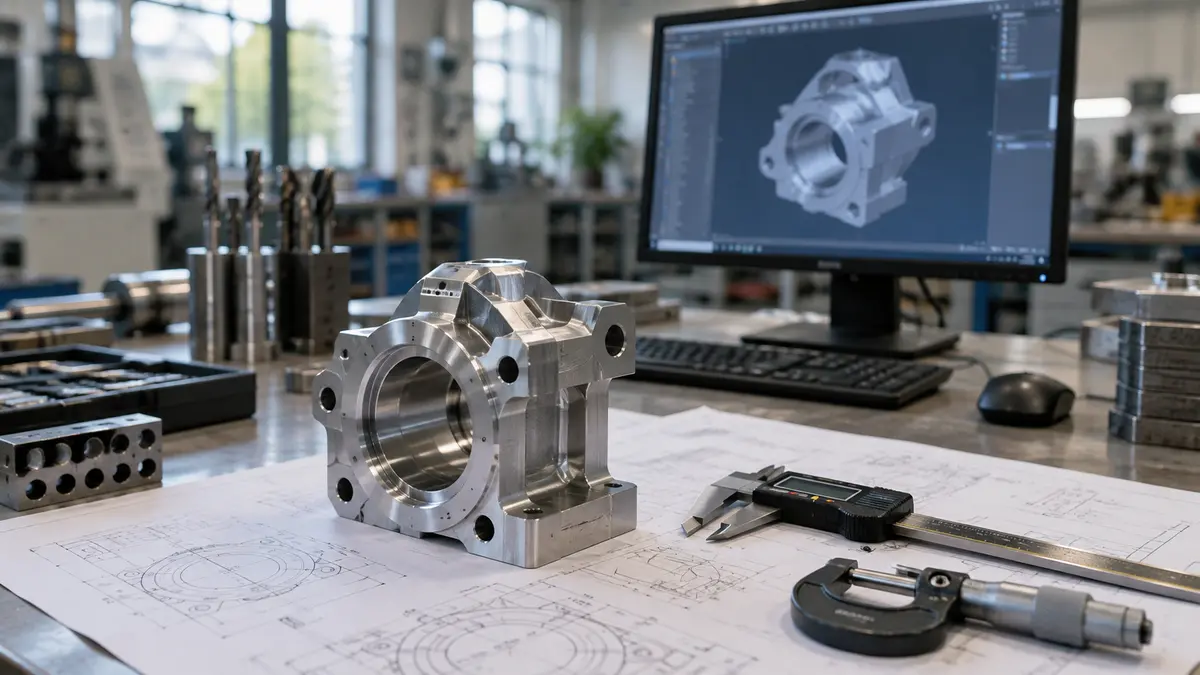
Schneider–PTC: the industrial data integration test behind the deal
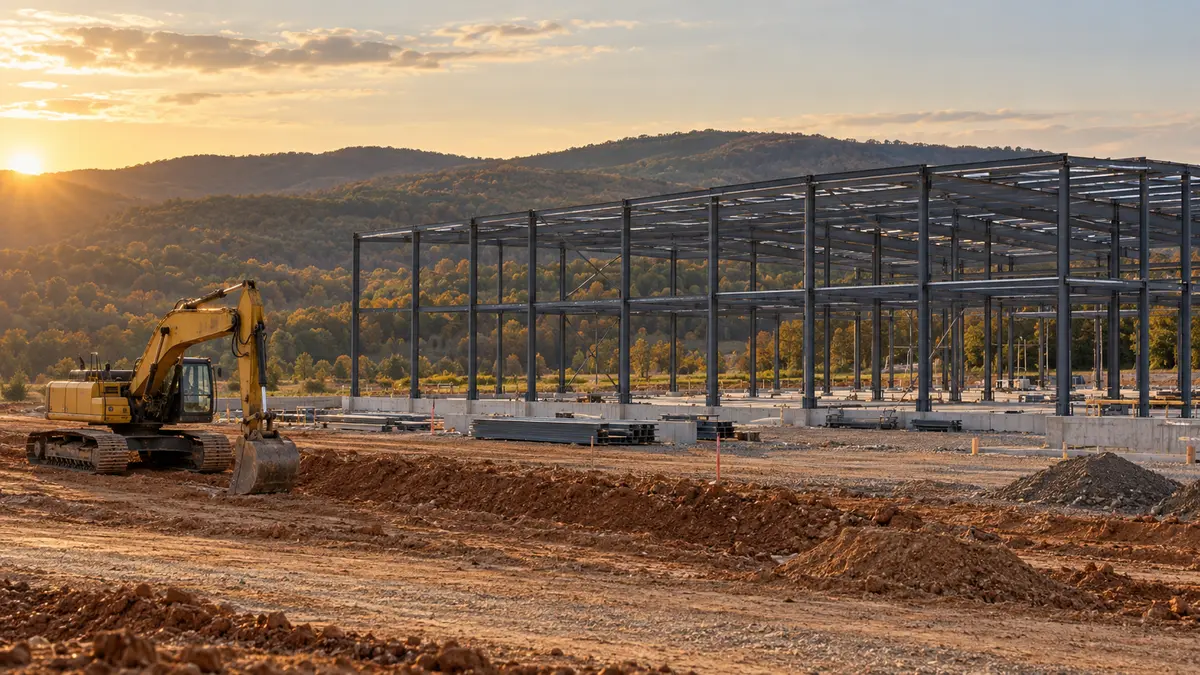
Avio USA starts work on its Virginia manufacturing site

One equity market, two currency measures

Russia’s draft budget raises spending and borrowing plans

Russia Sets the 2027 Minimum Wage at 28,935 Rubles, Up 6.8%, on the Way to 35,000 by 2030
Partner news digest
 Qatar LNG expansion: readiness, financing and the production test
 Pennon’s capital plan: turning finance into better water outcomes
 Italy’s diesel relief gap: taxes, price ceilings and implementation
 EU–China hybrid trade: from understanding to measurable implementation
 Schneider–PTC: the industrial data integration test behind the deal
 IKEA’s hybrid resale model: buyback, marketplace liquidity and furniture logistics
 Banking AI beyond the ranking: capability, execution and evidence of value
 Fishing labour beyond the product label: practical protection
 Rhenus and the Middle Corridor: terminals need coordinated connections
 Royal Mail restructuring: the test is reliable delivery
 Fuel Finder on Google Maps: when price transparency becomes useful competition
 Samsung’s memory profit surge: what the preliminary record explains
Leave a comment