
The Fertilizer Front of the Iran War: Hormuz Closure and the 10-Billion-Meal Question
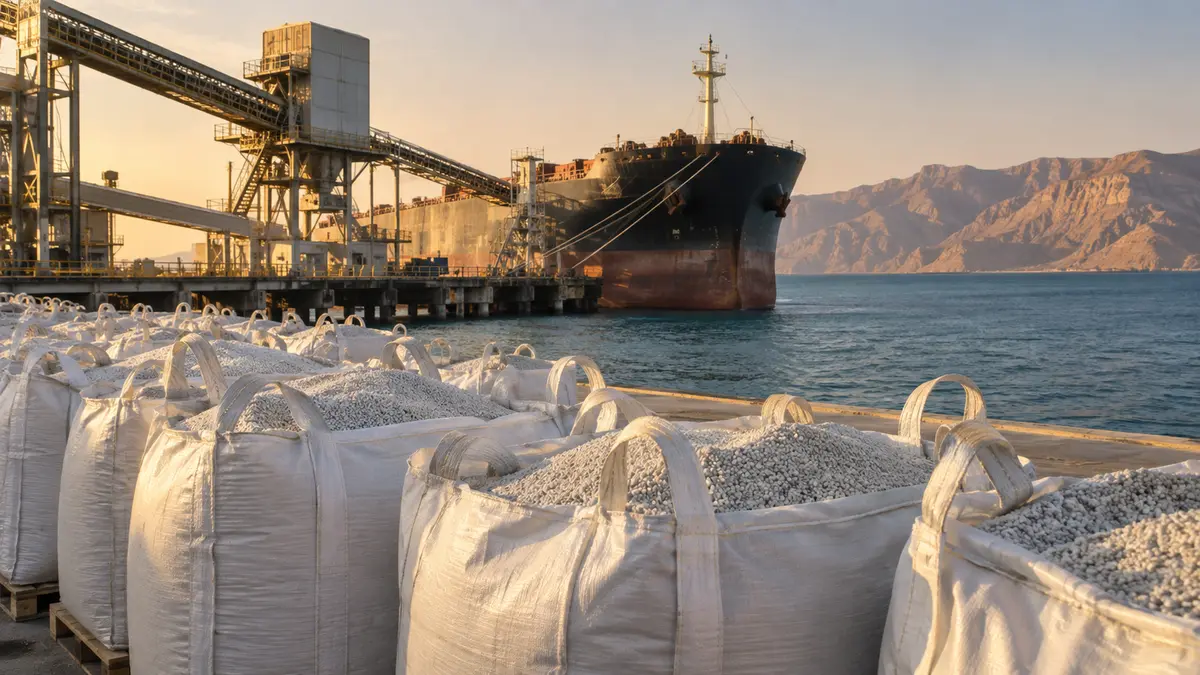
When Iran closed the Strait of Hormuz in the war that began in late February 2026, the shock moved through the global economy along an unusual transmission belt: not oil alone, but fertilizer. About a third of the world's fertilizer trade normally passes through the strait, prices have soared by 80% since the conflict began, and the chief executive of one of the biggest producers warns the disruption could cost up to 10 billion meals a week globally. The farm belt of the United States is where the bill is arriving first.
A chokepoint that feeds the world
Fertilizer production is energy-intensive, relying heavily on natural gas as a feedstock, with energy making up as much as 70% of production costs. That is why so much of the world's fertilizer is made in the Gulf, and why one-third of global trade in it passes through the Strait of Hormuz, the narrow shipping route along Iran's coast that has largely been shut since the conflict began. Some 20% of the world's oil and liquefied natural gas also transits the strait, and its near closure, combined with missile and drone strikes across the Gulf, has forced regional energy facilities to halt output — which in turn has shut fertilizer plants in the Gulf and beyond, just as farmers across the Northern Hemisphere were preparing for spring planting, leaving little margin for delays.
The scale of the dependency is hard to overstate. About half the world's food is grown using fertilizer, according to Argus analyst Marina Simonova, and in some countries fertilizers account for up to 50% of the cost of grain production. The United Nations food agency had warned that many low-income countries were already suffering from food insecurity before the war. The most important fertilizers in the near term are nitrogen-based products like urea, because if a farmer skips them for a single season, yields take an immediate hit — unlike phosphate and potash, whose agronomic effect stretches over longer periods.
The price shock in numbers
The market had no time to prepare. Benchmark New Orleans nitrogen prices stood at $350 a short ton in late December 2025 and had risen to $470 by late February, just before the conflict, according to Chris Yearsley, CEO and head of nitrogen at Profercy, a global fertilizer pricing and forecasting firm. As of March 10, nitrogen was trading at about $600 — and Yearsley's series captures only the first two weeks of a strait closure that has persisted.
Other benchmarks moved in the same direction. Middle East urea export prices jumped about 40% to just above $700 per metric ton from just under $500 before the war, according to Argus. In the United States, fertilizer prices surged as much as 32% since the conflict began, and analysts said prices for nitrogen-based fertilizers like urea could roughly double if the war drags on. Svein Tore Holsether, chief executive of Yara, one of the world's biggest fertilizer producers, put the aggregate move at 80% since the beginning of the US and Israeli war on Iran.
The physical flows contracted even faster than prices rose. Global urea exports were set to fall to about 1.5 million metric tons in March 2026, compared with 3.5 million tons without supplies from China — or 4.5 to 5 million tons when China ships, according to Scotiabank. For a market where the planting calendar does not wait, a two-thirds collapse in monthly tradeable volume is the more alarming statistic.
A war the tight market could not afford

The conflict arrived in a market that was already unusually brittle. The global urea market had been struggling with tight supplies before the current conflict: Europe had been forced to cut output after losing access to cheap pipeline gas, and China had been restricting fertilizer exports, including urea, to ensure domestic supply. The war therefore did not create the tightness — it detonated it.
That sequence matters for everything that follows. A shock landing on a surplus market is a price event; a shock landing on a market with idle European capacity and restrained Chinese exports is a rationing event. And rationing events are resolved not by prices but by queues: who has cargo afloat, who has port access, and who has a government willing to pay.
The map of halted plants
The production damage spread quickly around the Gulf and its customers:
- In Qatar, Qatar Energy halted output at the world's largest urea plant after shutting down gas production following attacks on its liquefied natural gas facilities.
- In India, a massive global urea market, three urea plants cut output as LNG supplies from Qatar plummeted. India, home to nearly a fifth of the world's population, buys more than 40% of its urea and phosphatic fertilizers from the Middle East and had recently agreed to purchase 1.3 million tons of urea, some of which might not arrive on time.
- Bangladesh shut four of its five fertilizer factories, while Australia's Wesfarmers warned of possible shipment delays, including for urea.
- Egypt, which supplies 8% of globally traded urea, could struggle to produce nitrogen fertilizer after Israel declared force majeure on gas exports to the country, according to Scotiabank and Rabobank analysts.
On top of the plant outages, Holsether said up to half a million tons of nitrogen fertilizer were not being produced in the world at that moment because of the situation. And the disruption was not confined to producers. Brazil, almost 100% reliant on urea imports, sources nearly half of them through the Strait of Hormuz. In the United States, farmers were reporting empty shop shelves, with the country about 25% short of fertilizer supplies for that time of year. Even fertilizer already bought can be trapped: deliveries from the Middle East to farms in the northern United States take up to two months, and Philip Coffin, an independent grain industry analyst, noted that a fair amount of product was physically in the United States — but nobody could say how much was floating in the Red Sea awaiting shipment for spring planting needs. "That's the really critical part here," Coffin said. "How much of the fertilizer that's bought and ordered for shipment will get hung up in this conflict?"
Why no one can fill the hole quickly
The Middle East's structural share explains the paralysis. The region handles about 35% of global urea trade, and roughly 20% of the world's phosphate trade comes from Saudi Arabia, according to Yearsley. Given that market share, no producer anywhere can quickly make up for the lost Gulf supply, said Chris Lawson, an analyst at CRU. China has ample capacity but restricts exports to protect domestic prices; European plants that could have ramped were already curtailed by gas economics. The margin of the global nitrogen system — the spare capacity that disciplines prices in normal years — simply was not there in the spring of 2026.
The food arithmetic
Holsether translated the production gap into meals. Not applying nitrogen fertilizer can reduce crop yields for some crops by as much as 50% in the first season, he told the BBC, and the up to half a million tons of unproduced nitrogen correspond to as many as 10 billion meals a week that will not be produced. The fertilizer market is global, so cargoes move across the planet, but the main destinations — Asia, Southeast Asia, Africa and Latin America — would see the most immediate impact. Regions that are already under-fertilized, such as several countries in sub-Saharan Africa, could suffer even larger yield drops; "significant drops" there were possible, he said.
The timing compounds the damage. Planting seasons vary: the United Kingdom was in peak planting season while Asian farmers were just getting started. The consequences of fertilizer shortages in Asia would not appear in food prices until the end of the year, when harvests that should have been planted in the spring come in smaller than they should — or not at all, according to analysts. Paul Teng, a senior food security fellow in Singapore, said some countries might have enough fertilizer for the immediate planting season, "but if the crisis drags on any longer, we will be seeing impact on crops such as rice in the coming months."
The institutional estimates point the same way. The UN World Food Programme estimated that the combined fallout from the Middle East conflict could push 45 million additional people into acute hunger in 2026, with food insecurity in Asia and the Pacific expected to rise by 24% — the largest relative increase of any region. Holsether's deeper worry was distributive: reduced crop yields could trigger a bidding war for food between richer and poorer nations. Europe would survive such a contest, he noted, but "who are we buying the food away from?" The most vulnerable people in developing nations pay the highest price because they cannot follow the bids — with direct implications, in his words, for food affordability, food scarcity and hunger.
American farmers absorb the shock first
In the United States, the crisis landed on an agricultural sector already in its fourth or fifth year of cost-price squeeze. Rodney Bushmeyer, 69, runs Bushmeyer Farms in Illinois with his son and cousin — a family operation dating back more than 100 years, to ancestors who arrived from Germany and acquired their first 80 acres cost-free as homesteaders. Wheat was planted and would be followed by soy and corn within weeks. But the farm has felt "dramatically" increased fertilizer prices over five or six years, some fertilizers have doubled in cost, and grain commodity prices have dwindled. "There is really no profit right now," Bushmeyer said. "It's not sustainable in the long term. We can do that for a few years, but eventually it'll put us out of business."
The structural numbers explain why the squeeze is so sharp. Fertilizer is the most volatile and significant non-land cost for most farmers; for corn, the country's biggest production crop, it can account for 20% of total production expenses, according to the US Department of Agriculture. The United States imports about 25% of its total fertilizer use, including 18% of its nitrogen, per the American Farm Bureau. And federal support has been holding the sector above water: in 2025, if not for subsidies — including the $12 billion in bridge loans the USDA offered farmers hurt by tariff disruption — producers would have lost money. Gregg Ibendahl, an associate professor at Kansas State University, said the extra payments turned "a really bad year into at least a mediocre year."
The war-driven spike hit in the worst possible window. "It's not a great time for the grower," said Matt Bennett, CEO of the brokerage and consulting firm AgMarket and himself a seventh-generation grain farmer in Shelby County, Illinois. The price spike happened so fast that farmers were unlikely to have booked their needs before prices rose, Coffin said, and they now face decisions about what to plant and how much to apply all season long. Fewer nutrients mean lower yields and less income.
Credit, rotation and the survival math
Lance Lillibridge, who farms about 1,250 acres of corn in east-central Iowa, watched the 1980s farm crisis unfold as a high-schooler — his agriculture teacher told him he might as well find something else to do, because he would never make it in farming. He worked five years in a factory, hated every minute, and returned to farming in the 1990s via a trucking company. He had already purchased the fertilizer he needed, but he said continued price levels would prove unsustainable: "We won't be able to buy the fertilizer." The credit channel is tightening with it — "Banks are already cutting guys and saying, 'Sorry, we can't finance that. There's not a return on investment.'" The downstream logic is grim: a distressed farmer sells, but the buyer inherits the same input prices; or the farmer skips fertilizer, yields fall, "and your cost at the grocery store is going to go up." His farm would probably be fine for another couple of years, he said — "but something has to change." With a 19-year-old son who wants to farm, he was no longer sure that was a good path.
Lillibridge also delivered the sector's angriest structural verdict: "The fertilizer industry is probably the most concentrated industry in the entire world, and they are able to manipulate markets. They have market power, and there's not a damn thing that we can do about it right now, other than hope and pray that our Department of Justice comes down on them."
The planting map is already bending. In February, the USDA's preliminary grain-acreage estimate forecast a 4 million-acre swing to soybeans from corn. Rotation between the two is agronomically normal, but soybeans may steal extra acres in 2026 precisely because the oilseed requires less fertilizer, making it cheaper to grow; some farmers are also pinning hopes on a new government biofuels policy that could lift soybean demand. Others gambled and lost: farmers who skipped fall applications hoping for lower prices are, in Bennett's phrase, "hamstrung," while those who did apply in the fall are locked in by sunk costs and still need spring nutrients at the new prices. For Guentzel, 37, a Minnesota Corn Growers Association board member who bought her fertilizer in the fall, precision application technology helps, but the trade-off is unforgiving: "Putting inappropriate amounts of fertilizer is basically not an option, because if you have less fertilizer, then you're going to have less yield." If prices stay high into the fall, "cuts are going to have to be made."
From farm gate to grocery shelf
The consumer bill follows with a lag. In the United Kingdom, food producers' higher costs are expected to start showing up in weekly food bills within months: the Food and Drink Federation forecast food inflation could reach 10% by December, and the Bank of England said food price inflation could rise to 4.6% by September and go even higher later in the year. British shoppers are unlikely to face shortages; shoppers in the regions most dependent on Gulf nitrogen will face both.
Guentzel framed the stakes beyond the farm: "Food security is basically national security. Everything on the table starts with a farmer and seed in the ground. And fertilizer isn't really an optional thing." If American farmers cannot afford to put a crop in the ground, she warned, the country becomes more dependent on foreign nations to feed its own people.
The politics of relief
The economic pain is acquiring a political expression. "Farmers are the backbone of America, and when they're squeezed by rising costs like fertilizer, it carries real political weight," said Brittany Martinez, a Republican strategist and executive director of Principles First. Many of these voters have historically supported Republicans, she noted, but frustration over undelivered economic promises could hurt the party on election day; both parties, in her formulation, need practical relief — lowering input costs, stabilizing supply chains and showing up for rural communities with solutions rather than rhetoric.
What to watch
The trajectory of the crisis now depends on a short list of observable variables:
- Reopening the strait: efforts to restart the crucial trade route have stalled, and every additional week of closure removes another slice of the spring application window.
- China's export stance: with ample capacity but restricted shipments, Chinese policy is the largest potential source of incremental supply — and of further tightening.
- Cargo geography: how much purchased fertilizer is stuck in the Red Sea will determine whether the physical shortage outlasts the price spike.
- Credit conditions: whether lenders keep financing input purchases at $600-per-ton nitrogen decides how many farms ration application this season.
- Year-end harvest data from Asia: the first hard evidence of yield damage will surface when spring-planted crops come in.
- Policy response: bridge payments, biofuels demand and antitrust attention to the concentrated supplier base are the levers governments actually hold.
The structural lesson
The Hormuz closure exposed a fragility that the previous decade's cheap food had concealed: the global nitrogen system is geographically concentrated, contractually rigid and financially concentrated at the supplier end. Farmers in Illinois and Iowa experience it as an input price they cannot pass on; the World Food Programme experiences it as 45 million people sliding toward acute hunger; producers like Yara experience it as demand they cannot serve. All three are describing the same missing half-million tons.
As one Minnesota farmer's closing formulation put it, growers have always been "at the mercy of the weather and the government." The spring of 2026 added a third item to that list — geography — and with it a standing question for every food-importing nation: what is the true cost of a fertilizer supply chain that runs through a single strait, and who pays it when the strait closes.
Just Published

European housing prices and rents

Schneider–PTC: the industrial data integration test behind the deal
Avio USA starts work on its Virginia manufacturing site

One equity market, two currency measures

Russia’s draft budget raises spending and borrowing plans

Russia Sets the 2027 Minimum Wage at 28,935 Rubles, Up 6.8%, on the Way to 35,000 by 2030
Partner news digest
 Qatar LNG expansion: readiness, financing and the production test
 Pennon’s capital plan: turning finance into better water outcomes
 Italy’s diesel relief gap: taxes, price ceilings and implementation
 EU–China hybrid trade: from understanding to measurable implementation
 Schneider–PTC: the industrial data integration test behind the deal
 IKEA’s hybrid resale model: buyback, marketplace liquidity and furniture logistics
 Banking AI beyond the ranking: capability, execution and evidence of value
 Fishing labour beyond the product label: practical protection
 Rhenus and the Middle Corridor: terminals need coordinated connections
 Royal Mail restructuring: the test is reliable delivery
 Fuel Finder on Google Maps: when price transparency becomes useful competition
 Samsung’s memory profit surge: what the preliminary record explains
Leave a comment