
The Year of the Obesity Pill: How Novo Nordisk and Eli Lilly Are Rewriting the GLP-1 Market
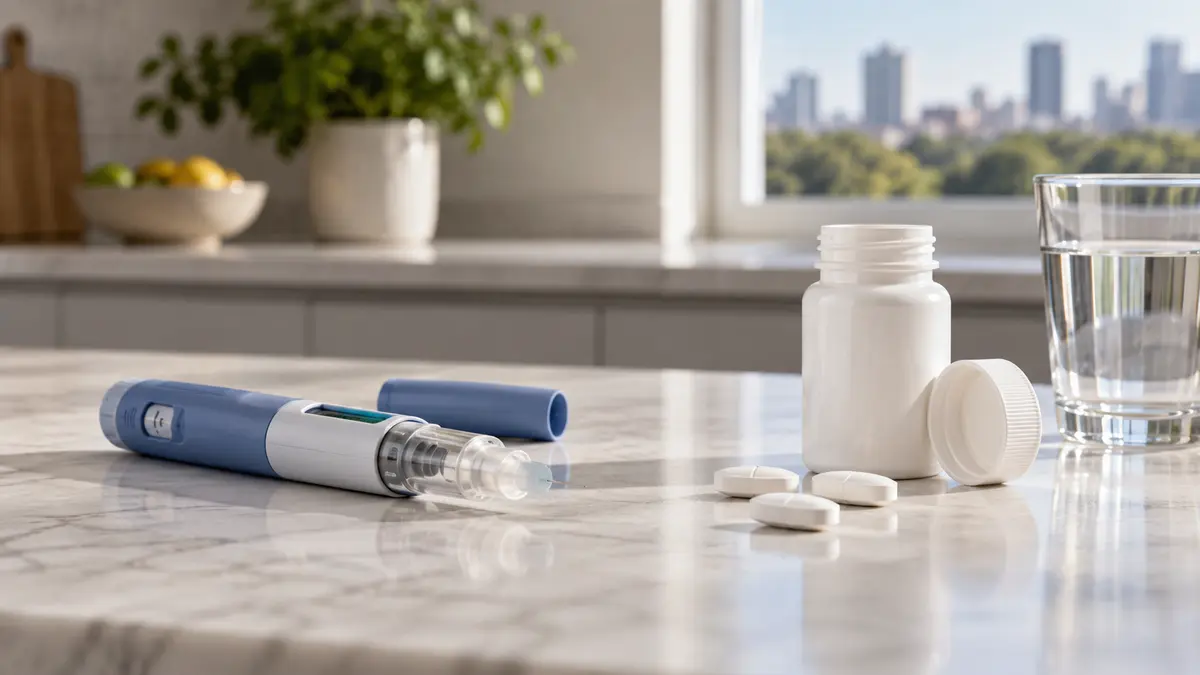
The GLP-1 market was built on weekly injections. In 2026 it enters its pill chapter: patients in the United States are already receiving the first oral GLP-1 for obesity from Denmark-based Novo Nordisk, a once-daily tablet that carries the same brand name as the blockbuster injection Wegovy, while chief rival Eli Lilly's pill is expected to win U.S. approval within months. The shift is not about greater weight loss — it is about who enters treatment at all, at what price, and through which door, as CNBC reported in its examination of the year ahead.
From a weekly shot to a daily tablet
The economics of the new chapter start with the price tag. Novo Nordisk's Wegovy pill carries cash prices of $149 per month for the starting dose and $299 for the two highest doses, slightly below the newly lowered cash prices of the company's injections. For some patients, a pill may serve as a more convenient and potentially cheaper alternative to today's injections, and health experts argue that widening the range of treatments is itself a major win, even if the pill does not outperform the shot in clinical trials.
The mechanism of expansion is behavioural rather than pharmacological. Pills could attract people who seek obesity treatment for the first time — patients who are afraid of needles, or who do not view their condition as severe enough to justify a weekly injection. That group is large enough to move market forecasts: analysts see the GLP-1 space that Novo Nordisk and Eli Lilly established as potentially worth almost $100 billion by the 2030s, and pills are the instrument through which new patients are expected to arrive.
The patients pills could unlock
Current usage already looks substantial but imprecisely measured. Around 1 in 8 U.S. adults said they were taking a GLP-1 drug to lose weight or treat another chronic condition as of November, according to a poll from health policy research organisation KFF. Against that base, Goldman Sachs analysts forecast in August that pills could capture roughly 24% — about $22 billion — of the global weight-loss drug market by 2030.
Clinicians describe the latent demand in plain terms. Dr. Eduardo Grunvald, medical director of the UC San Diego Health Center for Advanced Weight Management, says many people have never tried GLP-1 drugs and are waiting for pills to come out, calling the preference natural for some patients and some prescribers, and adding that out-of-pocket payers will find pills a bit less expensive than injections. Dr. Caroline Apovian, co-director of the Center for Weight Management and Wellness at Brigham and Women's Hospital, expects pills to prompt treatment because a tablet feels more acceptable or approachable than an injection — and notes that once patients enter the health-care system, doctors can guide them through all options, from injections to metabolic surgery and structured diet programmes.
Who will prescribe them

Uptake is likely to be driven by primary care physicians, who treat the majority of eligible patients and may be more comfortable prescribing an oral drug, Grunvald says. Obesity medicine specialists, who care for only about 5% to 10% of eligible patients, are more likely to keep favouring injections, which appear more effective than pills in separate clinical trials. The division of labour matters for market shape: primary care is where the expansion happens, and specialist care is where the highest-efficacy injectables remain.
The efficacy ladder explains why. Zepbound has shown average weight loss of more than 20% in late-stage studies, above the results of both the Wegovy injection and pill and of Eli Lilly's oral drug in separate trials. The highest dose of Novo Nordisk's Wegovy pill helped patients lose up to 16.6% of their weight on average at 64 weeks in one late-stage study, comparable to the injectable form, while the highest dose of Eli Lilly's pill delivered 12.4% at 72 weeks in one of its late-stage trials. Discontinuation due to side effects was about 7% or less for the Zepbound and Wegovy injections, similar for the Wegovy pill, and about 10.3% at the highest dose of Eli Lilly's oral drug. There are no head-to-head studies comparing the two pills directly, and Leerink Partners analyst David Risinger says the market views them as promoting roughly similar levels of weight loss.
Convenience is a debate, not a fact
The two pills differ in chemistry and therefore in routine. Eli Lilly's orforglipron is a small-molecule drug absorbed more easily in the body and free of dietary restrictions, while Novo Nordisk's peptide pill requires patients to drink no more than four ounces of water with it and wait 30 minutes before eating or drinking anything else each day. Novo Nordisk chief executive Mike Doustdar argues the requirement will not hinder uptake, pointing to the more than a million people taking the lower-dose version of the pill for diabetes, marketed as Rybelsus, since 2019: simply sip and go, he says, and patients move on with their life half an hour later. He also calls his company's drug the most efficacious pill, saying no product in development has shown the same level of weight loss in a late-stage trial.
Patient voices cut both ways. Deborah, a 53-year-old librarian in St. Louis, Missouri, is curious about the Wegovy pill partly for convenience: she is already accustomed to pills for other prescriptions, travel would be easier without refrigeration, and the potentially lower cost interests her — she has taken weekly Wegovy injections since June and was paying $449 per month in cash before Novo Nordisk cut that price to $349. Karen Galante, 42, of Horsham, Pennsylvania, takes a compounded version of semaglutide priced similarly to the new pill and stays loyal to the injection: it is hard enough to remember daily vitamins, she says, and she likes the set-it-and-forget-it rhythm of one shot a week.
The price war and the $149 front door
Obesity injections have long been hard to obtain, due in part to spotty insurance coverage and list prices of roughly $1,000 per month. Both manufacturers moved to cut cash prices to less than half that amount: Eli Lilly said in December that the highest doses of single-dose vials of Zepbound will cost $449 per month for cash-paying patients, while Novo Nordisk said in November that nearly all doses of Wegovy will cost $349 per month in cash. The pill sits below both, and under a deal struck with the Trump administration in November, the starting dose of both pills is available for $149 per month through the direct-to-consumer website TrumpRx.
Insurance is the harder question. Patients with coverage for Novo Nordisk's oral drug can pay as little as $25 per month, but pills are unlikely to expand insurance coverage of GLP-1s for obesity. John Crable, senior vice president at insurance and employee benefits brokerage Corporate Synergies, says the direct-to-consumer cash prices are likely significantly less than what employers and pharmacy benefit managers would pay to cover the drugs, and that it is unclear what the pill will ultimately cost payers because those prices are not publicly disclosed. If payer costs mirror injection costs — often above $1,000 per month — employers may be reluctant to add the drug to formularies; some companies that already cover obesity injections could add pills this year, but Crable notes that some employers have actually dropped coverage of GLP-1s for obesity in 2026 because of their high costs. His conclusion is blunt: employers are not highly motivated to add another high-volume, very high-cost drug when direct-to-consumer pricing is so much cheaper.
The 2026 share race
Risinger expects both pills to take off like a rocket this year, with uptake greater for the Wegovy pill initially because Eli Lilly's orforglipron is likely still months from market entry, but with Eli Lilly's pill ultimately generating higher sales because patients may consider it more convenient. The long-run split, in Goldman Sachs' August note, gives Eli Lilly's pill a 60% share — roughly $13.6 billion — of the daily oral segment in 2030, Novo Nordisk's oral semaglutide 21% or around $4 billion, and the remaining 19% to other emerging pills.
Switching dynamics add a second front. Eli Lilly released data in December showing that patients who initially took Wegovy or Zepbound shots maintained the majority of their weight loss after switching to the company's pill. Apovian's reading is restrictive: cost would be the only real reason to move patients who are doing well on injections, and if the cash price is similar she prefers injectables because the weight loss is better and the side effects are less. She wants real-world data on how pills perform against injections; until then, separate late-stage trials remain the only comparison.
The challengers queue up
Other drugmakers are racing to bring oral options to market, including Pfizer, AstraZeneca, Structure Therapeutics and Viking Therapeutics. Risinger highlights Structure's daily oral GLP-1, aleniglipron, which enters phase three trials later this year: midstage data released on December 9 showed the pill helped patients with obesity lose more than 11% of their weight at 36 weeks when adjusted for placebo, with a higher dose delivering more than 15% — surpassing the highest dose of Eli Lilly's orforglipron, albeit with tolerability data that appeared worse than Eli Lilly's pill. Structure shares soared more than 100% on the data, and chief executive Raymond Stevens called the pill potentially best-in-class for an oral small-molecule GLP-1. Risinger expects the Structure and AstraZeneca pills could launch as soon as late 2028, and points to privately held Verdiva Bio, which is developing oral peptide treatments designed for once-weekly dosing, with an ongoing phase two trial: weekly pills with compelling profiles, he says, could tilt the balance more towards orals.
The September checkpoint: pills already a third of prescriptions
By autumn the January forecasts had acquired hard numbers. Oral therapies accounted for about a third of U.S. obesity prescriptions following the pill's rollout, according to company presentations, with Novo Nordisk capturing more than 80% of new oral prescriptions. Yet Eli Lilly said on September 14 that its pill, sold as Foundayo, had captured more than 30% of new patients in the U.S. market for oral obesity treatments, narrowing the early lead that Doustdar had estimated in August at about 90% of the country's oral obesity market for the Wegovy pill.
At Novo Nordisk's Capital Markets Day in the United Kingdom on September 22, Doustdar told Reuters that weight-loss pills could capture as much as half of the global obesity drug market by 2030, against Wall Street forecasts of oral treatments accounting for about 14% to 40% of an obesity market projected to reach between $100 billion and $150 billion by 2030. Novo has five oral treatments in development, including the next-generation dual-acting tablet zenagamtide, an oral amylin analogue and a small-molecule drug, while competitors' pipelines hold eight injectables for every two pills — a mix Doustdar framed as a structural advantage if the market splits 50/50. He also addressed the patent question directly: oral Wegovy is protected from generic competition into the mid and late 2030s through patents covering its SNAC delivery technology, even as the active ingredient semaglutide loses exclusivity in the early 2030s. The backdrop remains bruised for the Danish group, whose shares have tumbled more than 70% from their peak as Lilly overtook its market share.
Beyond the cash market: Medicare and generics
Two channels outside the cash price war shape the pill era. In the United States, the government's Medicare obesity drug pilot launched in July allows eligible beneficiaries to obtain weight-loss drugs for a $50 monthly co-pay; Lilly executive vice president Ilya Yuffa said 60% to 70% of patients enrolled in the programme are new to the treatments, and that Zepbound has seen preference among patients in the pilot. Medicare covers about 66 million people aged 65 or older or living with disabilities, making the pilot a sizeable on-ramp for first-time patients of exactly the kind pills are expected to attract.
Outside the U.S., the price floor is set elsewhere. In India and Canada, generic versions of Novo Nordisk's blockbuster obesity and diabetes treatments Wegovy and Ozempic cost as much as 70% less. Yuffa's formulation of the competitive logic is that when the market expands significantly through generics, share declines but overall volume keeps growing for Mounjaro, Lilly's brand name for tirzepatide outside the U.S. The same arithmetic applies to pills: a cheaper entry point expands the treated population even as it compresses the revenue per patient.
What to watch in the pill era
- The timing of Eli Lilly's U.S. approval and Foundayo's launch pricing against the $149-$299 cash ladder.
- Whether primary-care adoption expands the treated population or mainly cannibalises injection starts.
- Employer formulary decisions in 2026, after several companies dropped GLP-1 coverage for obesity.
- Phase three data from Structure Therapeutics and AstraZeneca, and the late-2028 launch window for second-wave pills.
- The oral share of U.S. obesity prescriptions against the 50%-by-2030 scenario Novo Nordisk now prepares for.
The pill chapter does not replace the injection chapter; it re-prices the entry point of the whole market. A $149 tablet, a $50 Medicare co-pay and a 70%-cheaper generic in emerging markets all pull new patients into treatment, while efficacy data keep the highest-need patients on shots. The companies that win 2026 will be those that treat pills not as a cheaper version of their injection but as a different product with a different customer: the one who never started.
Just Published

European housing prices and rents

Schneider–PTC: the industrial data integration test behind the deal

Avio USA starts work on its Virginia manufacturing site

One equity market, two currency measures

Russia’s draft budget raises spending and borrowing plans

Russia Sets the 2027 Minimum Wage at 28,935 Rubles, Up 6.8%, on the Way to 35,000 by 2030
Partner news digest
 Qatar LNG expansion: readiness, financing and the production test
 Pennon’s capital plan: turning finance into better water outcomes
 Italy’s diesel relief gap: taxes, price ceilings and implementation
 EU–China hybrid trade: from understanding to measurable implementation
 Schneider–PTC: the industrial data integration test behind the deal
 IKEA’s hybrid resale model: buyback, marketplace liquidity and furniture logistics
 Banking AI beyond the ranking: capability, execution and evidence of value
 Fishing labour beyond the product label: practical protection
 Rhenus and the Middle Corridor: terminals need coordinated connections
 Royal Mail restructuring: the test is reliable delivery
 Fuel Finder on Google Maps: when price transparency becomes useful competition
 Samsung’s memory profit surge: what the preliminary record explains
Leave a comment