
Nilu and Sangardak: Village Tourism in Surkhandarya

Nilu offers a village-based setting for rural Uzbekistan journeys in Surkhandarya, with guesthouses, orchards and access to the mountain landscape around Sangardak. Nilu received Tourism Village status on Jul 21, 2025. Twenty-one family guesthouses and more than fifteen kinds of visitor service were presented at the opening. The village’s households also engage in horticulture, livestock work and beekeeping within the southern mountain setting.
Nilu is a community in Sariosiyo district, with more than 520 families and approximately 2,500 residents. Horticulture, animal husbandry and beekeeping are among local occupations. Houses stand beside the mountains along the road towards Sangardak. Guest accommodation forms one activity within this residential and agricultural setting, alongside orchards, livestock work and the households of people living in the village.
The village designation and the opening programme
Officials, residents, media representatives and social media participants attended Nilu’s Tourism Village ceremony in July 2025. Twenty-one family guesthouses and more than fifteen types of visitor service were presented at the opening. The designation applied to the named village in Sariosiyo district. Its opening-period facilities joined accommodation with activities and infrastructure developed for people arriving in the community.
Nilu’s visitor provisions included paved streets, banking services and horseback riding. Surfaced roads provide routes through the village, cash services serve residents and guests, and riding involves its own provider and arrangements. These facilities occupy different places within the community. Family guesthouses provide overnight accommodation, with the room and meal arrangements of each property forming another part of a stay.
An Osh Sayli programme accompanied the opening, with palov preparation forming part of the event. A press tour included Sangardak and Khonjiza. The opening ceremony and press itinerary have defined dates and participants. They should not be described as a daily programme that every subsequent guest can automatically join.
The designation gives Nilu a place within the official tourism programme. The village's agricultural work and household life, meanwhile, continue according to their own schedules. A visitor stay can connect with those activities through agreed arrangements, but the administrative status does not make every home, orchard or livestock area a public attraction.
Family guesthouses and the structure of a stay
Family guesthouses provide accommodation within Nilu’s residential setting. Rooms can be connected with courtyards and the hosts’ household activities, with each property having its own layout. The twenty-one guesthouses presented at the opening belonged to this local visitor provision. A stay has an individual host, address and room arrangement, alongside any meals or excursions included in the booking.
The distinction between a village and a property is practical. A destination may have several guesthouses, but a particular booking concerns one address and one host. A service mentioned in the regional opening programme may operate elsewhere in the village. The guesthouse can explain what it provides directly and what needs a separate arrangement.
Meals also involve a specific household or kitchen. An invitation to eat is different from a cooking demonstration, and a demonstration is different from a participatory lesson. The dishes, ingredients and timing depend on the agreed programme. A photograph of a regional breakfast illustrates a food setting without documenting the menu at a named Nilu property.
Staying in a village adds intervals that are different from a monument visit. Arriving, meeting a host, settling into a room and eating a meal take place around the local excursion. A short stop on a drive may show the village's location, while an overnight stay allows another encounter with household hospitality. The two visits should not be described as equivalent simply because both include Nilu.
Details to establish with a host
- The guesthouse address and the meeting point for arrival.
- The room arrangement and any shared facilities.
- Which meals are included and how dietary requests are handled.
- Whether a village activity needs an advance arrangement.
- The transport arrangements for a separate Sangardak excursion.
Orchards, livestock and beekeeping
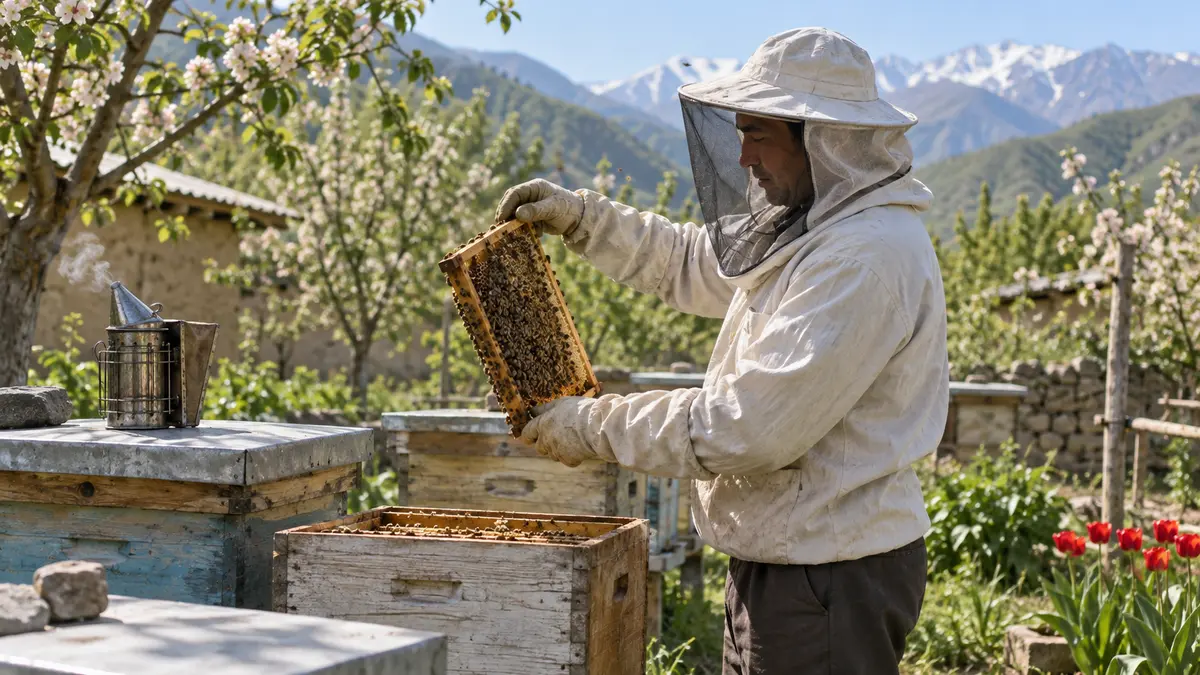
Horticulture, animal husbandry and beekeeping are major occupations in Nilu. Orchards contain fruit trees managed through cultivation and harvesting. Livestock require feeding and care, while beekeepers manage colonies and hives for honey production. The three activities involve different materials and seasonal work. Their products can appear within village trade and hospitality, with the origin of an individual item identified by its producer or seller.
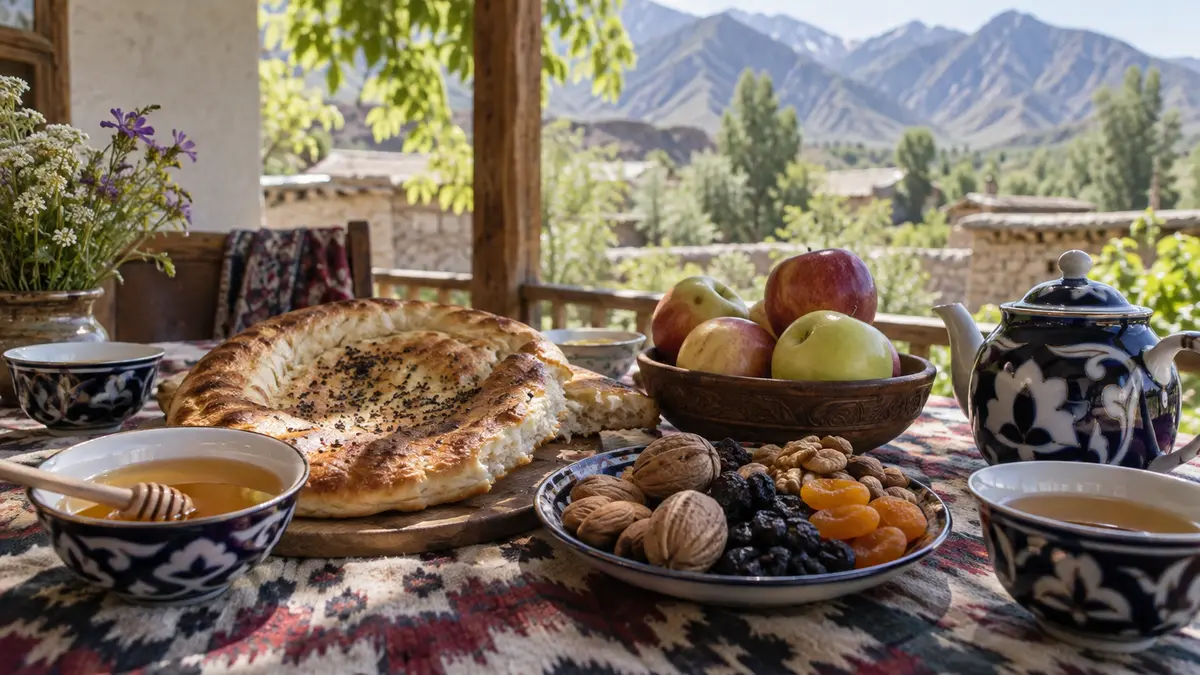
Fruit and honey belong to the village’s food and agricultural setting. Orchards supply cultivation work, while beekeepers manage hives and collect honey. At a guesthouse, the host prepares meals from the ingredients chosen for the kitchen. A breakfast table can therefore contain products from several producers, with individual foods identified through their makers and the household’s preparation.
Bees produce honey from floral sources, and beekeepers manage the colonies and collection process. Flavour and appearance vary with the plants visited and the handling of the product. Honey can form part of a breakfast or another meal alongside bread and fruit. Its production introduces hives, seasonal work and food preparation into the agricultural setting without adding medical claims to the visitor programme.
A farm visit also differs from viewing a landscape. An orchard seen from a road is part of the scenery; entering it involves the owner's arrangements. Handling equipment or approaching hives is another activity. The visitor programme, where one exists, determines how those encounters are organized. The village designation does not itself supply permission to enter every working agricultural space.
The relationship between agriculture and hospitality can be described concretely through food, space and work. A courtyard may connect rooms and a dining area. Fruit and bread form part of a meal. A host may explain how a product was made. Each detail belongs to a particular encounter, rather than a general promise that every visitor will experience the same household routine.
Sangardak and the mountain setting
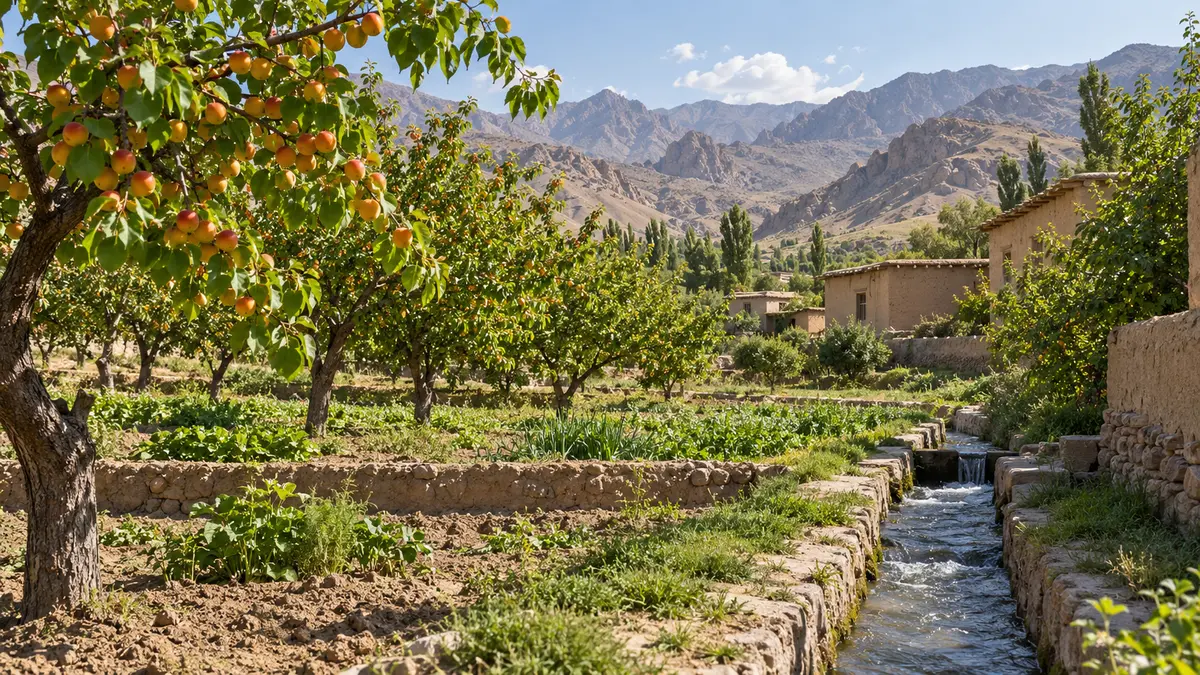
Sangardak waterfall lies in Sariosiyo district, approximately thirty kilometres from Denau and 205 kilometres from Termez in the national tourism description. Nilu stands beside the road leading towards it. The starting point and road used determine the transfer for a particular excursion. The waterfall provides a landscape visit alongside the village’s accommodation, household activity and agricultural surroundings.
The wider mountain environment includes the Hissar ridge and the Surkhandarya, Tupalandarya and Obizarang rivers. Sangardak’s cascade drops about twenty metres over rocks and vegetation. Its water source is believed to have a karst origin; that remains a qualified description. The falling water, rock surfaces and plants around the cascade form the visible landscape encountered during the visit.
A waterfall can be encountered through several features: the movement of water, the rock surface, the vegetation around it and the terrain of the approach. The amount of water and the conditions underfoot can vary. A general description of the cascade is not a guarantee of the exact appearance on every day of the year.
Juniper, pistachio, almond, walnut, apple, barberry and rosehip occur in the wider mountainous area. The regional plant life includes trees and shrubs with different habitats and seasonal growth. Cultivated village orchards occupy another part of this setting alongside uncultivated mountain vegetation. Individual species and their locations can be identified during a visit without assuming that every regional plant grows beside the waterfall.
Nilu’s houses adjoin the mountains beside the road towards Sangardak. This position connects a village stay with a waterfall excursion through the surrounding landscape. Guesthouses have individual addresses and access routes, while the cascade has its own approach. A programme can combine time in the household setting with travel to the falls, using transfers arranged for the particular property and group.
Palov at the village opening
The Osh Sayli element of the opening placed cooking within the public programme. Palov combines rice with other ingredients in a sequence of preparation, cooking and serving. Its social setting includes the people who prepare it and those who gather to eat. The ceremony's cooking activity belongs to a documented event, while household meals take place in another context.
UNESCO inscribed Uzbekistan's palov culture and tradition in 2016. Its description concerns the preparation and sharing of food and the transmission of knowledge across generations. The inscription is national in scope. Nilu's opening event is one specific occasion on which palov was presented, rather than the origin of the practice or a separate UNESCO designation for the village.
A communal cooking event differs from a restaurant order. The former has a defined gathering and preparation programme; the latter is a service supplied by a kitchen to a customer. A guesthouse meal is another setting again. These distinctions allow food to remain part of the village story without implying that the opening's public celebration continues unchanged every day.
Bread, fruit, dairy foods and honey are among the subjects of a village food encounter where they appear on the host’s menu. A meal contains the ingredients prepared for that table. Orchards and beekeeping add agricultural activities to the wider setting, while cooking takes place in household kitchens or visitor programmes. The producer and cook identify the food actually offered during the stay.
The southern region beyond the waterfall
Surkhandarya includes Termez, Denau, mountain districts and communities with different histories and occupations. A visit to Nilu concentrates on the Sariosiyo village setting; a visit to Termez concerns another urban and archaeological landscape. They can be connected within a southern journey, but they should retain their own geographical identities.
Boysun district has a recognised cultural space combining music, dance, ritual and oral traditions. It is another part of Surkhandarya’s cultural geography, distinct from Nilu in Sariosiyo district. The places share a region but have their own communities and activities. Boysun’s intangible heritage recognition concerns its named cultural space, while Nilu’s designation concerns a national Tourism Village initiative.
The difference between a regional practice and a specific performance is also relevant. A tradition may be recognized and transmitted in a community, while a visitor event is organized for a particular time and audience. The performers, repertoire and setting identify that event. A regional heritage description does not create a standing show at every guesthouse.
The opening press itinerary included Khonjiza and Sangardak. Media participants visited these named places as part of the organised programme. A later village stay can include its own excursions, with transport and timing arranged for the booked route. The opening event combined the designation ceremony with regional visits, while independent travellers and later groups follow the arrangements of their particular journey.
These distinctions leave the southern route open to several subjects: household hospitality, agriculture, mountain landscapes and regional cultural history. Their connection is geographical and social, while each individual visit supplies its own factual detail.
Boysun’s Shalola folk music ensemble has collected songs and documented instruments, costumes, legends and older melodies. That work concerns the communities and repertoire of Boysun. Music documentation can preserve material through collection and performance, alongside the transmission of skills between practitioners. Nilu’s opening programme belongs to a different community within the same broader southern region.
Boysun’s cultural space was proclaimed in 2001 and inscribed on UNESCO’s Representative List in 2008. Nilu received Tourism Village status in July 2025 under the national tourism programme. These are separate recognitions for different subjects and places. The first concerns a living cultural space; the second concerns a residential village and its visitor facilities in Sariosiyo district.
Keeping those records separate permits a southern itinerary to include both village hospitality and researched regional cultural history.
Approximately 2,500 people live in Nilu, in more than 520 families. Twenty-one family guesthouses were presented when the village received its tourism designation. The population and household figures describe the resident community, while the guesthouses provide a separate accommodation count. Hosts, agricultural households and other residents share the village setting around the roads, orchards and houses adjoining the mountains.
A village stay within a longer Uzbekistan route
Nilu combines household accommodation with agricultural activity and a mountain setting. Its population includes families engaged in horticulture, animal husbandry and beekeeping. The visitor services presented in July 2025 sit within that community rather than a separate resort compound. A stay takes place at a particular guesthouse, with its host and property alongside the wider village’s homes and working spaces.
A longer Uzbekistan itinerary may combine city architecture with a southern stay. The city portion can centre on monuments and museum collections, while Nilu introduces a household and mountain setting. This changes the scale of the encounter: from an ensemble of public buildings to a village, a host and a local excursion.
A Nilu programme can include a guesthouse stay, food prepared by a host and an excursion towards Sangardak. Each activity takes place in its own setting: accommodation within a property, meals at a table and landscape visits along a route. The village provides a residential base near the mountains, while transfers connect the booked stay with the places included in the itinerary.
Nilu’s Tourism Village designation dates to Jul 21, 2025. Its opening programme presented twenty-one guesthouses, visitor services, cooking and a press tour. The village’s orchards, livestock and beekeeping form part of its ongoing agricultural life. ABA Travel’s rural and regional routes provide a wider travel context for southern Uzbekistan, with individual stays and excursions arranged around the destinations included in each programme.

Just Published
Nilu and Sangardak: Village Tourism in Surkhandarya
European housing prices and rents

Schneider–PTC: the industrial data integration test behind the deal

Avio USA starts work on its Virginia manufacturing site

One equity market, two currency measures

Russia’s draft budget raises spending and borrowing plans
Partner news digest
 Imam al-Bukhari’s Heritage and Samarkand’s Pilgrimage Landscape
 Ancient Fortresses and Museums of Western Uzbekistan
 One Day in Kasri Orifon: Bukhara’s Pilgrimage Village
 Uzbekistan’s Western Rail Corridor and the Journey to Khiva
 Rishtan’s Craft Neighbourhood and the Fergana Valley
 Tashkent’s Museums, Mahallas and New Cultural Spaces
 Uzbek Food and Cultural Traditions: From London’s Festival to Regional Tables
 Parkent’s Chashma Village: Folk Traditions Near Tashkent
 Bukhara’s Biennale: Contemporary Art in Historic Spaces
 Nilu and Sangardak: Village Tourism in Surkhandarya
 Khiva’s Walled City: Architecture, Palaces and Living Traditions
 Uzbekistan's Tourism Expansion: Heritage Cities, Living Crafts and Regional Routes