
Samolet Paid Buyers 7.9 Billion Rubles in Late-Delivery Penalties in H1 2024
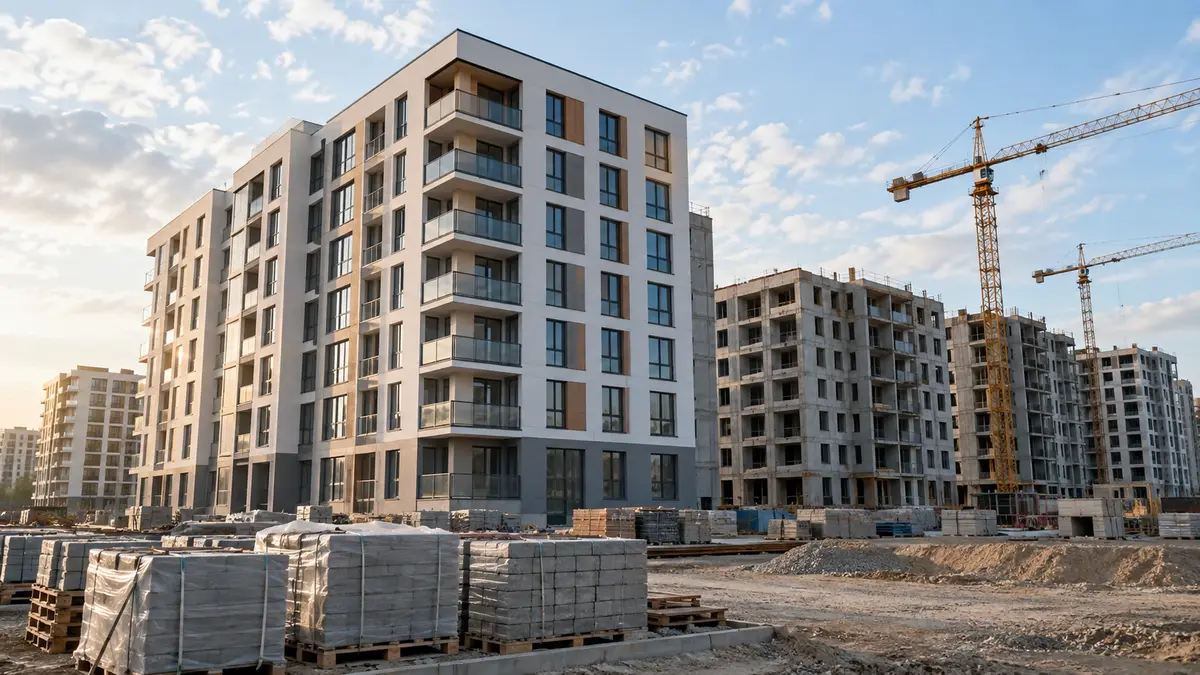
Summary: Samolet Group paid apartment buyers 7.9 billion rubles in penalties for missing commissioning deadlines in January-June 2024 — twice as much as in the same period a year earlier, according to the developer's IFRS statements examined by Kommersant. The sum is under 5% of the company's revenue of 170.8 billion rubles, but nearly one and a half times its net profit of 4.7 billion rubles.
Penalties against profit
As Kommersant discovered in Samolet Group's IFRS reporting, the developer paid buyers 7.9 billion rubles of "remuneration in the form of fines for violations of facility commissioning deadlines." The growth in penalties occurred despite the government moratorium on buyers collecting fines from developers: originally adopted in 2020 due to the pandemic, it was reinstated in spring 2022 over Western sanctions and extended to June 2023, then reintroduced from March 2024 — its effect is set to end in December 2024.
In theory, the moratoria should shrink penalty amounts, but developers accumulated obligations during periods when the moratorium was not in force, explains Almaz Kuchembayev (Almaz Kuchembayev), head of the Kuchembayev & Partners law agency.
The delay statistics
According to the unified information system Nash.Dom.RF, Samolet Group has commissioned 346 buildings over its entire history, of which 120 — that is 34% — were delivered late. The company currently has 293 buildings under construction, of which 65 (22%) are being built behind schedule. The company did not answer Kommersant's request.
For comparison, per the same system, Sergei Gordeev's PIK group delivered 60 of 610 buildings late over its history, Andrei Molchanov's LSR — 71 of 353, Vladimir Voronin's FSK group — 49 of 169, Setl Group — 20 of 377, and Brusnika — 22 of 98. Over the past year more than a third of the country's new housing was not delivered on time, notes Kirill Kholopik (Kirill Kholopik), head of the Unified Resource of Developers portal: "As experience shows, when the initial deadline is significantly missed, one has to wait on average another twenty and a half months for construction to finish."
How the industry responds
Brusnika said its payments to equity-holders for late key handovers on facilities commissioned in 2022-2023 fell by a third year on year in H1 2024, to 3 million rubles. Setl Group insists all its buyers receive keys within the established deadlines. Public developers including PIK, LSR, Etalon, Ingrad and Pioner do not disclose the penalties they pay buyers — and did not provide the data on request either. The Russian Construction Ministry did not answer the request.
Penalty amounts depend on the length of the delay and can reach 15% of the apartment's value, estimates Alexander Ruchiev (Alexander Ruchiev), president of Osnova Group. If a few years ago the collectable penalty stood at about 30% of the sum claimed by the buyer, today it is 50-60%, notes Maxim Deev (Maxim Deev), deputy head of the legal department at Granel Group. Among the causes of delays Ruchiev names a large shortage of construction labour and a marked decline in design quality; Kholopik adds that developers are heavily dependent on adjacent industries, including monopolists that can fail on deadlines.
Support instead of penalties
Despite the moratorium, the authorities continue providing additional support to developers, especially after part of the preferential mortgage programs was cancelled. From September 1, 2024 the fine for breaching obligations to home buyers was cut from 50% of the agreed sum to 5%. The penalty to an equity-holder for delays in fixing apartment defects is now accrued at 1/150 of the CBR refinancing rate per day instead of the previous 1%. Monetary liability for low-quality construction work was also reduced. Vladimir Koshelev (Vladimir Koshelev), first deputy chairman of the State Duma committee on construction and housing and co-author of the amendments, explains they aim to exclude double liability under law 214-FZ and the Consumer Rights Protection Law.
Key figures
- 7.9 billion rubles — Samolet's payments to buyers for missed deadlines in H1 2024, twice as much year on year.
- 170.8 billion rubles — the group's revenue for the period; the sanctions do not exceed 5% of it.
- 4.7 billion rubles — net profit: the penalties are nearly one and a half times larger.
- 34% of commissioned buildings and 22% of those under construction are late, per Nash.Dom.RF.
After the moratorium expires the volume of penalties may rise, Ruchiev expects. But developers will be able to substantially cut their penalty costs, which in turn will lead to worse quality of completed facilities, believes Artyom Glukhikh (Artyom Glukhikh), founder of Bazis Nedvizhimosti.
Company information
Samolet Group is one of Russia's largest development companies, working in the housing construction market of Moscow, the Moscow region and other regions. Corporate website: https://samolet.ru.
Contact
Samolet Group, Moscow, Russia. Media and investor relations enquiries are handled through the corporate website https://samolet.ru.
Just Published
European housing prices and rents

Schneider–PTC: the industrial data integration test behind the deal
Avio USA starts work on its Virginia manufacturing site

One equity market, two currency measures

Russia’s draft budget raises spending and borrowing plans
Russia Sets the 2027 Minimum Wage at 28,935 Rubles, Up 6.8%, on the Way to 35,000 by 2030
Partner news digest
 Qatar LNG expansion: readiness, financing and the production test
 Pennon’s capital plan: turning finance into better water outcomes
 Italy’s diesel relief gap: taxes, price ceilings and implementation
 EU–China hybrid trade: from understanding to measurable implementation
 Schneider–PTC: the industrial data integration test behind the deal
 IKEA’s hybrid resale model: buyback, marketplace liquidity and furniture logistics
 Banking AI beyond the ranking: capability, execution and evidence of value
 Fishing labour beyond the product label: practical protection
 Rhenus and the Middle Corridor: terminals need coordinated connections
 Royal Mail restructuring: the test is reliable delivery
 Fuel Finder on Google Maps: when price transparency becomes useful competition
 Samsung’s memory profit surge: what the preliminary record explains
Leave a comment