
Doninturflot Carries 40,000 River Cruise Passengers in 2024 as Berthing Shortage Limits Route Growth
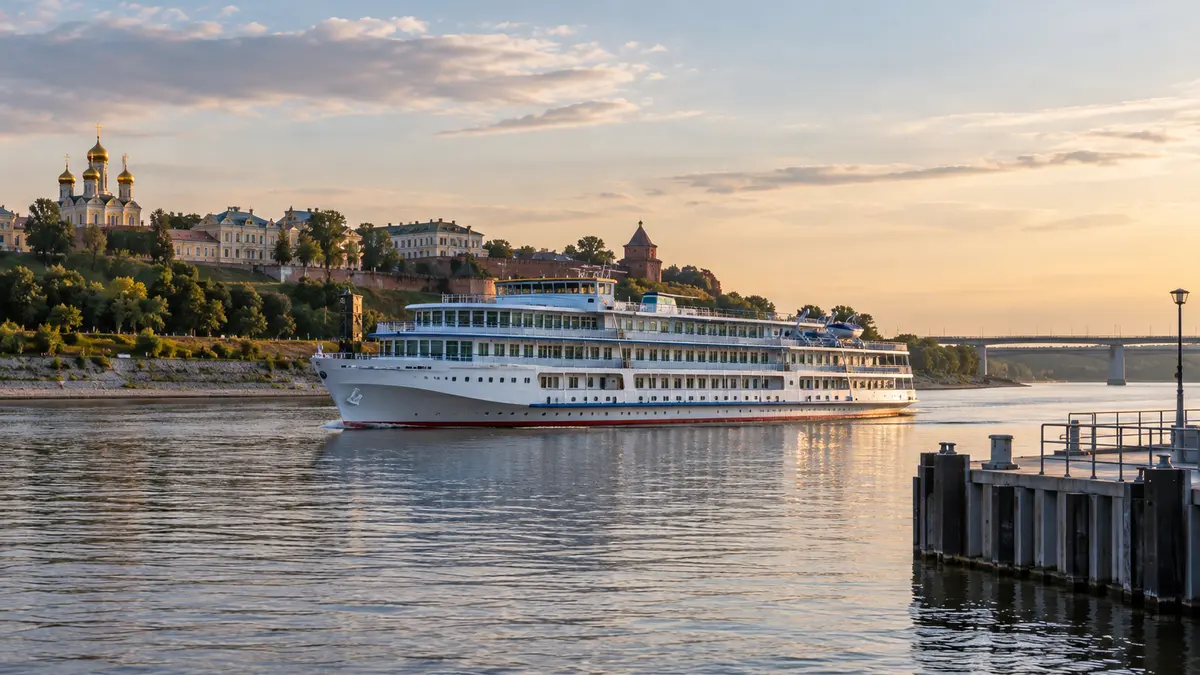
Summary: Doninturflot (Донинтурфлот), a river cruise operator based in Rostov-on-Don, carried 40,000 tourists in 2024, executive director Vladimir Chizhov (Vladimir Chizhov) said, calling the result a good one for a company that has refocused on the domestic market only recently. At a Russian Union of Travel Industry (RUTI) discussion, executives said demand for river cruises grows by about 15% a year, but a shortage of berthing infrastructure, personnel gaps and unpredictable fuel prices hinder new routes and a broader geography.
The 2024 season in numbers
"We are increasing the traffic and have transported 40,000 tourists in 2024. This is a rather good result, since we have refocused on the domestic market just recently," Chizhov said. Further development, he added, is slowed by the absence of infrastructure: little has changed on the country's rivers since the Soviet era.
The company's experience mirrors the wider market. RUTI said demand for river cruises has been growing rapidly in Russia, yet a shortage of berthing infrastructure across the country, a shortage of personnel and unpredictable fuel prices are hindering an increase in river cruise routes and a broader geography.
Repeat customers and new routes
Cruise tours have a traditionally high percentage of repeat customers, Vodokhod (Водоходъ) general director Rishat Bagautdinov (Rishat Bagautdinov) said: three out of four passengers return to the vessels after their first cruise, some take cruises several times a year and some have been doing it for 20 years. Cruise companies therefore constantly update programs and develop new routes, which is not easy given the underdeveloped berthing infrastructure; the problem exists on all rivers but is especially acute in Siberia. Demand for cruises has been growing by an average of 15% every year due to the comprehensive nature of such tours, higher tourist awareness of their opportunities and better ships, Bagautdinov said. A Doninturflot representative expressed a similar view.
A cost the operator cannot pass on
Fuel is the major cost borne by cruise operators, Mosturflot (Мостурфлот) deputy director Svetlana Goncharova (Svetlana Goncharova) said. In 2024 the price did not change, whereas in 2023 it soared by 40% right before the navigation season and after a substantial part of cruise tours had been sold; the law on the protection of consumer rights does not allow changing the price of a sold tour, so heavy financial losses were incurred, she said.
What the industry asks for
- More berthing infrastructure on rivers beyond the traditional western waterways, especially in Siberia.
- Non-refundable cruise rates: RUTI expert council head Nikolai Litarenko (Nikolai Litarenko) said the union sent a respective letter to the economic development minister at the end of last year.
- Solutions to the personnel shortage that limits fleet utilisation and the opening of new routes.
For Doninturflot, the 40,000-passenger result sets the baseline of its domestic-market comeback: traffic is rising, the repeat-customer base runs deep, and the binding constraints sit on the shore rather than on the water.
Company information
Doninturflot (Донинтурфлот) is a Russian river cruise operator based in Rostov-on-Don that runs multi-day cruise tours on the country's inland waterways. Corporate website: https://doninturflot.com.
Contact
Doninturflot (Донинтурфлот), Rostov-on-Don, Russia. Bookings and enquiries are handled through the corporate website https://doninturflot.com.
Just Published

European housing prices and rents

Schneider–PTC: the industrial data integration test behind the deal

Avio USA starts work on its Virginia manufacturing site

One equity market, two currency measures

Russia’s draft budget raises spending and borrowing plans
Russia Sets the 2027 Minimum Wage at 28,935 Rubles, Up 6.8%, on the Way to 35,000 by 2030
Partner news digest
 Qatar LNG expansion: readiness, financing and the production test
 Pennon’s capital plan: turning finance into better water outcomes
 Italy’s diesel relief gap: taxes, price ceilings and implementation
 EU–China hybrid trade: from understanding to measurable implementation
 Schneider–PTC: the industrial data integration test behind the deal
 IKEA’s hybrid resale model: buyback, marketplace liquidity and furniture logistics
 Banking AI beyond the ranking: capability, execution and evidence of value
 Fishing labour beyond the product label: practical protection
 Rhenus and the Middle Corridor: terminals need coordinated connections
 Royal Mail restructuring: the test is reliable delivery
 Fuel Finder on Google Maps: when price transparency becomes useful competition
 Samsung’s memory profit surge: what the preliminary record explains
Leave a comment