
Rosoboronexport Signs Over $13 Billion in New Arms Contracts in H1 2026, Matching All of 2025
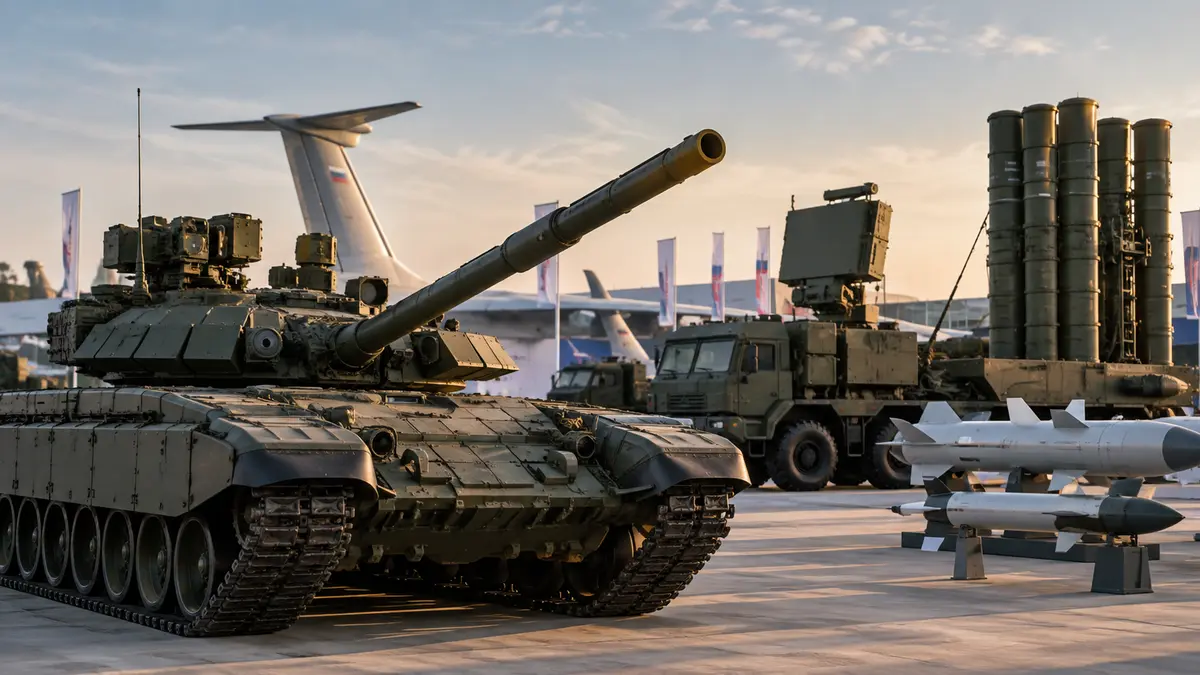
In the first half of 2026 Rosoboronexport signed export contracts for weapons and military hardware worth more than $13 billion - the same amount as for the whole of 2025 - while its order portfolio stands significantly above $60 billion, the company's chief Alexander Mikheev said ahead of the El Alamein International Airshow 2026 in Egypt.
Half a year equals a full year
The headline figure came on September 7: over the first half of the current year Rosoboronexport concluded export contracts for the supply of weapons and military equipment worth over $13 billion, Interfax reported, citing the company. "In the first half of 2026 Rosoboronexport signed export contracts worth more than 13 billion dollars. This amount corresponds to the indicator for the whole of 2025," Mikheev told journalists ahead of the international air and space show El Alamein International Airshow 2026 in Egypt.
The composition of the new contracts points to where demand concentrates: the largest share of contracts signed by Rosoboronexport in 2026 falls on products for air forces, with air defense hardware in second place, Mikheev said. Aviation and air defense have thus remained the calling card of the Russian export offer, a pattern consistent with the company's portfolio of combat-proven systems.
Deliveries: more than twenty customers, half the plan done
On the delivery side, the picture is equally front-loaded. Supplies of weapons and military hardware this year have been made to more than 20 foreign customers, and more than 50% of the 2026 delivery plan has already been fulfilled, Mikheev said, as Interfax also reported. Over the first half of 2026 Rosoboronexport delivered Russian military-purpose products to more than 20 countries friendly to Russia from the Middle East, Africa, the Asia-Pacific region, Southeast Asia, Latin America, Europe and the CIS, he said. About 70% of the total volume of deliveries fell on armaments and military hardware for air forces and air defense.
The geography described - seven macro-regions in one half-year - underlines the breadth of the customer base rather than dependence on one or two large buyers. It also frames the $13 billion of new contracts: with deliveries already past the halfway mark of the annual plan, the new signings refill the pipeline for 2027 and beyond.
A portfolio above $60 billion

The third number Mikheev put on the table was the order book: Rosoboronexport's portfolio significantly exceeds $60 billion, he said, adding that it contains contracts for the newest products of Russian defense enterprises, including Su-57 fifth-generation fighters in the export Su-57E configuration, Il-78MK-90A tanker aircraft, Yak-130M trainer-combat aircraft, air defense systems and small arms, according to the Interfax report on the portfolio.
- New export contracts in H1 2026: over $13 billion, equal to the full-year 2025 result.
- Deliveries in H1 2026: more than 20 countries; over 50% of the 2026 plan fulfilled.
- Mix: about 70% of delivered volume - air force and air defense hardware.
- Order portfolio: significantly above $60 billion.
- Named portfolio items: Su-57E fighters, Il-78MK-90A tankers, Yak-130M trainer-combat jets, air defense systems, small arms.
Combat experience as a sales argument
Mikheev attached a qualitative claim to the numbers: more than 90% of the samples contracted by Rosoboronexport in 2026 have taken part in combat operations against modern Western-made weapons and military hardware, he said, adding that characteristics demonstrated in real conditions significantly influenced customers' final decisions to sign contracts. The statement positions field experience as a commercial asset in a market where buyers compare proven performance rather than brochure parameters.
At the same time the company stressed the boundary between export and domestic obligations: fulfillment of these contracts will not affect the work of defense industry enterprises on the state defense order, Mikheev emphasized - a message repeated in the delivery statement as well, where he noted that supplies have not affected the fulfillment of state defense order tasks by industrial enterprises.
Why the airshow timing matters
All three statements were made ahead of the El Alamein International Airshow 2026 in Egypt, a venue that gathers air force and air defense buyers from the Middle East and Africa - precisely the regions named first in the delivery geography. Announcing a half-year contract total equal to a full previous year, a portfolio above $60 billion and a half-executed delivery plan on the eve of such a show is a negotiating posture as much as a report: it signals capacity to sign more without slowing current deliveries.
For observers of the arms market, the September 7 package of figures sets the benchmark for the second half of 2026: whether the contract pace holds, whether the air force and air defense mix persists, and whether named portfolio items such as the Su-57E convert from signed intent to delivered hardware. The company's own framing suggests the answer it intends to give at the next reporting point: exports grow, and the state defense order does not lose.
Just Published

European housing prices and rents

Schneider–PTC: the industrial data integration test behind the deal
Avio USA starts work on its Virginia manufacturing site

One equity market, two currency measures

Russia’s draft budget raises spending and borrowing plans

Russia Sets the 2027 Minimum Wage at 28,935 Rubles, Up 6.8%, on the Way to 35,000 by 2030
Partner news digest
 Qatar LNG expansion: readiness, financing and the production test
 Pennon’s capital plan: turning finance into better water outcomes
 Italy’s diesel relief gap: taxes, price ceilings and implementation
 EU–China hybrid trade: from understanding to measurable implementation
 Schneider–PTC: the industrial data integration test behind the deal
 IKEA’s hybrid resale model: buyback, marketplace liquidity and furniture logistics
 Banking AI beyond the ranking: capability, execution and evidence of value
 Fishing labour beyond the product label: practical protection
 Rhenus and the Middle Corridor: terminals need coordinated connections
 Royal Mail restructuring: the test is reliable delivery
 Fuel Finder on Google Maps: when price transparency becomes useful competition
 Samsung’s memory profit surge: what the preliminary record explains
Leave a comment