
Uzbekistan Bets $1.56 Billion on Waste-Fired Power: Eleven Plants, Two Commissioning Waves
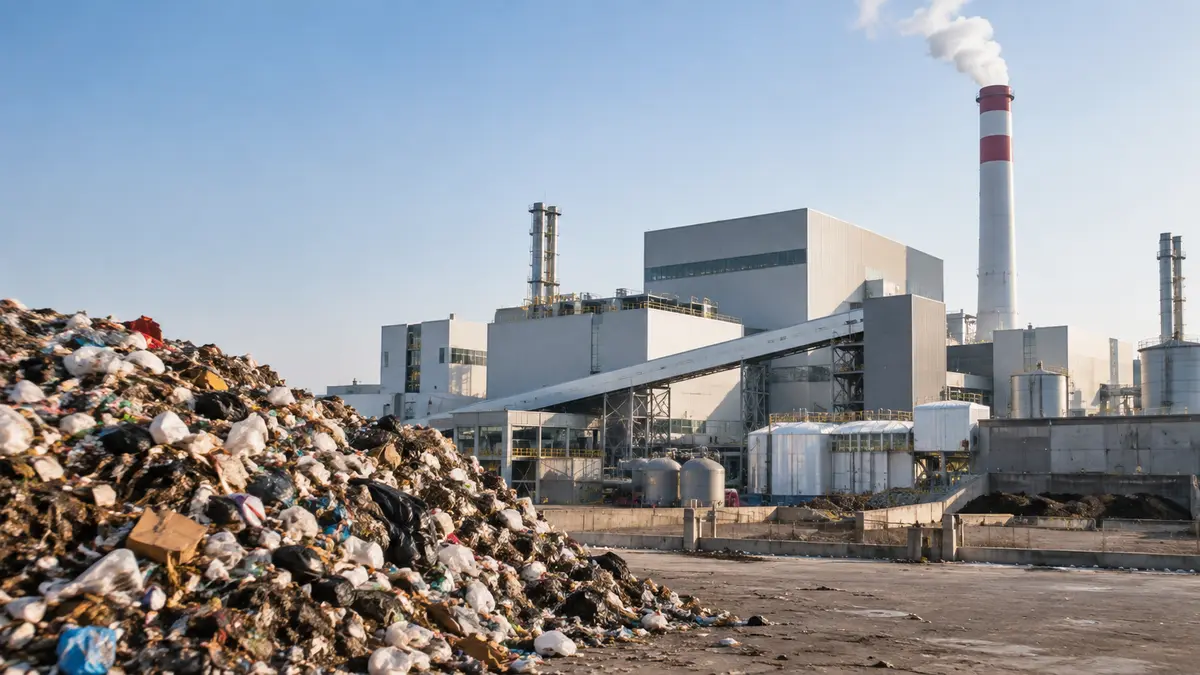
Uzbekistan will carry out six investment projects totaling $933 million for producing electricity from waste incineration in 2026-2027, with another five projects worth $625 million under consideration, according to a statement on the presidential website reviewed by President Shavkat Mirziyoyev on 11 September 2026.
Two waves of commissioning
The six projects in execution are being implemented in cooperation with Chinese companies, and as of 1 September $286.8 million of investments had been utilized, the statement said. The plants will be built in the Kashkadarya, Samarkand, Tashkent, Andijan, Fergana and Namangan regions: the Kashkadarya and Samarkand facilities are to be commissioned in 2026, the remaining four in 2027. After full launch, these enterprises will process 3.6 million tonnes of municipal solid waste and produce 1.6 billion kWh of electricity per year.
The second wave, still at the consideration stage, comprises five investment projects by companies from Singapore, South Korea and China for producing electricity from waste, with a total cost of $625 million. They are expected to be implemented in the Republic of Karakalpakstan and the Jizzakh, Surkhandarya, Bukhara and Khorezm regions, adding the capacity to process 1.9 million tonnes of municipal solid waste annually and produce 635 million kWh of electricity.
What the programme buys beyond power
The presentation framed the plants as waste-management infrastructure first and generation second. After full launch, opportunities will expand for a phased transition to the zero waste principle, reducing the burden on landfills and improving the environmental situation, the statement said. The quantified side effects of the second wave alone are substantial: 500 jobs created, 158 million cubic meters of natural gas saved and greenhouse gas emissions reduced by 316,000 tonnes.
The programme in numbers
- Six projects in execution, $933 million, commissioning in 2026 (Kashkadarya, Samarkand) and 2027 (Tashkent, Andijan, Fergana, Namangan regions).
- Five projects under consideration, $625 million, in Karakalpakstan and the Jizzakh, Surkhandarya, Bukhara and Khorezm regions.
- Combined pipeline of $1.56 billion to be implemented together with foreign investors.
- Annual processing after full launch: 3.6 million tonnes plus 1.9 million tonnes of municipal solid waste.
- Annual generation after full launch: 1.6 billion kWh plus 635 million kWh.
- Investments utilized as of 1 September 2026: $286.8 million.
A state-led model with foreign capital

The geography of partners is as notable as the geography of regions. The executing wave is built with Chinese companies, while the pipeline wave brings in bidders from Singapore and South Korea alongside China, which spreads technology risk across three engineering schools of waste incineration. For Uzbekistan, a country where landfill pressure has grown with urbanization, the model converts a municipal liability into contracted generation and a localization agenda at once.
Mirziyoyev emphasized the need to pay special attention to accelerating construction of these facilities, creating the necessary infrastructure and organizational conditions for investors, increasing the level of localization and training qualified personnel in this field. That list reads as the execution risk register of the programme: construction pace, investor conditions, local content and skills are the four variables that will decide whether the 2026-2027 commissioning dates hold.
Signals to watch
- Commissioning of the Kashkadarya and Samarkand plants within 2026, the first physical proof of the schedule.
- Conversion of the five considered projects into signed investment agreements and financing closings.
- Utilization of the remaining investment budget beyond the $286.8 million reported as of 1 September.
- Localization metrics and training programmes, which determine the durability of operations after foreign contractors leave.
The strategic content of the September statement is that waste-to-energy has moved in Uzbekistan from pilot rhetoric to a two-wave, $1.56-billion capital programme with named regions, named partners and named commissioning years. For Central Asia's largest economy by population, the landfill is being re-priced as a fuel source, and the test of the model arrives with the first two plants this year.
Just Published

European housing prices and rents
Schneider–PTC: the industrial data integration test behind the deal
Avio USA starts work on its Virginia manufacturing site

One equity market, two currency measures

Russia’s draft budget raises spending and borrowing plans

Russia Sets the 2027 Minimum Wage at 28,935 Rubles, Up 6.8%, on the Way to 35,000 by 2030
Partner news digest
 Qatar LNG expansion: readiness, financing and the production test
 Pennon’s capital plan: turning finance into better water outcomes
 Italy’s diesel relief gap: taxes, price ceilings and implementation
 EU–China hybrid trade: from understanding to measurable implementation
 Schneider–PTC: the industrial data integration test behind the deal
 IKEA’s hybrid resale model: buyback, marketplace liquidity and furniture logistics
 Banking AI beyond the ranking: capability, execution and evidence of value
 Fishing labour beyond the product label: practical protection
 Rhenus and the Middle Corridor: terminals need coordinated connections
 Royal Mail restructuring: the test is reliable delivery
 Fuel Finder on Google Maps: when price transparency becomes useful competition
 Samsung’s memory profit surge: what the preliminary record explains
Leave a comment