
EAEU Returns Titanium Scrap to Zero Duty: A Tariff Signal for the Secondary Metals Loop
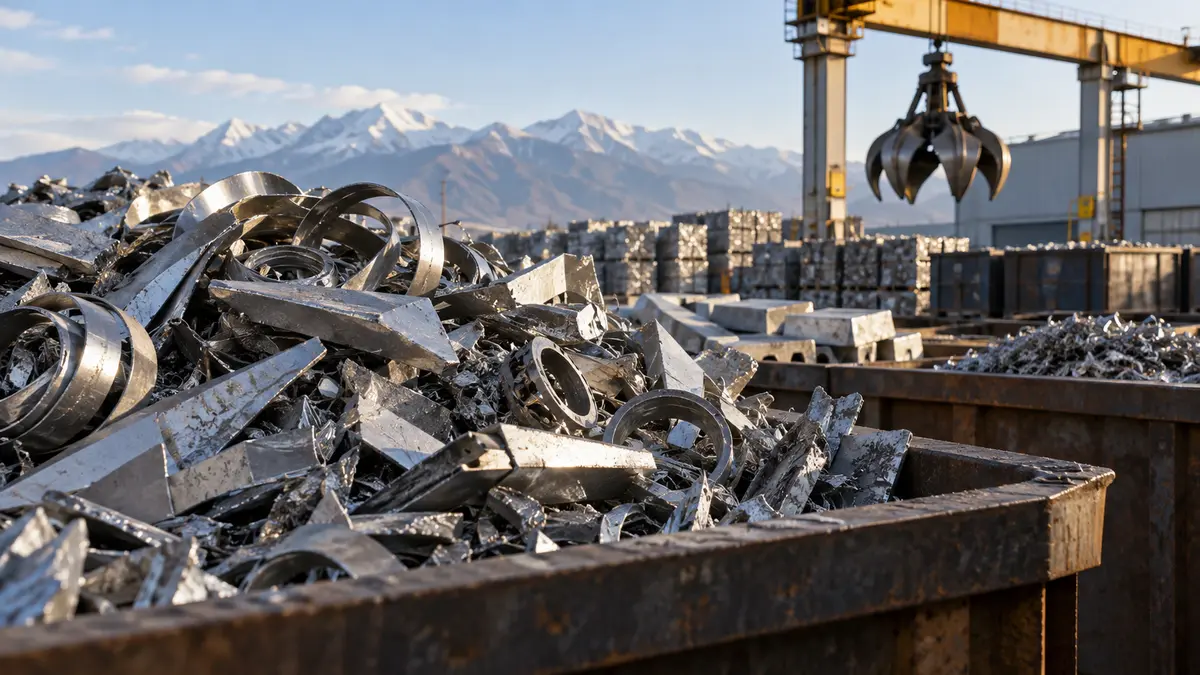
The board of the Eurasian Economic Commission has set a zero rate of import customs duty on titanium waste and scrap until the end of August 2028, restoring a measure that lapsed in February 2026 and reopening a cheap secondary raw material channel for the metallurgy of the Russia-led Eurasian Economic Union.
A duty that disappeared and came back
On 11 August 2026 the board of the Eurasian Economic Commission (EEC) set a zero rate of import customs duty on titanium waste and scrap, classified under EAEU commodity code 8108 30 000 0, until 31 August 2028 inclusive. The decision enters into force after 10 calendar days have elapsed from the date of its official publication. Without the zeroing, the rate of import customs duty on these goods in the EAEU is 5 percent of the customs value.
The measure is a renewal rather than an innovation: the EEC introduced a zero rate on imports of titanium scrap and waste in 2024, and that measure ceased to be in effect in February 2026, leaving importers facing the full 5 percent duty for several months before the board acted again.
Why secondary titanium matters to EAEU metallurgy
Titanium scrap is not a residual stream but a production input. Vahagn Ghazaryan (Vahagn Ghazaryan), director of the EEC's Department of Customs Tariff and Non-Tariff Regulation, explained the logic: titanium scrap is used in the production of titanium ingots and slabs as secondary raw material, and its use significantly reduces the cost and accelerates the production process of titanium semi-finished products, while also making it possible to increase the output of finished products.
The commission expects the zeroing of the import duty to increase the competitiveness of metallurgical enterprises of the Eurasian Economic Union, a customs bloc in which Russia holds the dominant share of titanium melting and semi-finished production capacity. For remelt shops, the decision converts a several-month tariff overhang into a fixed horizon that runs to the end of summer 2028.
What the zero duty changes for buyers
- Imported titanium waste and scrap become cheaper by up to the former 5 percent duty, lowering the cost base of ingot and slab production.
- Remelt campaigns gain a predictable horizon: the rate is fixed until 31 August 2028 rather than reviewed year by year.
- Secondary raw material competes more effectively with primary titanium sponge in semi-finished product routes.
- EAEU processors can plan scrap-based output without pricing in the duty that applied between February and August 2026.
A recycling signal inside a tariff instrument

Formally the decision is a customs tariff act, but its substance is a recycling policy: it prices secondary titanium as a resource rather than as waste. For the EAEU, where titanium sponge and ingot production is concentrated in a handful of large plants, the availability of affordable imported scrap determines how much of the metal loop closes inside the bloc instead of leaving it as unprocessed waste.
The 2024 precedent also shows the limits of such measures. A zero rate introduced for a fixed period simply expires, and the February 2026 lapse demonstrated how quickly the economics of scrap-based routes deteriorate when the duty returns: the same tonnes of scrap that were competitive at a zero rate carried a 5 percent surcharge for half a year. The new decision pushes that cliff edge out by two more years, but it does not remove it.
Signals to watch
- Import volumes of titanium waste and scrap into the EAEU once the decision enters into force.
- Whether the zero rate is extended beyond August 2028 or converted into a permanent schedule.
- Price spreads between imported scrap and primary titanium sponge in EAEU contracts.
- The share of secondary raw material in ingot and slab output reported by EAEU metallurgical plants.
Until then the message to the bloc's metallurgy is simple: secondary titanium is back on the tariff-preferred list, and the window to build scrap-based capacity runs to the end of summer 2028.
Just Published

European housing prices and rents
Schneider–PTC: the industrial data integration test behind the deal

Avio USA starts work on its Virginia manufacturing site

One equity market, two currency measures

Russia’s draft budget raises spending and borrowing plans

Russia Sets the 2027 Minimum Wage at 28,935 Rubles, Up 6.8%, on the Way to 35,000 by 2030
Partner news digest
 Qatar LNG expansion: readiness, financing and the production test
 Pennon’s capital plan: turning finance into better water outcomes
 Italy’s diesel relief gap: taxes, price ceilings and implementation
 EU–China hybrid trade: from understanding to measurable implementation
 Schneider–PTC: the industrial data integration test behind the deal
 IKEA’s hybrid resale model: buyback, marketplace liquidity and furniture logistics
 Banking AI beyond the ranking: capability, execution and evidence of value
 Fishing labour beyond the product label: practical protection
 Rhenus and the Middle Corridor: terminals need coordinated connections
 Royal Mail restructuring: the test is reliable delivery
 Fuel Finder on Google Maps: when price transparency becomes useful competition
 Samsung’s memory profit surge: what the preliminary record explains
Leave a comment