
Bosch Braces for Another Tough Year and Pushes Its 7% Margin Target to 2027
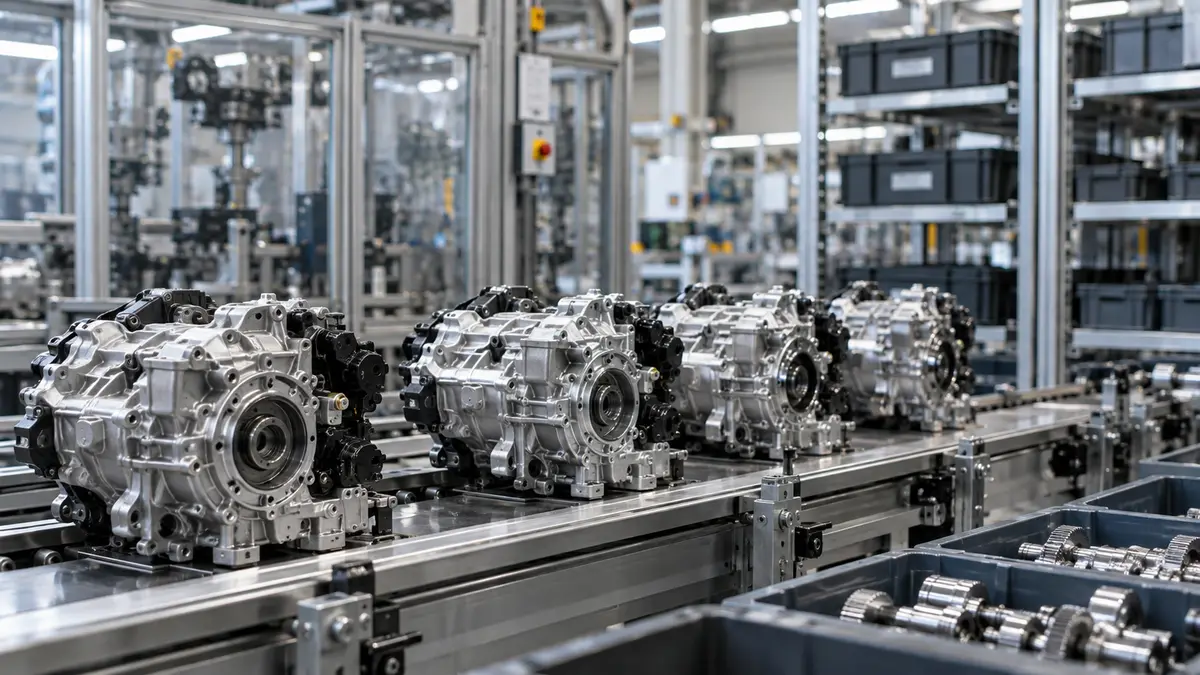
Bosch, the world's largest car parts supplier, warned on January 30, 2026 of another tough year ahead and postponed its 7% margin target, saying it expects no let-up in cost and competitive pressure in a sector hit by tariffs worldwide. The warning, released with preliminary 2025 results, puts a date on the supplier crisis that has been building across the auto industry: the adjustment is not a one-year event but a multi-year programme.
The warning and the delayed target
The company said it now expected to begin achieving its 7% profit margin in 2027 at the earliest, having previously forecast to hit it this year. A margin target moving by a full year is a strong signal: it means management no longer believes the cost and price pressure easing within the current planning horizon. For a supplier whose customers negotiate annually and globally, the delay also resets the internal benchmark against which every plant and product line is measured.
The language of the statement is deliberately unsoftened. There are many indications of a slight slowdown in global economic growth, Bosch finance chief Markus Forschner said, adding that competitive and price pressure are likely to increase further and that the increased tariffs will have their full impact for the first time in 2026. Tariffs that were announced or phased in during 2025 become a full-year cost line in 2026, which is why the coming year carries the complete impact even if no new duty is added.
The 2025 numbers behind the caution
The preliminary results explain the mood. In 2025, sales rose 0.8% to 91 billion euros, while the operating margin fell to 1.9% from 3.5%. Growth that barely keeps pace with inflation combined with a margin that nearly halved describes a company selling roughly the same business for materially less profit — the classic signature of price pressure passed down the supply chain by carmakers fighting their own price war.
The margin gap also quantifies the distance to the target: from 1.9% to 7% is not an efficiency programme but a restructuring of the portfolio, and the company's own actions over the past year show it treating it as such.
Jobs, tariffs and the fight over every cent

Bosch last year announced a further 13,000 job cuts, or around 3% of its total workforce, to protect margins and ensure it remains competitive in light of import tariffs and price declines that have hurt its business. The cuts sit on top of earlier restructuring rounds and concentrate in the automotive business, the division that defines the group.
CEO Stefan Hartung told Reuters last year that 2026 would be tough, warning that the automotive industry would remain a highly competitive sector where there will be a fight over every cent. That phrase captures the supplier's position precisely: when carmakers compete on price in electric vehicles, the cents they fight over are extracted from component quotes, and the largest supplier in the world is the largest single target for that extraction.
What the 2026 warning changes
- The 7% margin goal moves from 2026 to 2027 at the earliest, resetting internal and external benchmarks.
- Tariffs shift from a partial-year to a full-year cost impact in 2026.
- The 13,000 announced cuts frame 2026 as an execution year for restructuring rather than a recovery year.
- Preliminary 2025 figures (91 billion euros of sales, 1.9% operating margin) become the base from which any improvement is measured.
What to watch next
- Whether 2026 tariffs land at the level management assumed when it moved the margin target.
- The pace of the 13,000-job reduction and any additional rounds at locations in Germany.
- First-half 2026 figures, which will show whether the 1.9% margin has bottomed.
- Customer pricing rounds: supplier margins recover only when carmakers stop passing their price war downstream.
The strategic reading of Bosch's January warning is that the auto-supplier cycle has decoupled from the car-sales cycle. Even if vehicle volumes stabilise in 2026, the component industry enters the year carrying tariff costs, restructuring provisions and a price pressure that its customers have contractually pushed down. For the world's largest supplier, surviving 2026 is not about selling more; it is about losing fewer cents per unit than the fight demands.
Just Published

European housing prices and rents
Schneider–PTC: the industrial data integration test behind the deal

Avio USA starts work on its Virginia manufacturing site

One equity market, two currency measures

Russia’s draft budget raises spending and borrowing plans

Russia Sets the 2027 Minimum Wage at 28,935 Rubles, Up 6.8%, on the Way to 35,000 by 2030
Partner news digest
 Qatar LNG expansion: readiness, financing and the production test
 Pennon’s capital plan: turning finance into better water outcomes
 Italy’s diesel relief gap: taxes, price ceilings and implementation
 EU–China hybrid trade: from understanding to measurable implementation
 Schneider–PTC: the industrial data integration test behind the deal
 IKEA’s hybrid resale model: buyback, marketplace liquidity and furniture logistics
 Banking AI beyond the ranking: capability, execution and evidence of value
 Fishing labour beyond the product label: practical protection
 Rhenus and the Middle Corridor: terminals need coordinated connections
 Royal Mail restructuring: the test is reliable delivery
 Fuel Finder on Google Maps: when price transparency becomes useful competition
 Samsung’s memory profit surge: what the preliminary record explains
Leave a comment