
Samsung Biologics Posts a Record 2025 as CDMO Orders Top 6 Trillion Won
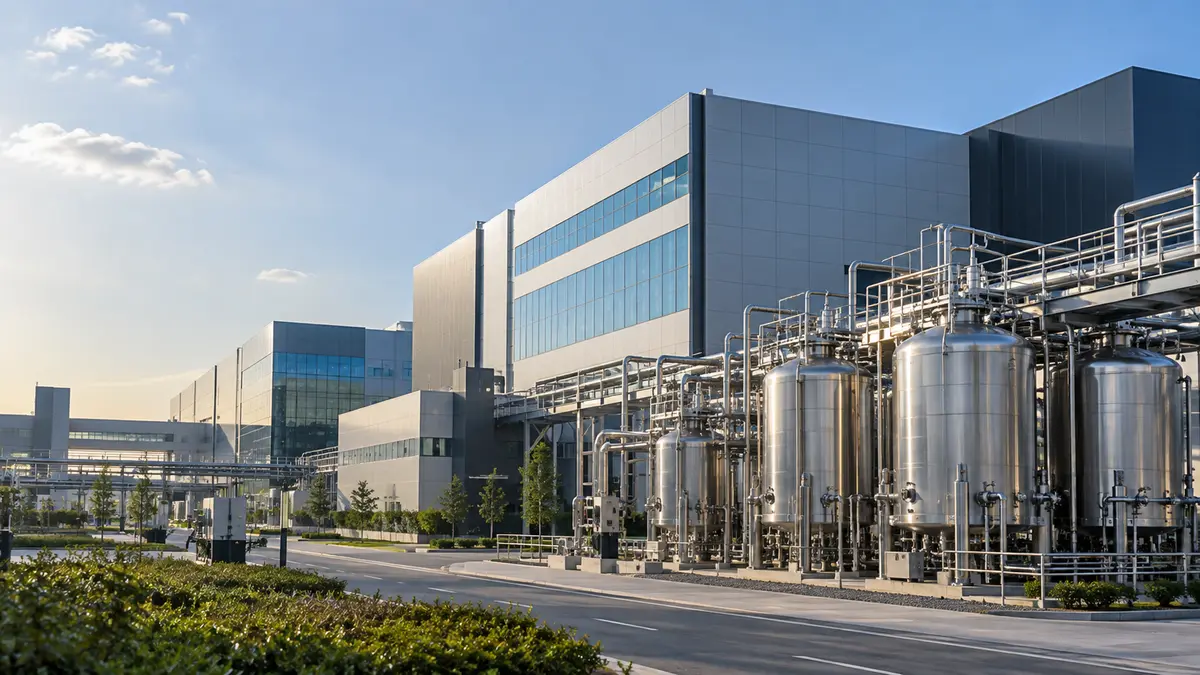
Samsung Biologics, the biotech arm of Samsung Group, reported fourth-quarter net profit of 453.1 billion won (US$308.2 million), up 74.1% year on year, on the ramp-up of its fourth plant and full-scale operation of plants one through three, Yonhap News Agency reported from Seoul. The quarter closed a record 2025 and set up a 5.32 trillion won sales target for 2026.
The fourth-quarter numbers
In the three months ended December, net profit rose to 453.1 billion won from 260.3 billion won a year earlier, the company said in a press release. Operating income jumped 67.8% to 528.3 billion won from 314.8 billion won, while sales rose 35.3% to 1.28 trillion won from 950.4 billion won. A company spokesperson attributed the quarterly bottom line to the ramp-up of plant No. 4, full-scale operations at plants Nos. 1 through 3 and improved operating efficiency — a combination that turns added capacity into margin rather than into idle depreciation.
A record full year
For all of 2025, net income surged 55.2% to 1.61 trillion won from 1.04 trillion won a year earlier. Operating profit climbed 56.6% to 2.07 trillion won from 1.32 trillion won, and sales increased 30.3% to 4.56 trillion won from 3.49 trillion won. The symmetry of the three growth rates — sales, operating profit and net income all rising by a third to a half — describes a contract manufacturer running existing assets harder rather than buying growth through one-off items.
The order book behind the 2026 target

The forward story sits in contracts. Samsung Biologics said it signed CDMO contracts with global pharmaceutical companies worth more than 6 trillion won in 2025, exceeding the previous year's order total of 5.4 trillion won. For 2026 the company aims to achieve 5.32 trillion won in sales, supported by large-scale contract development and manufacturing organisation deals — a target that converts last year's order intake into this year's recognised revenue.
What to watch next
- Utilisation of plant No. 4 after the ramp-up: the quarter's margin gain depends on keeping new capacity loaded.
- The pace of new CDMO signings against the 6 trillion won run-rate set in 2025.
- Conversion of the 5.32 trillion won 2026 sales target into quarterly milestones.
- Capacity additions beyond the Songdo campus and their financing structure.
- The won-dollar rate, which moves the reported dollar value of won-denominated contracts.
For South Korea the result is a reminder of where biopharma value is being created: not only in new molecules but in the manufacturing slots that global drugmakers compete to reserve. A 74% quarterly profit jump on existing plants is the clearest possible signal that those slots are scarce.
Just Published
European housing prices and rents
Schneider–PTC: the industrial data integration test behind the deal
Avio USA starts work on its Virginia manufacturing site

One equity market, two currency measures

Russia’s draft budget raises spending and borrowing plans

Russia Sets the 2027 Minimum Wage at 28,935 Rubles, Up 6.8%, on the Way to 35,000 by 2030
Partner news digest
 Qatar LNG expansion: readiness, financing and the production test
 Pennon’s capital plan: turning finance into better water outcomes
 Italy’s diesel relief gap: taxes, price ceilings and implementation
 EU–China hybrid trade: from understanding to measurable implementation
 Schneider–PTC: the industrial data integration test behind the deal
 IKEA’s hybrid resale model: buyback, marketplace liquidity and furniture logistics
 Banking AI beyond the ranking: capability, execution and evidence of value
 Fishing labour beyond the product label: practical protection
 Rhenus and the Middle Corridor: terminals need coordinated connections
 Royal Mail restructuring: the test is reliable delivery
 Fuel Finder on Google Maps: when price transparency becomes useful competition
 Samsung’s memory profit surge: what the preliminary record explains
Leave a comment