
UPM to Shut Its Ettringen Paper Mill as Europe's Graphic Paper Market Shrinks Again
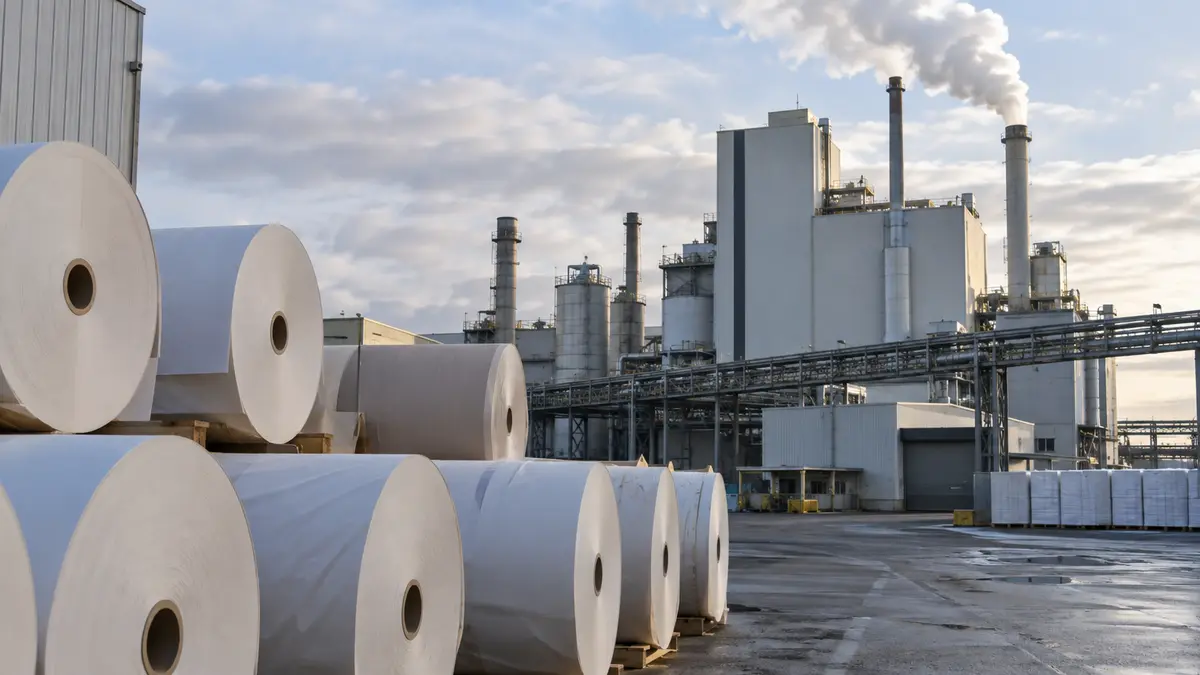
Finland's UPM said on Tuesday, March 11, 2025, that it plans to permanently close its paper mill in Ettringen, Germany, and implement cost-cutting measures affecting a total of 462 jobs, citing a dynamically changing market and overcapacity, Reuters reported. The decision is the latest step in a sector-wide retreat from printing and writing paper towards packaging grades.
The announcement
The Finnish forestry group framed the closure as part of a broader efficiency programme. Alongside the permanent shutdown of the Ettringen mill, UPM plans cost cuts in Germany, the United States, Finland and the United Kingdom, with the planned measures estimated to save 39 million euros (42.56 million dollars) annually. The company said it will book restructuring charges of 74 million euros in its first-quarter result. "With the planned measures we improve cost efficiency and competitiveness, while ensuring a reliable supply from our production locations in Finland, Germany, the UK and the USA," UPM said in a statement. The 462 affected positions are spread across the group's mill organisations and functions in four countries rather than concentrated at the German site alone.
A sector in structural retreat
The closure sits inside a pattern rather than an isolated event. Forestry companies across Europe and North America have been adjusting production and shifting focus to making cardboard, packaging materials, labels and tissue paper in response to shrinking demand for printing and writing paper. Graphic paper - the family that includes magazine, office and other printing and writing grades - has lost volume year after year as advertising, publishing and office paper use migrate to digital channels, leaving European capacity structurally too large for the remaining market. Each closure announcement therefore does two jobs at once: it removes tonnes from an oversupplied market and concentrates the surviving volume on the most competitive machines.
What the closure changes

For UPM, the Ettringen decision converts a recurring overcapacity problem into a one-off charge: 74 million euros of restructuring costs in the first quarter against 39 million euros of annual fixed-cost savings thereafter. For the German paper industry, it removes another domestic producer of uncoated mechanical grades at a time when several European peers have taken comparable steps on their own graphic paper assets. For customers, the company's promise of "reliable supply" from the remaining locations in Finland, Germany, the UK and the USA is the operative commitment: the question is not whether graphic paper will still be made in Europe, but from how few sites, and at what delivery distance.
What the market watches next
- Whether the 39 million euros of annual savings materialise on the schedule UPM implies, and whether further restructuring charges follow in later quarters.
- Whether other European graphic paper producers announce comparable capacity removals in 2025, extending the sector's retreat.
- How quickly the remaining UPM paper locations absorb volumes previously served from Ettringen, and whether customers face longer delivery chains.
- Whether the packaging, labels and tissue grades that forestry groups are pivoting towards hold their margins better than graphic paper has.
- Whether employee consultations at the affected sites in Germany, Finland, the UK and the USA soften the final headcount below the 462 positions announced.
The Ettringen closure is a small number in UPM's group accounts and a large one in the town around the mill. Between those two scales sits the whole logic of the European paper industry in 2025: demand that no longer returns, capacity that must leave, and a portfolio being rebuilt around the grades that still grow.
Just Published

European housing prices and rents

Schneider–PTC: the industrial data integration test behind the deal

Avio USA starts work on its Virginia manufacturing site

One equity market, two currency measures

Russia’s draft budget raises spending and borrowing plans

Russia Sets the 2027 Minimum Wage at 28,935 Rubles, Up 6.8%, on the Way to 35,000 by 2030
Partner news digest
 Qatar LNG expansion: readiness, financing and the production test
 Pennon’s capital plan: turning finance into better water outcomes
 Italy’s diesel relief gap: taxes, price ceilings and implementation
 EU–China hybrid trade: from understanding to measurable implementation
 Schneider–PTC: the industrial data integration test behind the deal
 IKEA’s hybrid resale model: buyback, marketplace liquidity and furniture logistics
 Banking AI beyond the ranking: capability, execution and evidence of value
 Fishing labour beyond the product label: practical protection
 Rhenus and the Middle Corridor: terminals need coordinated connections
 Royal Mail restructuring: the test is reliable delivery
 Fuel Finder on Google Maps: when price transparency becomes useful competition
 Samsung’s memory profit surge: what the preliminary record explains
Leave a comment