
Glamping Bookings in Russia Double Over Summer 2025 as Supply Spreads to New Regions
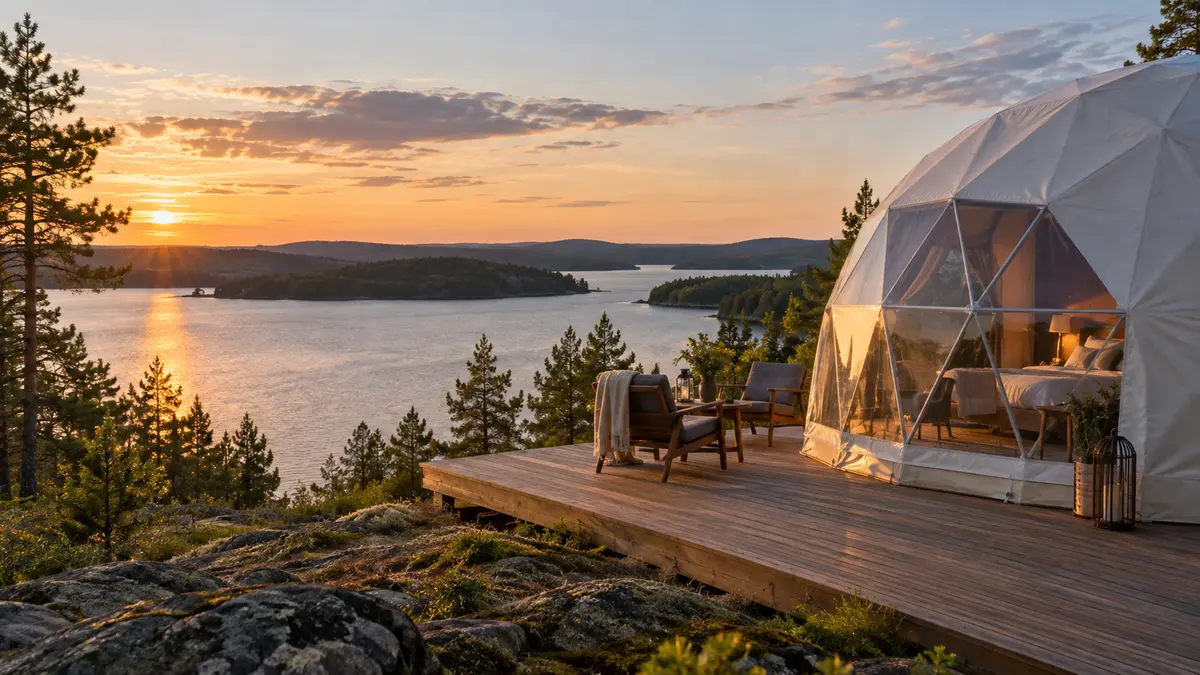
Glamping bookings in Russia doubled in the summer of 2025 compared with the same season a year earlier, analysts of Avito Travel (Авито Путешествия) said in a study; the Ministry of Economic Development considers the growth of supply of such sites one of the main reasons for the demand surge.
Demand doubled across the country
The most frequently rented glamping sites in the summer of 2025 were in the Moscow region (14% of all bookings), Tatarstan (10%), Karelia (6%), Krasnodar Krai (5%) and the Nizhny Novgorod region (4%). Countrywide, bookings grew 104% year on year, according to the study's regional table.
Where demand grew fastest
- Samara region: bookings up 6.4 times year on year.
- Voronezh region: up 3.6 times.
- Leningrad region: up 2.7 times.
- Tatarstan: up 2.6 times.
- Bashkortostan, Tyumen region and Nizhny Novgorod region: up 2.4 times each.
Growth was broad-based across the study's regional table: the Yaroslavl and Sverdlovsk regions each added about 80 percent, the Tyumen region 140 percent, Bashkortostan 141 percent and the Chelyabinsk region 133 percent, while the slowest among the listed regions — the Kaluga region at plus 16 percent and the Tver region at plus 30 percent — still stayed positive.
Supply: 800 projects and 13,000 rooms in three years
The Ministry of Economic Development links the demand jump primarily to the expansion of supply in popular tourist locations. "Over the past three years, about 60 regions reported the implementation of more than 800 projects, putting more than 13,000 rooms into operation," said Alimbek Khidzev (Алимбек Хидзев), director of the ministry's tourism development department.
A glamping is a comfortable and expensive variety of camping: instead of tents, holidaymakers stay in large convenient marquees or quickly erected original structures, with a bathroom provided as standard and often an almost full hotel service.
Beyond glampings: cottages also in demand

The study notes a wider shift toward non-hotel formats: this summer, demand for short-term cottage rentals grew 2.5 times year on year, with Dagestan and Karelia the most popular destinations among tourists.
The doubling of glamping bookings against a 13,000-room supply base suggests the format has moved from a niche curiosity to a mass summer product; the regional spread of growth — from the Samara and Voronezh regions to Bashkortostan and Tyumen — shows demand following the new supply into regions that previously had almost no organised outdoor accommodation.
Just Published
European housing prices and rents

Schneider–PTC: the industrial data integration test behind the deal

Avio USA starts work on its Virginia manufacturing site

One equity market, two currency measures

Russia’s draft budget raises spending and borrowing plans

Russia Sets the 2027 Minimum Wage at 28,935 Rubles, Up 6.8%, on the Way to 35,000 by 2030
Partner news digest
 Qatar LNG expansion: readiness, financing and the production test
 Pennon’s capital plan: turning finance into better water outcomes
 Italy’s diesel relief gap: taxes, price ceilings and implementation
 EU–China hybrid trade: from understanding to measurable implementation
 Schneider–PTC: the industrial data integration test behind the deal
 IKEA’s hybrid resale model: buyback, marketplace liquidity and furniture logistics
 Banking AI beyond the ranking: capability, execution and evidence of value
 Fishing labour beyond the product label: practical protection
 Rhenus and the Middle Corridor: terminals need coordinated connections
 Royal Mail restructuring: the test is reliable delivery
 Fuel Finder on Google Maps: when price transparency becomes useful competition
 Samsung’s memory profit surge: what the preliminary record explains
Leave a comment