
KuibyshevAzot Drops Its Kursk Fertilizer Plant Site, Keeps the Project Vehicle Alive
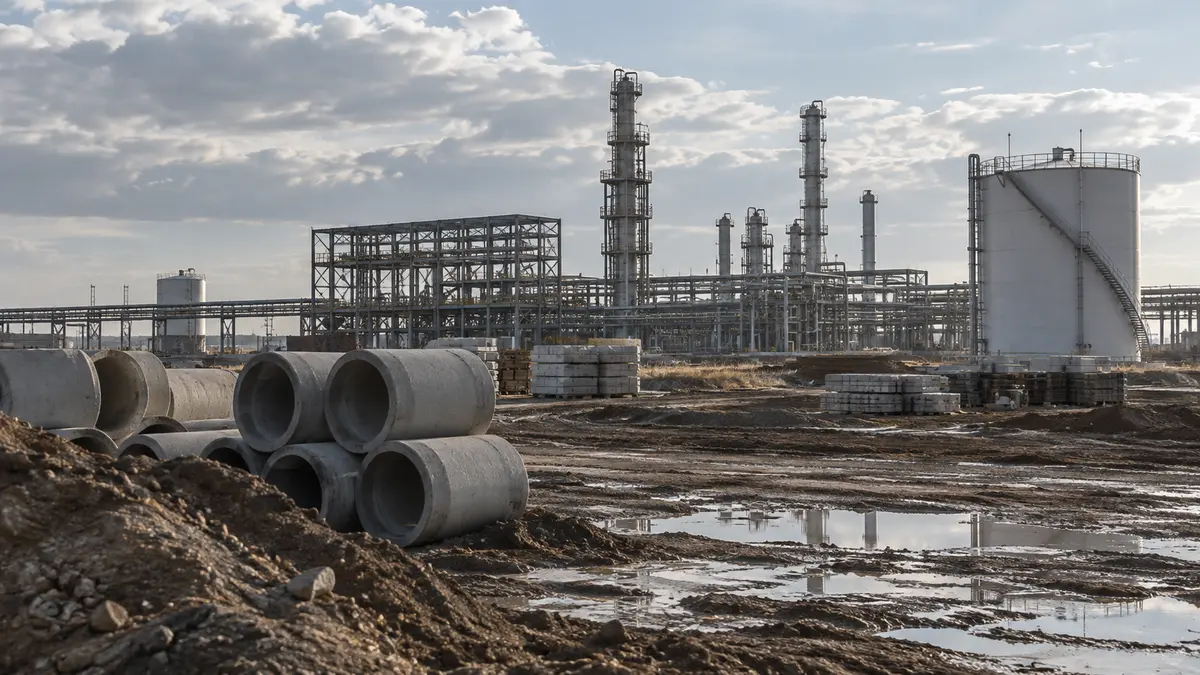
KuibyshevAzot has abandoned the construction of a mineral fertilizer plant at its Kursk site. The company will continue examining other possible locations for the complex both within Kursk Oblast and in neighbouring oblasts of the Central Federal District, leaving alive a project that regional authorities first announced six years ago.
What the cancelled project was
Kursk Oblast authorities announced the chemical plant project of KuibyshevAzot back in 2019. According to data current as of February 2023, the plan concerned a complex for producing mineral fertilizers from natural gas. Its capacity could have reached 200,000 tonnes of ammonia, 800,000 tonnes of urea and 365,000 tonnes of urea-ammonium mixture a year. The investment was estimated at 75 billion rubles, and the project was expected to create around 200 jobs.
In August 2022, the holding registered a special-purpose company for the project in Kursk — KurskAzot LLC. According to Rusprofile data, the parent company is the sole owner of the entity. The withdrawal from the specific site therefore does not mean the death of the vehicle: on the contrary, in late October 2025 the beneficiary increased the company's charter capital from 3.2 billion to 4 billion rubles — even though for the previous three years the company had operated with zero revenue and losses.
Protest and the regional chemical backdrop
Residents of Kursk came out against the construction of the chemical plant, a conflict that regional business coverage tracked in detail. The decision to drop the Kursk site came against a broader shift in the region's chemical footprint: in mid-October 2025, Kurskkhimvolokno announced a logistics centre project in Kursk worth 1.1 billion rubles, to be implemented in stages through 2028 — first two warehouses of 2,500 square metres each, then a terminal for transloading 40-foot containers, and finally a class A warehouse complex covering 10 hectares.
What the numbers describe

- 200,000 tonnes of ammonia, 800,000 tonnes of urea and 365,000 tonnes of urea-ammonium mixture per year — the design capacity of the cancelled site.
- 75 billion rubles — the estimated investment in the complex.
- Around 200 jobs — the expected employment effect.
- 4 billion rubles — the enlarged charter capital of the project company KurskAzot, raised in late October 2025 after three years of zero revenue.
- 2019 — the year Kursk Oblast authorities first announced the project.
What to watch next
The key indicator is the fate of KurskAzot itself. A project vehicle whose capital is being enlarged while its host site is being abandoned points to relocation rather than cancellation: the company has said it will keep working through options in Russia's Kursk Oblast and the surrounding Central Federal District. The 75-billion-ruble price tag, the gas-to-fertilizer configuration and the protest record all travel with the project to whatever locality comes next — and the same economics that made Kursk attractive will now be tested against a second region's infrastructure, gas logistics and social consent.
Just Published
European housing prices and rents
Schneider–PTC: the industrial data integration test behind the deal
Avio USA starts work on its Virginia manufacturing site

One equity market, two currency measures

Russia’s draft budget raises spending and borrowing plans

Russia Sets the 2027 Minimum Wage at 28,935 Rubles, Up 6.8%, on the Way to 35,000 by 2030
Partner news digest
 Qatar LNG expansion: readiness, financing and the production test
 Pennon’s capital plan: turning finance into better water outcomes
 Italy’s diesel relief gap: taxes, price ceilings and implementation
 EU–China hybrid trade: from understanding to measurable implementation
 Schneider–PTC: the industrial data integration test behind the deal
 IKEA’s hybrid resale model: buyback, marketplace liquidity and furniture logistics
 Banking AI beyond the ranking: capability, execution and evidence of value
 Fishing labour beyond the product label: practical protection
 Rhenus and the Middle Corridor: terminals need coordinated connections
 Royal Mail restructuring: the test is reliable delivery
 Fuel Finder on Google Maps: when price transparency becomes useful competition
 Samsung’s memory profit surge: what the preliminary record explains
Leave a comment