
One Trillion Kilowatt-Hours in a Month: China's July Power Use Sets a Global First
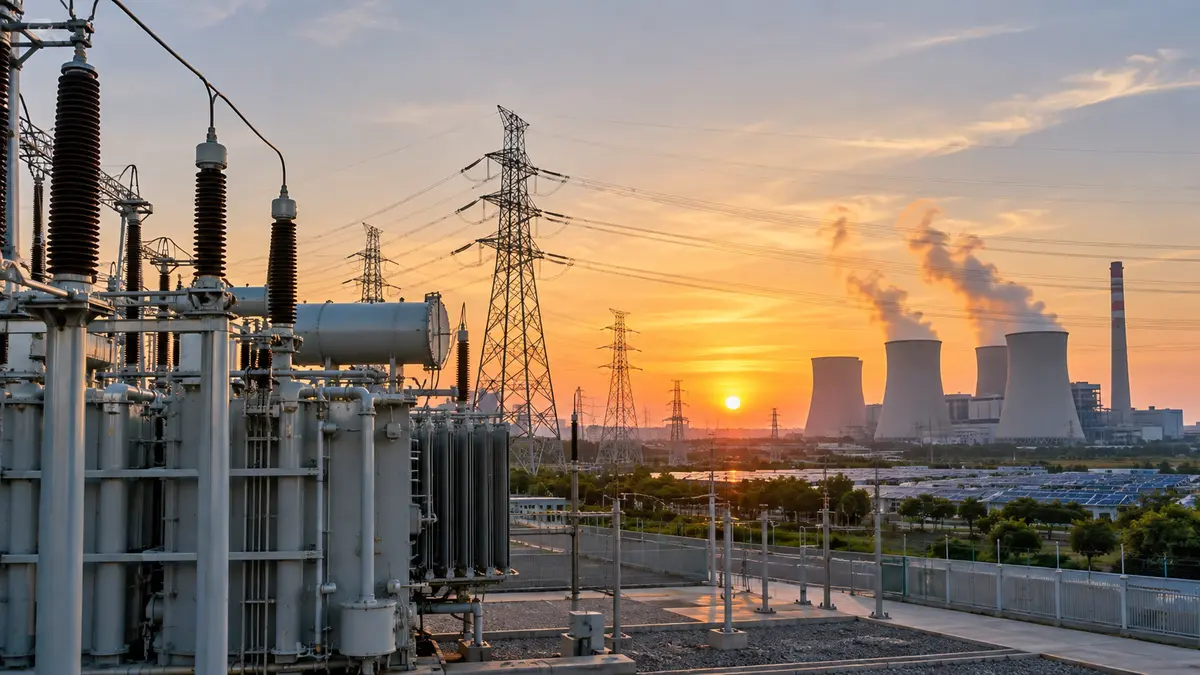
China's electricity consumption surpassed the 1-trillion-kilowatt-hour mark in a single month for the first time in July 2025, reaching 1.02 trillion kWh, up 8.6% year on year, the National Energy Administration said. Heat waves and steady industrial activity pushed the world's largest power system into territory no country has occupied before.
A trillion kilowatt-hours in thirty-one days
Power use hit 1.02 trillion kilowatt-hours in July, representing an 8.6% increase from the same period last year, driven by a combination of multiple rounds of heat waves and steady industrial activity, according to the National Energy Administration (NEA). The threshold is symbolic as much as physical: a monthly national consumption above one trillion kWh means the system served, in one month, more electricity than many large economies generate in a year.
The growth rate is the second signal. An 8.6% year-on-year jump in a system of this size implies an absolute increment comparable to the entire annual consumption of a mid-sized industrial country, added inside twelve months. The NEA attributes it to two forces acting together: repeated heat waves, which load the grid with cooling demand, and industrial activity that kept its own pace through the summer.
Where the increment came from
The sectoral breakdown shows a demand surge that is broader than air conditioning. In July, power consumed by the primary and secondary industries rose 20.2% and 4.7% year on year to 17 billion and 593.6 billion kilowatt-hours respectively, and power consumed by the tertiary sector increased 10.7% to 208.1 billion kilowatt-hours. The electricity consumption of the country's residents also saw strong growth, with total residential use reaching 203.9 billion kilowatt-hours, a year-on-year increase of 18%, as prolonged high temperatures and humidity kept cooling devices running.
The 20.2% jump in primary-industry consumption is the outlier of the table and points to agricultural and extraction loads reacting to the same weather: irrigation, drainage and pumping all scale with heat. The residential 18% is the household face of the heat wave; the tertiary sector's 10.7% captures commerce, services and the digital load that follows population activity into the cooled indoors.
The seven-month balance

From January to July, China's total power use climbed 4.5% year on year to over 5.86 trillion kilowatt-hours. The contrast between the 4.5% seven-month pace and the 8.6% July jump measures how much of the year's growth arrived with the summer: the first half of 2025 had grown 3.7% year on year to about 4.84 trillion kWh, with Guangdong, the manufacturing powerhouse of more than 127 million people, alone using 433.3 billion kWh, nearly one-tenth of the national total. July therefore did not continue the trend; it broke away from it.
Renewables as the supply-side answer
The supply side moved in step. Renewable energy accounted for 91.5% of China's total newly installed power capacity in the first half of 2025, with 268 million kilowatts of new renewable capacity added in January-June, nearly doubling year on year, the NEA reported. By the end of June, cumulative renewable capacity reached 2.16 billion kilowatts, up 30.6% from a year earlier and representing 59.2% of total installed capacity. Renewable generation expanded 15.6% year on year to 1.8 trillion kWh in the first half, or 39.7% of total electricity output, exceeding the combined power consumption of the services sector and residential use, NEA official Pan Huimin told a press conference.
The pairing of the two datasets is the structural story of 2025: a demand curve that adds a mid-sized country's consumption every year is being met by a supply curve whose growth is almost entirely renewable. Whether the renewable share can cover the summer cooling peak, rather than the annual average, is the question the July trillion tests.
What to watch
- Whether August repeats the trillion-kilowatt-hour month, extending the summer plateau.
- The residential share of the increment as heat waves become the dominant seasonal driver.
- The pace of renewable additions against the 268 million kW half-year run rate.
- Guangdong's roughly one-tenth national share as a proxy for manufacturing-side demand.
By the end of June the country had also installed 16.1 million electric vehicle charging facilities nationwide, with more than 97% of counties equipped, a reminder that the next layer of demand, transport electrification, is already wired into the same grid that absorbed the July trillion. China's power system enters the second half of 2025 as the global reference case for how fast a national grid can grow without losing its balance.
Just Published

European housing prices and rents

Schneider–PTC: the industrial data integration test behind the deal

Avio USA starts work on its Virginia manufacturing site

One equity market, two currency measures

Russia’s draft budget raises spending and borrowing plans

Russia Sets the 2027 Minimum Wage at 28,935 Rubles, Up 6.8%, on the Way to 35,000 by 2030
Partner news digest
 Qatar LNG expansion: readiness, financing and the production test
 Pennon’s capital plan: turning finance into better water outcomes
 Italy’s diesel relief gap: taxes, price ceilings and implementation
 EU–China hybrid trade: from understanding to measurable implementation
 Schneider–PTC: the industrial data integration test behind the deal
 IKEA’s hybrid resale model: buyback, marketplace liquidity and furniture logistics
 Banking AI beyond the ranking: capability, execution and evidence of value
 Fishing labour beyond the product label: practical protection
 Rhenus and the Middle Corridor: terminals need coordinated connections
 Royal Mail restructuring: the test is reliable delivery
 Fuel Finder on Google Maps: when price transparency becomes useful competition
 Samsung’s memory profit surge: what the preliminary record explains
Leave a comment