
Argentina's $7 Billion Grain Tax Experiment Lasted Two Days
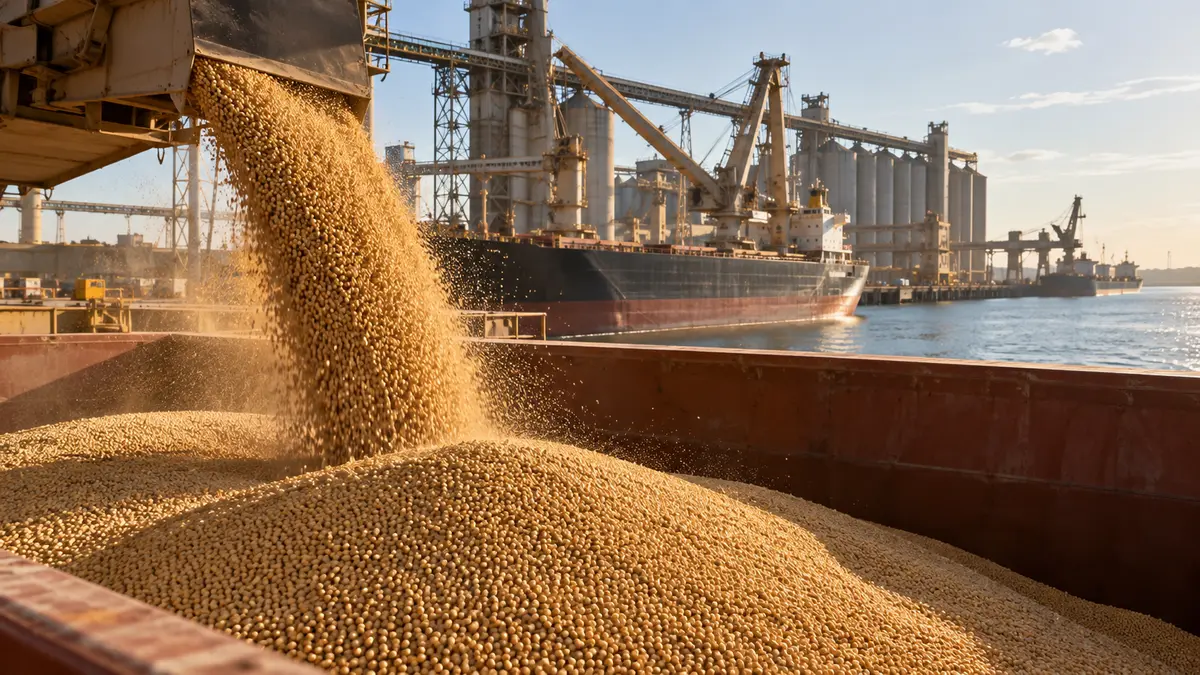
Argentina reimplemented export taxes on grains and their by-products on September 25, 2025, after a suspension that lasted two days: declared exports hit the decree's $7 billion cap almost immediately, closing one of the shortest and most consequential tax experiments in the history of the grain trade.
A two-day tax holiday
On Monday, September 22, the government issued a decree suspending export taxes on soy, corn, wheat and their by-products, including biodiesel, aiming to accelerate sales abroad and secure much-needed dollars to stabilize the flagging peso currency. The suspension was set to last through the end of October, or until declared exports reached $7 billion. Exports reached the sales limit after two days, and Argentina's ARCA fiscal agency said the taxes were reimplemented.
The design explains the speed. Argentina, one of the world's top grains suppliers, relies on the agricultural sector to generate foreign currency; a tax holiday on its main export complex is not a marginal incentive but a firehose. Sellers who had been withholding grain against a 2025 tax schedule registered exports the moment the rate went to zero, and the cap — conceived as a two-month ceiling — functioned as a 48-hour valve.
One part of the package survived the flip: a tax suspension on beef and poultry products, also launched earlier that week, will continue through the end of October without a sales cap, presidential spokesman Manuel Adorni said.
China moves first
The market response was immediate and geographically pointed. Chinese buyers booked at least 10 cargoes of Argentine soybeans after Buenos Aires scrapped grain export taxes, three traders said on September 23, dealing another setback to U.S. farmers already shut out of their top market. The Panamax-sized shipments of 65,000 metric tons each were scheduled for November, quoted at a premium of $2.15-$2.30 per bushel to the Chicago Board of Trade November soybean contract; one trader said buyers had booked 15 cargoes.
The US squeeze
The deals landed inside an existing wound: China, the world's biggest buyer of soybeans, had yet to purchase any U.S. soybean cargoes from its autumn harvest, with unresolved trade talks freezing exports and rival South American suppliers led by Brazil stepping in. "Every time China turns to South America instead of the U.S., soybean farmers and our farm families here at home lose out," said Caleb Ragland, a Kentucky farmer and president of the American Soybean Association. After Argentina scrapped its export tax, Chicago soybean futures set a six-week low.
- Decree of September 22, 2025: export taxes suspended on soy, corn, wheat and by-products including biodiesel, plus a separate beef and poultry suspension.
- Cap: end of October or $7 billion of declared exports — reached in two days.
- Beef and poultry suspension: continued through end-October with no cap (spokesman Manuel Adorni).
- China: at least 10 Panamax cargoes of 65,000 t booked for November at $2.15-$2.30/bushel over CBOT November; one trader said 15.
- Context: China had earlier booked around 15% of November needs, all from South America; in previous years it would by then have bought 12-13 million tons from the United States for September-November shipment.
Why the flip matters beyond the two days

Two days were enough to reprice a quarter of cargo. Argentine exports had hit a six-year high in the 2024/25 season, and local processors were already feeling the pinch of raw-bean exports outrunning domestic crushing — a tension the tax holiday amplified for 48 hours. For buyers, the episode demonstrated that Argentine export policy can change the delivered cost of a cargo overnight; for sellers, that a withheld tonne has an option value the state can cash in whenever it needs dollars. The $7 billion cap, spent in two days, is the cleanest available measure of how much grain was waiting for exactly this signal.
Just Published

European housing prices and rents

Schneider–PTC: the industrial data integration test behind the deal
Avio USA starts work on its Virginia manufacturing site

One equity market, two currency measures

Russia’s draft budget raises spending and borrowing plans

Russia Sets the 2027 Minimum Wage at 28,935 Rubles, Up 6.8%, on the Way to 35,000 by 2030
Partner news digest
 Qatar LNG expansion: readiness, financing and the production test
 Pennon’s capital plan: turning finance into better water outcomes
 Italy’s diesel relief gap: taxes, price ceilings and implementation
 EU–China hybrid trade: from understanding to measurable implementation
 Schneider–PTC: the industrial data integration test behind the deal
 IKEA’s hybrid resale model: buyback, marketplace liquidity and furniture logistics
 Banking AI beyond the ranking: capability, execution and evidence of value
 Fishing labour beyond the product label: practical protection
 Rhenus and the Middle Corridor: terminals need coordinated connections
 Royal Mail restructuring: the test is reliable delivery
 Fuel Finder on Google Maps: when price transparency becomes useful competition
 Samsung’s memory profit surge: what the preliminary record explains
Leave a comment