
The Crown Changes Hands: BYD Overtakes Tesla as the World's Biggest Electric Car Seller
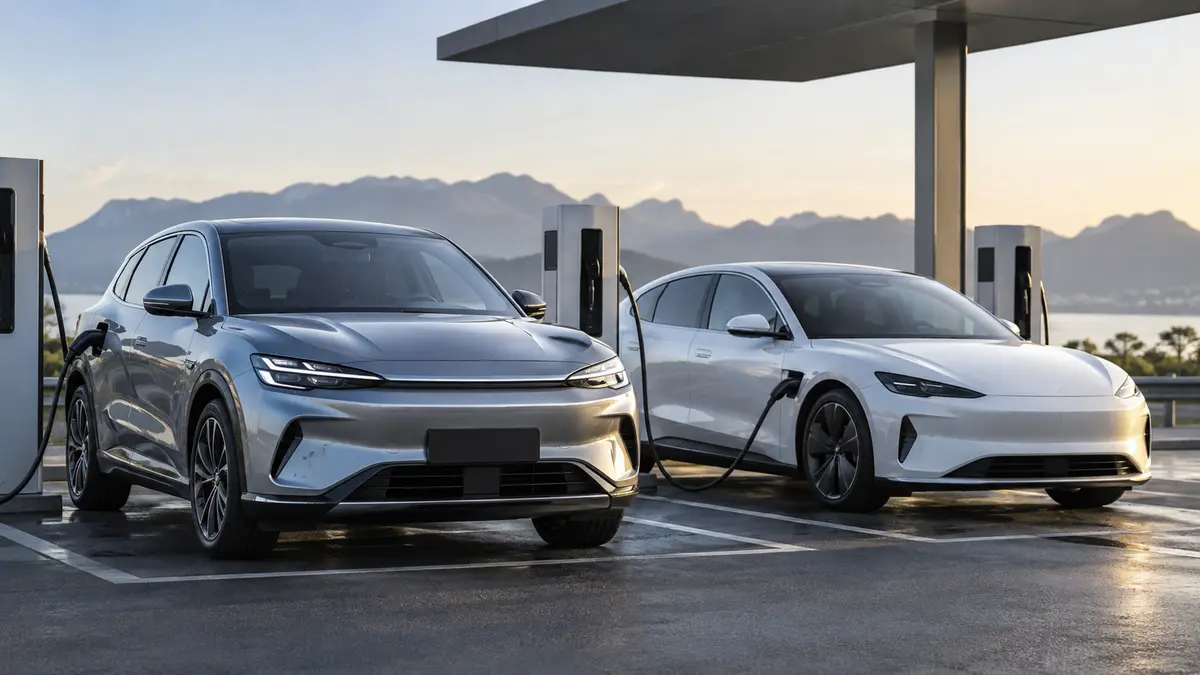
For most of the electric car era, one question organised the industry: when would anyone catch Tesla? In 2025 the question answered itself. BYD sold 2.26 million battery-electric cars over the year while Tesla delivered 1.63 million, and the annual crown of the world's largest electric carmaker passed to China for the first time. The switch is a symbolic moment in the rise of Chinese car companies, but the mechanics behind it are concrete: a demand shock in the American market, a brand problem in Europe, and a competitor that kept growing even while cutting prices.
The year the ranking flipped
The headline comparison is stark. BYD sold 2.26 million battery electric cars during 2025, easily outstripping the 1.63 million deliveries reported by Tesla for the same period. Tesla had overtaken the market's imagination long before it overtook the market's volumes, and for years the reverse order held: the American company set the pace for electric sales while Chinese manufacturers chased. The 2025 result inverts that hierarchy on the measure that matters most to factories — units sold over a full calendar year.
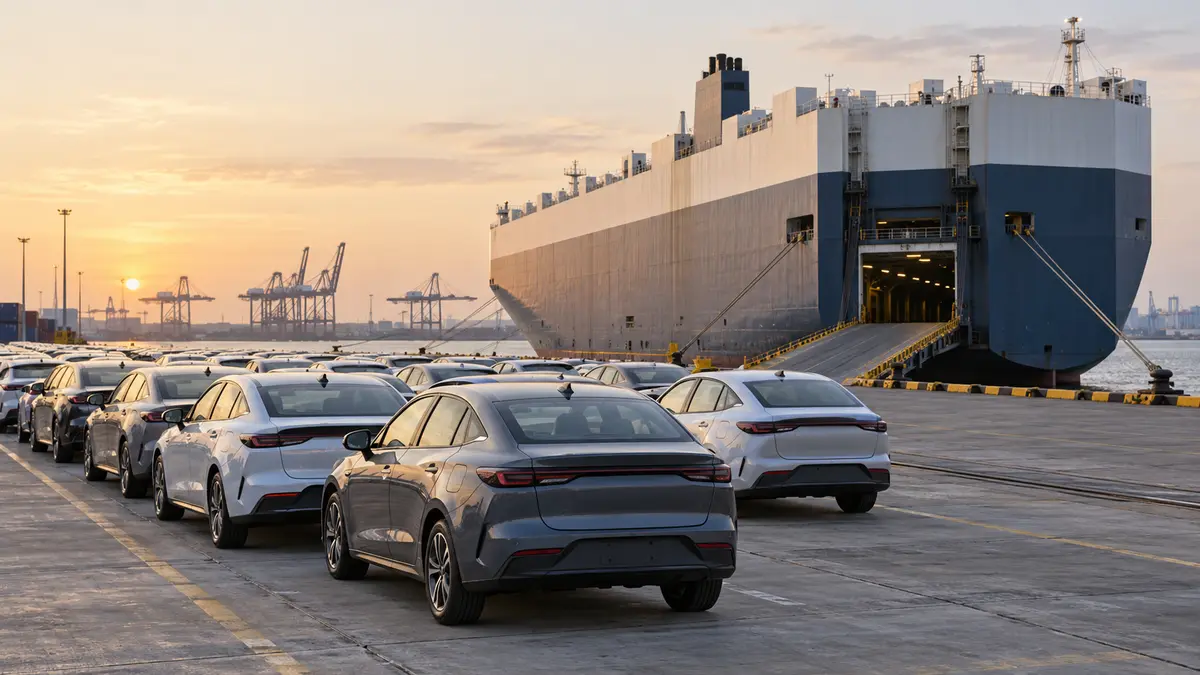
The Guardian frames the switch as a symbolic moment in the rise of China's car companies, which have used the transition to electric cars to try to dominate the global automotive industry. Chinese car exports have risen in recent years, led by BYD and rivals such as the state-owned SAIC and Chery, which runs the Omoda and Jaecoo brands. The crown, in other words, did not transfer between two isolated companies; it transferred between two industrial systems, one of which spent the year exporting at scale.
Tesla's numbers: a second consecutive decline
Tesla's own figures explain how the gap opened. Deliveries slumped to 418,200 in the final quarter of 2025, below the average forecasts of analysts, and sales for the full year were down 9% compared with 2024. An average compiled by Bloomberg had suggested Tesla would deliver 441,000 vehicles during the quarter. Notably, Tesla took the unusual step before the new year of publishing its own consensus estimate for the first time, apparently in an effort to guide investors that sales were expected to be lower — a company pre-announcing its own miss.
The 2025 decline was the second consecutive annual fall in Tesla's sales, following the first-ever annual drop recorded for 2024. Two declining years in a row transform a bad quarter into a trend, and a trend into a strategic question: is Tesla a car company in cyclical trouble, or a car company deliberately deprioritising car volumes? The market reaction was muted but negative — the share price was down 1% on the day of the report, although it was down 8% since Christmas Eve.
The policy shock in the United States
The largest single driver of Tesla's slump sits in Washington. Tesla's sales appear to have suffered in large part because of the withdrawal of electric vehicle subsidies by Donald Trump, and the US president also removed emissions regulations that had incentivised electric car production. Federal purchase incentives had been a structural support for American EV demand; their removal pulled the rug from under the marginal buyer exactly when Tesla's line-up needed one.
The political geometry of the shock is unusual. Trump's anti-EV policies came despite Elon Musk donating more money than anyone else to the victorious 2024 presidential election campaign and briefly running an effort to cut government costs. Musk at first seemed to win support for EVs from Trump — down to an awkward photoshoot in a Tesla in front of the White House — but the two fell out dramatically in the summer. The result is a policy environment in which the best-selling American electric carmaker lost its domestic subsidy floor while its chief executive was publicly feuding with the administration that removed it.
The brand backlash
Policy was not the only headwind. Tesla also faced a backlash from some consumers after Musk's embrace of far-right politics at the end of 2024. A car badge is a statement the buyer wears in public, and a portion of the addressable market decided the statement had changed. Where subsidy withdrawal hit the economics of the purchase, the backlash hit the identity of it, and the two effects compounded in the markets where Tesla's brand had been strongest among early adopters.
Europe is where that combination bites hardest, because European demand had also been supported by regulation that the American market no longer had and by a competitive field that keeps widening. The Guardian's account of the year describes electric carmakers forced to cut prices aggressively while governments around the world rolled back targets on the shift away from petrol — a demand environment in which a brand controversy costs volume that competitors immediately absorb.
A 1.4 trillion dollar paradox
And yet, even as sales fell for the second year, Tesla remains by far the world's most valuable carmaker, with shares valued at 1.4 trillion dollars — more than the next 30 carmakers combined. The paradox is the defining feature of the company's position in 2026: the volume crown and the valuation crown have separated. Investors appear to be betting that Musk will lead Tesla to be a leading force in robotics and artificial intelligence, not that it will win back the delivery leaderboard.
That bet reframes the 2025 result. If Tesla is priced as an AI and robotics company that also manufactures cars, then losing the EV sales crown is a competitive event in a legacy segment rather than a verdict on the enterprise. If, instead, the robotics and autonomy story fails to commercialise at scale, the same 1.4 trillion dollar valuation meets a car business with two consecutive years of declining volume — and the crown loss becomes the first chapter of a repricing.
Autonomy: Austin robotaxis versus God's Eye
Musk has consistently claimed that autonomous capabilities will set Tesla apart from rivals, and the company has started operating a limited robotaxi service in Austin, Texas. The claim, however, no longer stands alone. It will still face competition on that front: several Chinese carmakers and tech companies already have comparable technology, including an offering from BYD called God's Eye that is now included even on its cheapest cars.
The contrast in deployment philosophy is as important as the technology. A limited robotaxi service in one American city is a demonstration; driver-assistance software bundled as standard on the cheapest models of the world's largest EV seller is a distribution strategy. Whichever approach proves safer and more scalable, the autonomy argument that once justified Tesla's valuation premium is now a contested field rather than a private road.
BYD's side of the ledger
BYD's 2025 was not a clean sweep. Its electric car sales rose 28% during the year despite a weaker performance in December, and the company's plug-in hybrid sales fell 8% year on year to 2.29 million, even though some markets saw an uptick in plug-in hybrid purchases from consumers worried about their ability to charge. Overall, BYD recorded 4.55 million car sales in 2025 counting all powertrains, and it more than doubled its sales of commercial vehicles, including electric buses and lorries, to 57,000.
The company's history explains its resilience. BYD was founded in 1995 as a battery company by Wang Chuanfu, who is often described as China's equivalent to Musk, and its business already produced more cars overall than Tesla when counting hybrids. A battery maker that became a carmaker controls the component that defines an electric car's cost, which is why BYD could keep growing battery-electric volume through a year of aggressive industry-wide price cutting. The Shenzhen-headquartered manufacturer had overtaken Tesla during single quarters before; what changed in 2025 is that its battery-electric production pulled away from its US rival across the full year, even as it faced intense competition from Chinese rivals.
A slower global EV expansion
The crown change landed inside a market growing more slowly than its promoters expected. Electric car sales have continued to grow in the past two years, but the rate of growth has been slower than expected. Electric carmakers have been forced to cut prices aggressively, and governments around the world have rolled back targets on the shift away from petrol. In such a market, share gains come partly from rivals' losses rather than from a rising tide, which makes BYD's 28% battery-electric growth and Tesla's 9% decline two views of the same zero-sum quarter.
Slower expansion also changes what winning means. In a boom, the leader is whoever adds capacity fastest; in a slowdown, the leader is whoever defends margin while holding volume. BYD entered 2026 with the volume crown, a battery cost base and a commercial-vehicle line that doubled; Tesla entered with the valuation crown, a robotaxi pilot and a robotics narrative. The two companies are now competing in the same market with different definitions of victory.
What the crown means for 2026
- Price war intensity: aggressive cutting sustained BYD's growth in 2025; a second year of cuts tests every manufacturer's margin, including the new leader's.
- Policy divergence: the United States removed subsidies and emissions rules while other markets kept or rolled back targets, splitting global demand into differently shaped regions.
- The hybrid buffer: BYD's plug-in hybrid decline of 8% shows the crown rests on battery-electric volume alone; hybrid demand remains a swing factor for total revenue.
- Commercial vehicles: doubling to 57,000 electric buses and lorries gives BYD a second growth axis outside the passenger price war.
- The autonomy race: Tesla's Austin robotaxi pilot now competes with driver-assistance suites shipped as standard on cheap Chinese cars.
- Valuation versus volume: Tesla's 1.4 trillion dollar market value against two declining sales years keeps the robotics bet at the centre of its equity story.
Winners and losers of the transition year
Behind the two headline companies, the 2025 crown change redistributed positions across the industry. Chinese exporters such as SAIC and Chery, with its Omoda and Jaecoo brands, gained shelf space in markets where Tesla's brand backlash and the subsidy withdrawal opened gaps, and their pricing set the ceiling every Western electric car had to justify. Battery suppliers allied to BYD's vertical model gained leverage, because in a price war the cost of the cell decides the price of the car. Plug-in hybrids, despite BYD's own 8% decline in that segment, remained the safety valve for consumers anxious about charging, and commercial electrification — the segment where BYD doubled to 57,000 units — emerged as the quiet growth story of the year.
The losers are equally identifiable. Manufacturers whose electric strategy depended on American subsidies lost their demand floor overnight; premium European electric models met Chinese pricing without a cost base to answer it; and every carmaker that treated autonomy as a future differentiator discovered in 2025 that driver-assistance software had become standard equipment on the cheapest cars of the new volume leader. The crown did not merely change hands; it changed the terms on which the next one will be won.
For buyers, the transition year meant cheaper electric cars in most markets and a wider choice of Chinese badges; for investors, it meant two irreconcilable valuation logics sitting inside one industry — units and margin on one side, software and robotics optionality on the other. The year 2026 will force at least part of that gap to close.
The December footnote and the quarterly crown
One detail keeps the 2025 result honest: BYD's battery-electric growth of 28% came despite a weaker performance in December, the very month in which Tesla's deliveries slumped to 418,200. The crown therefore did not pass on a single dramatic quarter; it passed because BYD led or matched through enough of the year that a soft December could not reopen the gap, while Tesla's quarterly miss sealed its own annual decline. Quarterly overtakes had happened before — the Shenzhen manufacturer had passed Tesla in single quarters in earlier years — which is precisely why the full-year figure carries the symbolic weight: a quarter can be a shipment-timing artefact, a year cannot.
Exports as the second battlefield
The volume crown was won partly outside both companies' home markets. Chinese car exports have risen in recent years, led by BYD and rivals such as SAIC and Chery with its Omoda and Jaecoo brands, and that export machine sets the terms of competition in Europe, South-East Asia and Latin America, where Tesla now meets Chinese pricing without the shelter of American scale. For 2026 this makes trade policy the second battlefield: every tariff wall raised against Chinese electric cars reshapes where BYD's 28% growth can land next, and every localisation decision by a Chinese exporter converts an export statistic into a domestic competitor inside a protected market.
The result also carries a symbolic dimension for regulators: the annual crown is the figure both sides of every trade dispute over Chinese electric cars will quote in 2026 — those demanding new walls will point to the 2.26 million units, while defenders of open markets will point to the price cuts that accompanied them. The 2025 numbers have already left corporate reporting and entered trade policy.
The strategic conclusion
The 2025 result should not be read as Tesla's collapse or BYD's coronation in perpetuity. It is the first full year in which the electric car market's centre of gravity sat in the United States' rival industrial bloc, and the first year in which the American pioneer lost volume for reasons that combine policy, brand and competition rather than product failure. Tesla still sells a desirable car into a growing global market; BYD still has to convert a volume crown into durable margin.
What changed is the default assumption. For a decade the industry asked when anyone would catch Tesla. From 2026 the question is whether Tesla wants the crown back on the old terms — units, price cuts, subsidies — or whether it is content to let the volume leaderboard belong to China while it bets the company on machines that drive themselves. The 2025 numbers say the crown has moved. The 2026 numbers will say whether anyone still wants it.
Just Published

European housing prices and rents
Schneider–PTC: the industrial data integration test behind the deal
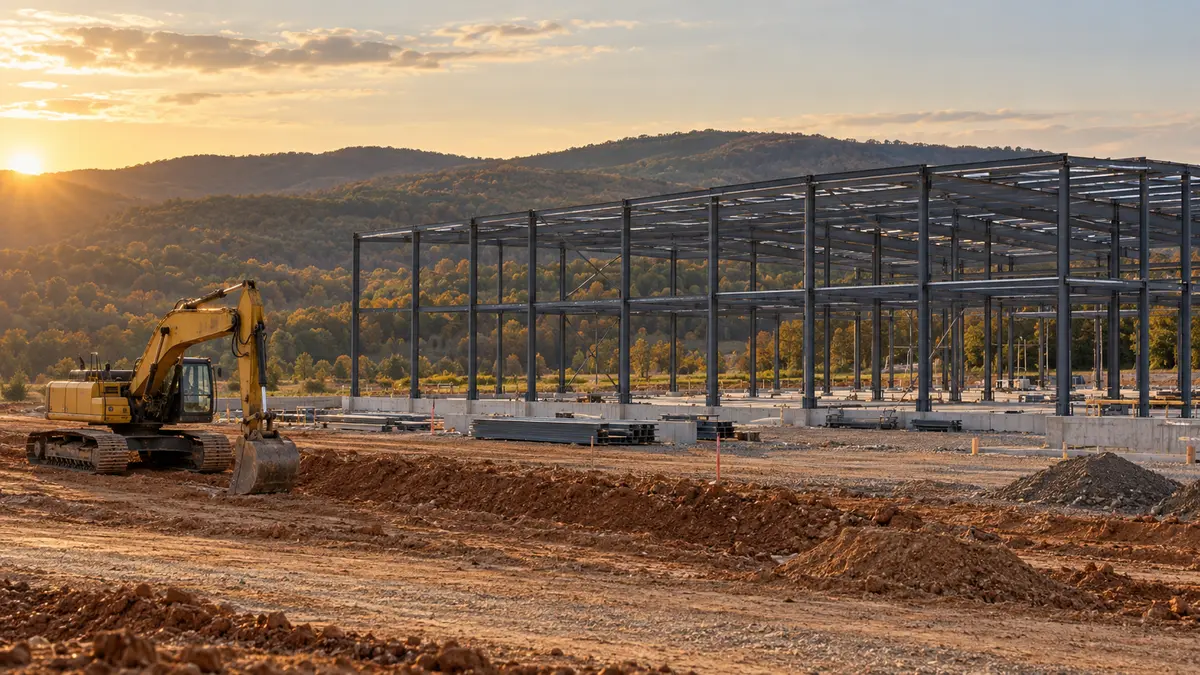
Avio USA starts work on its Virginia manufacturing site

One equity market, two currency measures

Russia’s draft budget raises spending and borrowing plans

Russia Sets the 2027 Minimum Wage at 28,935 Rubles, Up 6.8%, on the Way to 35,000 by 2030
Partner news digest
 Qatar LNG expansion: readiness, financing and the production test
 Pennon’s capital plan: turning finance into better water outcomes
 Italy’s diesel relief gap: taxes, price ceilings and implementation
 EU–China hybrid trade: from understanding to measurable implementation
 Schneider–PTC: the industrial data integration test behind the deal
 IKEA’s hybrid resale model: buyback, marketplace liquidity and furniture logistics
 Banking AI beyond the ranking: capability, execution and evidence of value
 Fishing labour beyond the product label: practical protection
 Rhenus and the Middle Corridor: terminals need coordinated connections
 Royal Mail restructuring: the test is reliable delivery
 Fuel Finder on Google Maps: when price transparency becomes useful competition
 Samsung’s memory profit surge: what the preliminary record explains
Leave a comment