
Russia's Industrial Development Fund Adds 20 Billion Rubles: How 3% Money Is Financing Machinery Import Substitution
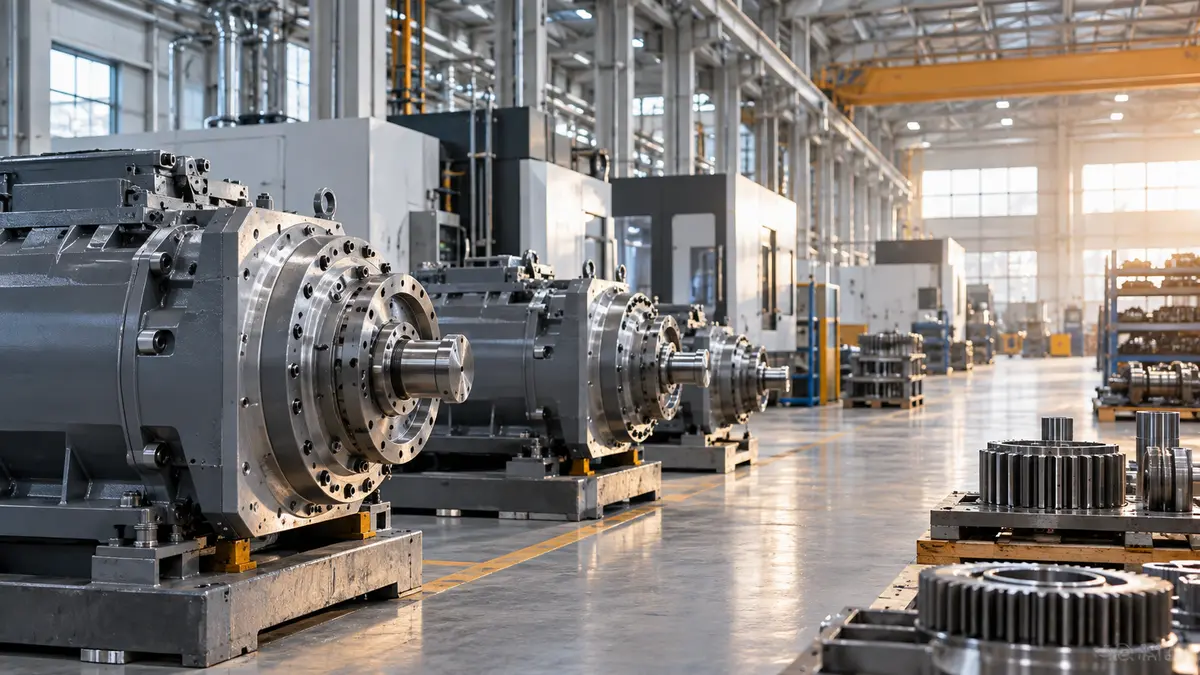
On June 16, 2025, the Russian government added another 20 billion rubles to the Federal Industrial Development Fund, the state vehicle that lends to manufacturers at 3% and 5% a year, with machine building first on the list of beneficiary industries. The tranche, announced by Prime Minister Mikhail Mishustin at a government meeting, will finance preferential loans to another 50 manufacturers and sits inside a larger plan to recapitalize the fund by 300 billion rubles by 2030. Read properly, it is the clearest available signal of how Russia intends to finance machinery import substitution: not through grants, but through cheap loans with repayment discipline.
The tranche in context
"An order has been signed to allocate 20 billion rubles to the Industrial Development Fund, which already has around 2,000 projects and 500 billion rubles in investments. The additional funds will be used to provide preferential loans to another 50 manufacturers," Mishustin said. The money comes from the reserve fund and lands within a single calendar year, which makes it an operational decision rather than a budget promise spread across a decade.
The scale of the existing portfolio matters for interpreting the tranche. Around 2,000 projects and 500 billion rubles of investments means the fund has been averaging roughly 250 million rubles per project across eleven years of work - squarely in the middle of its statutory lending window. The new 20 billion rubles, directed at 50 more manufacturers, implies an average ticket of about 400 million rubles, larger than the historical mean and consistent with the shift toward full-fledged plant projects rather than single-line upgrades.
The government press service's report adds one more figure: support for the projects should assist in attracting around 5 billion rubles in private investment. The ratio is modest by design - the fund's money is the anchor, and private capital follows the project's own economics rather than matching the state ruble for ruble.
The timing completes the picture. The order was announced in mid-June, and within a month the annual Innoprom industrial exhibition in Yekaterinburg produced a flow of regional investment agreements financed through exactly this channel - including machinery projects structured around joint federal and regional fund loans. A June allocation and a July signing season are two halves of one annual cycle: the government tops up the fund before the exhibition calendar converts pipeline projects into signed agreements.
How the fund actually works
The FIDF was created in 2014 on the basis of the Russian Fund for Technological Development. Its statutory purposes describe the industrial-policy agenda of the machinery sector almost item by item: financing projects to manufacture high-tech products, substitute imports, lease equipment, digitalize production, and complete other projects. The instrument is a targeted loan, and the terms are the whole story:
- interest rates of 3% and 5% per annum - a fraction of commercial borrowing costs;
- maturity of up to seven years, matching the payback horizon of equipment-heavy projects;
- loan sizes from 5 million to 5 billion rubles, covering everything from a pilot line to a greenfield plant;
- joint financing with regional industrial development funds for projects that need loans of up to 200 million rubles, which pushes small and mid-sized manufacturers into the same system.
Each parameter does specific work. The rate turns the loan into a subsidy with a repayment schedule: at 3-5% a year, the effective price of capital is below inflation, so the borrower receives the grant equivalent as an interest-rate spread while remaining formally a debtor. The seven-year tenor acknowledges that machinery projects earn back their capital slowly - a plant making filters or lifting equipment cannot repay a three-year bridge. The 5 million to 5 billion window means the same institution can finance a component line and an entire factory, keeping projects inside one system as they grow.
Leasing, digitalization and the other statutory doors

Machinery plants are the most visible use of fund money, but the statutory list is wider. Alongside import substitution and high-tech manufacturing, the FIDF finances equipment leasing and the digitalization of production. Both doors matter for the machinery sector in a specific way. Leasing is how equipment reaches the factories that consume machines rather than build them - a preferential loan behind a lease contract lowers the price of renewal for the entire manufacturing base, not only for the machine maker. Digitalization is how a plant financed in 2025 stays competitive in 2030: the same fund can accompany a borrower from construction through the software and controls that determine its productivity.
The practical effect is that a machinery manufacturer can enter the system at several points: a loan for its own plant, financing for the leasing of its products, and support for digital upgrades of its lines. Few instruments of industrial policy offer the same continuity from greenfield construction to the shop-floor software layer.
The 300-billion trajectory
The June 2025 allocation is not a one-off. President Vladimir Putin previously ordered the FIDF to be recapitalized annually by 50 billion rubles until 2030, and the fund should be recapitalized by 300 billion rubles overall by 2030. The 20 billion rubles from the reserve fund is an addition on top of that schedule, which tells two things at once: the annual plan is being executed, and demand for preferential loans is running ahead of it.
A standing recapitalization order changes how the fund - and applicants - can plan. Multi-year capital means the fund can commit to projects whose construction spans two or three budget cycles without renegotiating its own funding each year; for manufacturers, it converts a discretionary support programme into an institution with a predictable pipeline. That predictability is arguably worth as much as the rubles themselves, because machinery investment decisions are taken years before the first machine ships.
Machinery first on the recipients' list
The government named the recipients of the new preferential loans: enterprises in machine manufacturing, chemical, metalworking, medical and biopharmaceutical industries. Machine building heads the list, and the ordering is not cosmetic. Machinery is the sector that produces the means of production for every other sector on the list - chemicals need reactors and pumps, medicine needs process lines, metalworking needs machine tools. Substituting imported equipment therefore starts with substituting the equipment makers themselves, and a fund that lends at 3-5% is the cheapest available lever for that substitution.
The logic has a second layer. Unlike consumer industries, machinery projects generate long service tails: installations, spare parts, maintenance and upgrades keep a plant relevant for decades after commissioning. Cheap state capital directed at machinery buys not a single product cycle but a permanent position in domestic supply chains - which is precisely what an import-substitution programme is supposed to purchase.
Case in point: a joint loan in the Rostov Region
Three weeks after the government's decision, the mechanism was visible in a live project. At the Innoprom-2025 exhibition in Yekaterinburg in July 2025, Neis Group signed an agreement to build a machinery plant in the Novocherkassk Industrial Park in the Rostov Region with investments of around 850 million rubles, Igor Sorokin, deputy governor of the region, said. The plant is to produce air and oil automotive filters, lifting, mounted and trailed equipment and special-purpose vehicles using domestic components, with production 50% localized at the plant. To implement the project, the company plans to use a joint loan from the regional and federal industrial development funds - exactly the instrument described in the fund's rules for projects of this size.
The Neis case shows the system working as designed at the regional scale. The group has been operating since 2011 in freight transport, with offices in Rostov-on-Don, Stavropol, Krasnodar and Novorossiysk, and it is already building a 700 million ruble truck-components plant in the same industrial park - capacity for around 120,000 eco-filters, 150,000 plastic components and 100,000 fittings for trailed equipment a year, with commissioning scheduled for 2026, according to Interfax. A service and trading group is thus converting into a manufacturer inside one industrial park, financed through fund loans rather than commercial credit. The deal size also sits instructively inside the rules: an 850 million ruble project is far above the 200 million ruble ceiling of the purely joint regional-fund channel, so the structure combines regional and federal money inside the fund's standard 5 million to 5 billion window. That is the mid-market segment of industrial policy - too large for a regional fund alone, too small for a flagship state programme - and it is precisely the segment where machinery import substitution either scales or stalls. The industrial park supplies the site, the federal and regional funds supply the cheap capital, and the company supplies the product knowledge from years of servicing freight fleets.
The economics of 3% money
Why lend rather than grant? A grant disappears on the day it is spent; a loan keeps the borrower inside a repayment relationship for up to seven years, with reporting, milestones and default risk. The fund's structure means that every ruble of support is underwritten twice - once by the state's allocation and once by the borrower's obligation to return it. For machinery projects with real cash flows, that discipline is an asset: the companies that can service a 3% loan are, almost by definition, the companies whose products the market will buy.
The counterparty of cheap money is selection. At 3-5%, demand for loans exceeds supply in any economy, so the binding constraint becomes project screening rather than funding. The fund's portfolio of around 2,000 projects is therefore also a record of two thousand screening decisions, and the new tranche extends that record to fifty more. The quality of machinery import substitution will be decided less by the size of allocations than by which projects pass the filter.
The value of the instrument also moves with the credit environment. A loan at 3% or 5% is worth exactly the spread between that rate and what the borrower would pay commercially: when market money is expensive, the same 20 billion rubles of fund capital delivers a far larger subsidy equivalent and unlocks projects that commercial banks would decline. The state therefore does not need to increase allocations to increase support - in a tight credit cycle, the preferential rate does the work by itself. That is why the June tranche should be read together with the lending conditions facing machinery investors in 2025, not in isolation from them.
What to watch
A capacity of 20 billion rubles a year, multiplied across the recapitalization plan, sets the questions that will decide whether the machinery programme converts money into installed capacity. Five markers are directly observable from public data and corporate announcements:
- placement speed: how quickly the 20 billion rubles converts into signed loan agreements with the promised 50 manufacturers;
- the annual 50-billion recapitalization: whether each year to 2030 delivers on schedule, since the 300-billion total is the plan's backbone;
- regional fund capacity: the joint-loan channel for projects up to 200 million rubles depends on regional vehicles keeping pace with federal money;
- sector mix: whether machine building keeps its leading share of new loans or cedes ground to chemical and biopharmaceutical projects;
- commissioning outcomes: plants financed in 2025-2026 should reach their scheduled starts by 2026-2028, giving the first hard evidence on the programme's hit rate.
The long view
By the end of the decade the fund will have received 300 billion rubles of recapitalization, on top of a portfolio that already carried around 2,000 projects and 500 billion rubles in investments when the June 2025 tranche arrived. If the annual orders are executed and the loan pipeline keeps absorbing them, the FIDF will have become the standing financial institution of Russian machinery manufacturing - the place where import-substitution projects are priced, screened and disciplined.
The June decision is small next to that trajectory: 20 billion rubles, fifty manufacturers, one year. But it is also a progress report on the whole design. A fund that lends at 3% and 5%, recapitalizes by presidential order, and finances everything from a 5-million-ruble line to a 5-billion-ruble plant is not an anti-crisis instrument. The fund's design assumes exactly that horizon: loans rather than grants, fixed statutory terms rather than case-by-case negotiation, and an annual recapitalization order that survives changes of government priorities. Machinery is the first sector on the recipients' list because it is the sector whose products determine the productivity of every other list. If the 2025-2030 plan is executed as written, the question at the end of the decade will not be how much the state lent, but how much installed capacity those loans left behind. It is infrastructure for an industrial policy that intends to outlast the crisis that started it, as reported by Interfax.
Just Published
European housing prices and rents
Schneider–PTC: the industrial data integration test behind the deal
Avio USA starts work on its Virginia manufacturing site

One equity market, two currency measures

Russia’s draft budget raises spending and borrowing plans
Russia Sets the 2027 Minimum Wage at 28,935 Rubles, Up 6.8%, on the Way to 35,000 by 2030
Partner news digest
 Qatar LNG expansion: readiness, financing and the production test
 Pennon’s capital plan: turning finance into better water outcomes
 Italy’s diesel relief gap: taxes, price ceilings and implementation
 EU–China hybrid trade: from understanding to measurable implementation
 Schneider–PTC: the industrial data integration test behind the deal
 IKEA’s hybrid resale model: buyback, marketplace liquidity and furniture logistics
 Banking AI beyond the ranking: capability, execution and evidence of value
 Fishing labour beyond the product label: practical protection
 Rhenus and the Middle Corridor: terminals need coordinated connections
 Royal Mail restructuring: the test is reliable delivery
 Fuel Finder on Google Maps: when price transparency becomes useful competition
 Samsung’s memory profit surge: what the preliminary record explains
Leave a comment