
The Next Billion: How Retail, Quick Commerce and Streaming Are Rewiring Small-City India
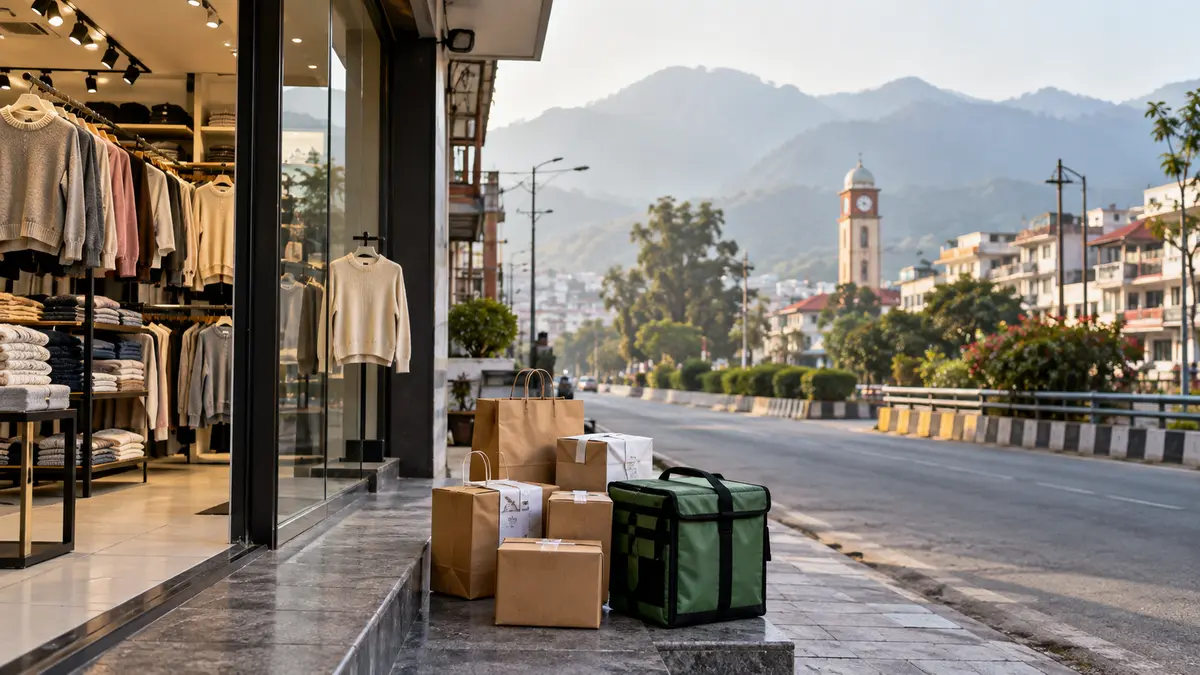
Inside a Zudio store on Ballapur Road in Dehradun, ribbed sweaters hang at $10 and sneakers at $11, all made in Bangladesh, while ten-minute delivery riders thread past chai stalls outside. The scene is the front line of a new race in Indian retail: after a decade in which discretionary spending was powered by roughly 150 million affluent urban consumers, companies are retooling products, pricing, logistics and content for the next billion - the price-conscious, aspirational shoppers of smaller towns. The prize is not a new category but the entire consumption ladder of India, and the playbook that wins it is being written far from Mumbai's high-rises.
India 1 and India 2
The discretionary spending boom of the world's most populous nation has been powered by what analysts call India 1: about 150 million affluent, English-speaking consumers concentrated in a handful of major cities. With the economy headed toward becoming the world's fourth largest, the growth frontier has moved to India 2 - a vast, price-conscious yet aspirational consumer base in smaller towns, eager for the conveniences and brands once reserved for the urban elite. This group was long viewed as all but unmonetizable: too frugal, too distant, too hard to convert into steady consumers. Rising incomes, cheap smartphones and data, and improved roads have begun knitting smaller cities and industrial hubs into the national economy, and companies are discovering that the problem is not aspiration but design - the need to market to this audience on its own terms.
Aditya Sharma (Aditya Sharma), investment analyst at Shikhara Investment Management, which forecasts India's economy will double to $8.5 trillion by 2032 on the strength of new consumers outside the metro cities, puts the strategic shift bluntly: penetration in the top cities is largely over, so companies have to onboard new customers, convert light customers into heavy ones, and go down deeper into smaller markets.
The Dehradun test case
Dehradun, a hill city of roughly 1 million residents tucked into the Himalayan foothills some 150 miles south of the 20-million-plus sprawl of Delhi, is where the abstract race becomes visible. Sameer Narula (Sameer Narula), whose bicycle shop spills onto one of the main thoroughfares, has watched a trickle of cars swell into a traffic-jammed roar: Porsches, BMWs and Toyota Fortuner SUVs jostle with Maruti Suzuki hatchbacks and Hero MotoCorp motorbikes. Professionals fleeing Delhi's pollution and crowds have snapped up second homes, pushing up property prices and turning a once-sleepy hill station into a small metropolis. A Starbucks opened in 2022. Chain hotels and pubs have sprouted across town, and ten-minute delivery apps zip through streets still marked by elephant-crossing signs.
The city is urban enough to spark fresh habits and small enough to remain price-sensitive - precisely the profile of the Tier 2 battleground where national brands now concentrate their expansion, reachable thanks to expanding highways, new airports and the logistics networks that trail them.
Zudio versus Zara: the price architecture of aspiration

The clearest expression of the new economics is fast fashion. Zudio, the Tata Group's fast-fashion answer to Zara, sells the look of H&M and Zara at a fraction of the price: sweaters at $10, sneakers at $11, hand cream from about $1. The formula has carried the chain to more than 800 stores in under a decade, while Zara's footprint remains confined to major metropolitan areas with just 22 stores. The contrast is not a failure of Zara's brand but a statement about where the volume lives: in India's small cities, aspiration is monetized at local price points, and the retailer that engineers that price point owns the growth.
The same logic produces what marketers call faux-premiumization: chains such as Burger Singh riff on Burger King's look and menu, and outlets branded American Fried Chicken mirror KFC's red-and-white branding and interiors to project a premium feel at accessible prices. Karthik Srinivasan (Karthik Srinivasan), a Bengaluru-based marketing consultant, frames the opportunity: the next billion are not unwilling to pay - their willingness sits behind barriers of trust, access, habit and perceived value.
Quick commerce climbs the hills
The last few years have pulled Dehradun squarely into India's quick-commerce revolution: Blinkit, InstaMart, Zomato and Swiggy now cover much of the city, ferrying food and cosmetics from international brands as they chase their next wave of growth. The economics of the move are unusually favourable. Platforms are setting up dark stores in Tier 2 and Tier 3 cities not only because of consumer demand but also because of lower real estate prices, notes Pintu Babu (Pintu Babu) of Nishith Desai Associates. According to financial services firm Emkay Global, a dark store in a Tier 2 city needs only about 800 orders a day to break even, compared with 1,300 in a Tier 1 city.
The boom has drawn workers as well as warehouses. Ankit Kumar (Ankit Kumar), a 30-year-old InstaMart delivery driver earning about 25,000 rupees a month, describes the job as a step up from selling vegetables in his smaller hometown of Saharanpur; Dehradun offered better prospects and, thanks to new roads, an hour's trip home. And despite concerns about a quick-commerce bubble, Ravi Kapoor (Ravi Kapoor) of PwC India argues the sector still has significant runway: it currently serves only a small fraction of India's roughly 19,000 ZIP codes, and while companies cut prices and localize assortments to expand, lower costs and lighter competition cushion the hit. The pressure to deliver in ten minutes, he notes, is not so dire - anything short of 30 minutes is below the noticeable level for Tier 2 or Tier 3 markets.
Why Tier 2 is cheaper to serve
The economics of moving down the city tier ladder compound three discounts against the metros: cheaper real estate for dark stores, lower wage expectations for riders, and thinner competition for traffic. Migrant workers arriving from nearby Uttar Pradesh replenish the labour pool that delivery platforms draw on - the same flow that carried Ankit Kumar from a vegetable stall to a scooter. And because a Tier 2 dark store breaks even at roughly half the daily order count of a Tier 1 one, per Emkay Global's estimate of about 800 against 1,300 orders, platforms can expand deep into the map without waiting for metro-grade order density. The gap between 800 and 1,300 orders a day is the difference between entering a town this quarter and entering it never.
Meesho's IPO as a signal
The capital markets ratified the thesis in December 2025. E-commerce retailer Meesho surged nearly 60% in a blockbuster listing, pushing its valuation to $8.5 billion and making it India's best-performing major IPO of 2025. The SoftBank-backed company sells everything from footwear to kitchen staples, and nearly 90% of its buyers live outside India's top cities. Its ascent points to the deeper change behind every storefront and dark store in Dehradun: small-city India is coming online at scale, and the first public-market price for that shift was set by a company built for it.
The playbook: five moves that convert India 2
Across retail, delivery and content, the companies making progress outside the metros converge on a short list of moves:
- Price architecture first: engineer aspirational products at local price points, from $10 sweaters to sachet-sized subscriptions.
- Localize language and content: regional languages and locally rooted stories outperform imported global formats.
- Build cost-light infrastructure: Tier 2 dark stores and mid-scale hotels carry structurally lower break-evens than metro equivalents.
- Design for the market, not for the head office: adapt products to local usage instead of porting global specifications.
- Use logistics as market entry: highways, airports and delivery networks open towns before brand advertising does.
Streaming learned the lesson first
Entertainment shows how the conversion works when the playbook is followed. Netflix arrived in 2016 with a global $8 monthly price tag targeting 5 million consumers in major cities; it later cut prices, introduced a mobile-only plan - a game-changer in a country with some of the cheapest data plans in the world - and invested in regional-language content. Its subscriber base now exceeds 15 million, according to Media Partners Asia. Amazon's Prime Video pushed into vernacular markets and rolled out a cheaper Prime Lite tier, bringing sachetization to streaming and pulling in more than 18.5 million subscribers by early 2025; in 2024 it doubled down by acquiring Tencent-backed MX Player, a free ad-driven service with about 250 million users, roughly half of them in Tier 2 and Tier 3 cities according to Amazon MX Player's Aruna Daryanani (Aruna Daryanani). JioHotstar, part of the Reliance Industries and Walt Disney joint venture JioStar, tapped cricket and local soap operas to build more than 300 million subscribers - the world's second-largest streaming platform after Netflix.
The content itself confirms the direction: Laapataa Ladies, India's Oscar entry, and Panchayat, both steeped in small-village life, became national favourites. Local content, local contexts, local stories, local faces and local stars are what people want to see, sums up Tim Westcott (Tim Westcott) of Omdia.
Hotels, travel and the mid-scale pivot
The offline analogue is hospitality. As domestic travel expands and smaller cities draw more visitors, demand is rising for affordable, reliable stays. Indian Hotels Co., long known for five-star luxury through the Taj group, is pushing into the mid-scale market with Ginger Hotels - a legacy premium brand reworking its playbook for a broader, more price-sensitive consumer base, exactly as Zudio did for apparel.
Where imported playbooks die
India's consumer economy is also littered with global companies whose proven formulas collapsed on the subcontinent. Many stumbled over high import duties, misaligned partnerships or a failure to adapt to local tastes, says Adrian Mutton (Adrian Mutton), founder of London-based consultancy Sannam S4 Group. When Ford Motor launched premium vehicles in India two decades ago, some cars featured power windows only in the front - standard in the United States, but a misread in India, where affluent buyers are driven by chauffeurs and sit in the back. Nivruti Rai (Nivruti Rai), chief executive of Invest India, names the trap: a chip is identical country to country, but cars have features, and one global design does not work everywhere.
Harley-Davidson is the cautionary tale in two wheels. The Milwaukee-based motorcycle maker arrived in 2009 with high hopes for the world's largest two-wheeler market, then collided with steep import duties, high prices and $20,000-plus signature rigs ill-suited to India's battered roads. In 2020 it partnered with Hero MotoCorp to build a lower-cost, India-specific model: the X440 carries classic Harley styling with a stripped-down engine and a price starting around $3,000. It has drawn attention but only modest sales - fewer than 9,000 units in the first nine months of the fiscal year, against more than 800,000 annual India sales for rival Royal Enfield. At the Foothills Harley dealership in Dehradun, riders still admire the styling and grumble about the India-specific offerings; the brand's pull endures, as local riding chapter head Saurabh Agarwal (Saurabh Agarwal) demonstrates with Harley bracelets and a forearm tattoo, but the dilemma stands: the opportunity is enormous and so are the challenges.
The inequality ceiling
Speed and price alone will not decide how far the model spreads, because India remains one of the world's most unequal societies. In fiscal 2023 the top 1% captured 22.6% of national income and held 40.1% of its wealth, according to the World Inequality Lab. Less than 10% of Indians - around 140 million people, or 30 million households - account for the vast majority of discretionary spending, twice as much as the rest of the country put together, estimates Blume Venture Advisors. Add the geographic and linguistic divides - 22 national languages, and roughly 60% of the population still living in villages - and the addressable market for premium consumption stays narrow even as the aspirational market widens.
That is precisely why Tier 2 cities matter: they are the layer where aspiration meets affordability at scale, big enough to hum with new habits and small enough to remain price-sensitive. The companies that convert them are not selling down-market versions of metro products; they are building separate products, separate price ladders and separate content for a separate consumer.
The strategic conclusion
After a decade of rapid growth, India's consumer market is no longer shaped from the top down but from the habits of people far from the megacities. In Dehradun, aspiration shows up not in big purchases but in small shifts - a puffer jacket examined on a Thursday morning, a delivery snack, a streaming subscription. And the transformation is not unique to one hill city: from Uttarakhand to Jharkhand the same pattern repeats. In Hazaribagh, schoolteacher Punam Sinha (Punam Sinha) films gardening videos for her 6,500 YouTube subscribers; three months after Blinkit arrived in her small hilly town, the service had already delivered an order far from the everyday - dried cow dung for a Hindu ritual - in twelve minutes. When a ten-minute delivery network can serve a ritual requirement in a town that global retail maps barely register, the next billion are no longer a forecast. They are a customer base with a delivery address.
Just Published
European housing prices and rents
Schneider–PTC: the industrial data integration test behind the deal
Avio USA starts work on its Virginia manufacturing site

One equity market, two currency measures

Russia’s draft budget raises spending and borrowing plans

Russia Sets the 2027 Minimum Wage at 28,935 Rubles, Up 6.8%, on the Way to 35,000 by 2030
Partner news digest
 Qatar LNG expansion: readiness, financing and the production test
 Pennon’s capital plan: turning finance into better water outcomes
 Italy’s diesel relief gap: taxes, price ceilings and implementation
 EU–China hybrid trade: from understanding to measurable implementation
 Schneider–PTC: the industrial data integration test behind the deal
 IKEA’s hybrid resale model: buyback, marketplace liquidity and furniture logistics
 Banking AI beyond the ranking: capability, execution and evidence of value
 Fishing labour beyond the product label: practical protection
 Rhenus and the Middle Corridor: terminals need coordinated connections
 Royal Mail restructuring: the test is reliable delivery
 Fuel Finder on Google Maps: when price transparency becomes useful competition
 Samsung’s memory profit surge: what the preliminary record explains
Leave a comment