
The Rice Floor: Why Global Prices Stopped Falling and Why No Rebound Is Coming in 2025
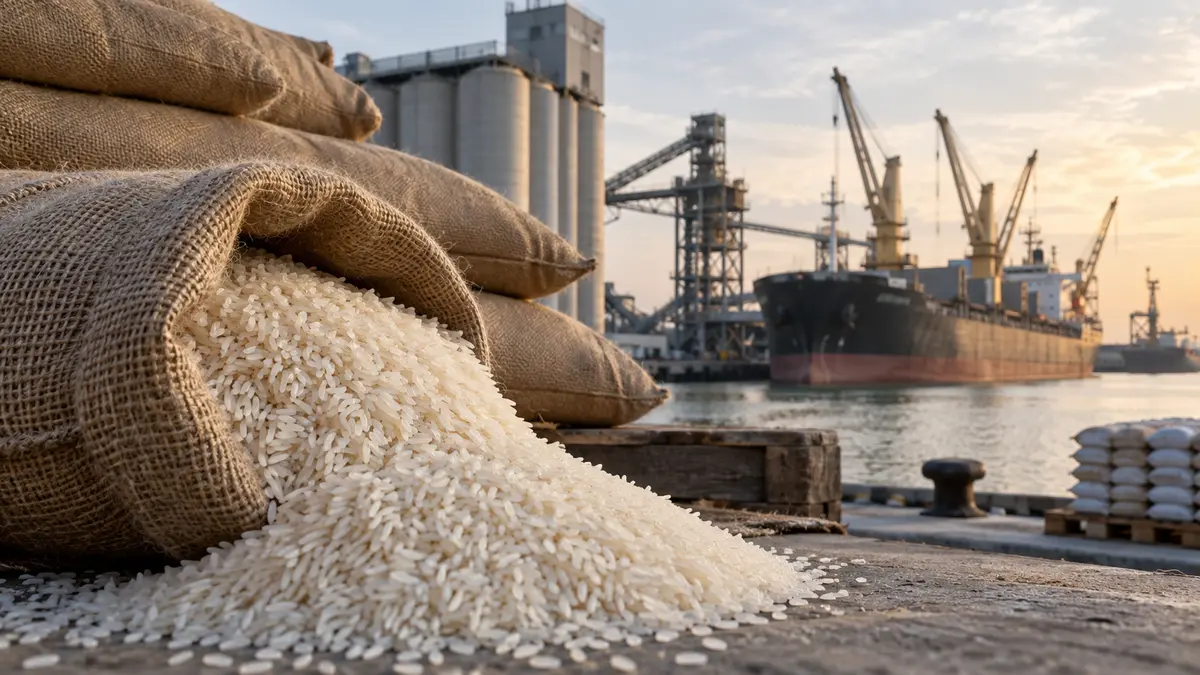
Global rice prices have tumbled to multi-year lows and, according to the traders and executives who move the grain, they have found a floor. The April 2025 slump came a month after Delhi removed the last of the export curbs imposed in 2022; Indian parboiled rice fell to a 22-month low, Thai prices to their weakest in more than three years, Vietnamese quotes to near five-year lows. What happens next is a story about stockpiles, monsoons, currencies and a state-set price — four anchors that together explain why the floor is firm and why no rebound is coming this year.
A third of the value, gone in a slide
Following a slide of nearly one-third from their 2024 peaks, prices have found a floor, traders and industry executives said, but will hold there for the rest of 2025, limited by surpluses in all major exporting countries. That single sentence contains the whole market: the correction has already happened, and the remaining question is not direction but duration. "Even after the recent significant correction, we don't expect a price rebound. The supply glut will likely prevent prices from increasing," said B.V. Krishna Rao, president of the Rice Exporters Association.
The association expects prices to fluctuate within a $10 range around $390 per ton for 5% broken rice for the rest of the year. A ten-dollar band on a four-hundred-dollar price is not volatility; it is a regime. Himanshu Agrawal, executive director at Satyam Balajee, a leading rice exporter, framed the only escape hatch: prices will remain around the current level unless the monsoon pulls a surprise and affects production.
The April trigger: Delhi removes the last curb
The market slumped in April, a month after Delhi removed the last of its export curbs on the grain imposed in 2022. The sequence matters. Restrictions had carved the world market into a rationed one for two years; their removal did not merely add supply, it removed the scarcity premium that had been pricing every cargo. Indian parboiled rice export prices fell to a 22-month low; prices in Thailand dropped to their lowest in more than three years; in Viet Nam, they sank to near five-year lows.
For importers, the reversal was a windfall arriving all at once. For exporters outside India, it was a two-year advantage evaporating in a single quarter. The geography of the rice trade in 2025 is best read as the map of that evaporation.
India's mountain of stock

The physical anchor of the floor-and-ceiling regime is inventory. In India alone, rice stocks including unmilled paddy in government warehouses totalled 63.09 million tons on April 1 — nearly five times the government target of 13.6 million tons. With massive stocks and an expected rebound in production, buyers are in no rush to make purchases while sellers compete for market share, keeping global prices under pressure, as Agrawal put it.
A stockpile of that size performs two functions at once. It caps any price rally, because the state can release grain whenever the market tightens. And it disciplines exporters, because every tonne they fail to sell competes with the next release. The 2025 rice market is, in effect, a market with a sovereign seller of last resort sitting on five years of buffer.
The monsoon bet and the FAO arithmetic
The second anchor is weather. A good spell of monsoon rains is vital for the rice crop, which requires copious amounts of water, and India's state-run weather office has forecast above-average monsoon rains for a second consecutive year in 2025, which will boost production. The global balance sheet agrees with the sky: global rice output is expected to reach a record 543.6 million metric tons in 2024/25, up from 535.4 million tons the previous year, according to estimates from the Food and Agriculture Organization. Total global supply, including stocks, is seen at 743 million tons, well above demand expected to rise to 539.4 million tons.
Those FAO numbers explain why the floor is also a ceiling. A surplus of more than 200 million tons between total supply and demand is not a tight market waiting for a spark; it is a market where any spark is smothered by the sheer mass of available grain.
The currency floor
The third anchor is exchange rates, and it is the reason prices stop falling rather than keep falling. When India's broken rice came back to the market in March, demand was stoked by a weak rupee trading around 87.2 against the dollar, which helped drive prices down. However, the rupee has since recovered to 84.55 against the dollar, and other exporting nations' currencies have strengthened too, which has prevented global rice prices from falling further, three grain dealers said.
The mechanism is simple: an exporter's costs are local and its revenue is dollar-denominated. A weaker rupee lets an Indian seller cut the dollar price without cutting his margin; a firmer rupee removes that room. The March slide was a currency event wearing a commodity costume, and its reversal set the floor as precisely as the earlier depreciation had cut the ceiling.
The state price that anchors the market
The fourth anchor is administrative. Indian farmers have the option to sell paddy to the government; if exporters begin offering lower prices than the state-fixed price, farmers will start selling to the government. The government raises its minimum support price annually, another factor that will keep export prices from dropping further. In other words, the procurement price is a put option held by every farmer in the country, and its strike rises every year.
This is why the $390 band has a hard underside. Exporters cannot bid paddy below the state price without losing the raw material entirely; therefore the export price cannot fall below the procurement price plus milling and margin. The floor of the world rice market is, in the end, a line drawn in an Indian budget document.
Who loses: Thailand and Vietnam adjust
Forecasts of higher supplies from India have rattled rival suppliers, and the damage is already measurable. In the first quarter of 2025, Thailand's rice exports fell 30% to 2.1 million tons as India offered the staple at lower prices, prompting buyers to switch, said Chookiat Ophaswongse, honorary president of the Thai Rice Exporters Association. For the full year, Thailand's exports are likely to drop 24% from a year ago to 7.5 million tons, while Vietnam's are expected to fall 17%, also to 7.5 million tons, trade bodies in the two countries estimate.
Protests, subsidies and diplomacy in Bangkok
The price transmission reached the farm gate with political force. A 30% year-on-year slide in rice paddy prices in Thailand in February sparked protests by farmers and prompted the government to offer a subsidy to rice growers. In an effort to support its farmers, Thailand has sought cooperation from India and Vietnam to address falling rice prices, the Thai commerce minister said in March. The episode shows the limit of the floor logic: global prices may be stable at $390, but a paddy price 30% lower is a household crisis in the producing countryside, and subsidies are the invoice.
Who wins: the importers' windfall
Benefiting from the price slump are the top rice-importing countries — the Philippines, Indonesia, Saudi Arabia, and African countries such as Senegal, Nigeria and Ghana. In Cote d'Ivoire, rice demand has grown with an influx of people from neighbouring countries, said Yacouba Dembele, director of the Agency for the Development of the Rice Sector. For food-importing budgets, 2025 is the mirror image of 2023: the same staple, bought at a third less.
"India's export curbs were a bonanza for other Asian suppliers in the past two years. Now, the resumption in exports would make buyers happy with the moderation in prices," Rao said. The sentence is the cleanest summary of the two-year cycle: restriction created rents for rivals; resumption returned them to buyers.
Reclaiming a forty-percent share
The strategic consequence of the price regime is a redistribution of market share, and the numbers point one way:
- The Rice Exporters Association expects Indian shipments to rise nearly 25% from a year earlier to a record 22.5 million metric tons this year.
- Olam Agri India, one of the world's top rice exporters, is even more bullish, projecting exports could climb to as much as 24 million tons.
- The jump is likely to propel India back to its dominant share of the global market, above 40% before it curbed exports in 2022, surpassing the combined sales of the next four largest suppliers — Thailand, Vietnam, Pakistan and the United States.
- "India has already started to reclaim its lost market share," said Nitin Gupta, senior vice president at Olam Agri India.
A share above 40% is not a commercial statistic; it is market structure. When one supplier outsells the next four combined, its procurement price, its monsoon and its currency become the world's pricing variables — exactly the four anchors described above.
Two years of rationing: how the market got here
The 2025 price regime cannot be read without the 2022-2024 interlude. When Delhi curbed exports in 2022, the world market lost its marginal supplier overnight; prices climbed to the peaks from which they have now slid nearly a third, and rival exporters harvested the scarcity. Rao's formulation — the curbs were a bonanza for other Asian suppliers — is the balance sheet of that period: two years of elevated prices transferred income from importers to every seller except the one that imposed the restriction.
The removal of the last curb therefore did not create a new market; it restored the old one, complete with its dominant supplier and its structural surplus. What changed in between is the installed behaviour of buyers: after two years of rationing, importers learned to hold smaller cover and to wait. That learned patience is itself a price cap in 2025, because a buyer who expects release from state stocks will not pay a panic premium for prompt cargo.
The exporter's playbook in a buyer's market
For Thailand and Vietnam, the adjustment is not only about volume; it is about what a shrinking volume must now do. A 24% and 17% export decline respectively means fixed costs — milling capacity, port slots, breeding programmes — spread over fewer tonnes, while the price per tonne sits at a multi-year low. The observable responses in the source material are political and diplomatic: farmer protests, a Thai subsidy, and Bangkok seeking cooperation with India and Vietnam on falling prices. The unobservable ones are commercial: longer credit to importers, tighter quality sorting, and a fight for the premium niches where price is not the only variable.
The cooperation request is the most telling instrument of the three. Competing exporters asking the dominant supplier to co-manage prices is an admission that no individual seller can defend a floor alone in a market with a 200-million-tonne supply-demand gap. It is cartel logic without a cartel — and, like most such logic, it works only as long as the dominant party finds it convenient.
Scenarios for the rest of 2025
Within the floor-and-ceiling regime, three deviations remain possible. A monsoon failure in India would cut the supply anchor and test the stockpile's release discipline; a sharp rupee depreciation would reopen the downside through the currency channel; a political decision to raise procurement aggressively would lift the administrative floor and drag the whole band upward. None of the three is the base case: the weather office forecasts above-average rains, the rupee has firmed, and the procurement cycle is annual and predictable.
The base case is therefore the boring one — a $10 band around $390, record Indian shipments, Thai and Vietnamese volumes shrinking by roughly a quarter and a sixth respectively, and importers booking the difference. Boring markets, however, redistribute power quietly, and the 2025 rice market is redistributing it toward Delhi.
What the floor means for food-importing budgets
The windfall side of the regime deserves its own ledger. The beneficiaries named in the market are the top rice-importing countries — the Philippines, Indonesia, Saudi Arabia, and African countries such as Senegal, Nigeria and Ghana — and the demand signal in West Africa is demographic as much as commercial: in Cote d'Ivoire, rice demand has grown with an influx of people from neighbouring countries, said Yacouba Dembele, director of the Agency for the Development of the Rice Sector. For a finance ministry, a third-off staple price is fiscal space: the same import bill buys more calories, or the same calories cost less foreign exchange.
Scenario label: this is the distributional case, not a price forecast. If the $10 band around $390 holds through 2025 as the Rice Exporters Association expects, importing budgets book a one-off improvement while Asian farm incomes absorb the mirror-image loss. The political economy of the band is therefore split by the equator of the trade flow — sellers above it, buyers below it — and any future rebound will be resisted by exactly the governments that are currently saving the difference.
The strategic reading
Lower rice prices will benefit price-sensitive consumers in Africa and other regions, but they are likely to further squeeze the already meagre earnings of farmers across Asia, which produces nearly 90% of the world's rice. That is the final asymmetry of the story: the consumer gain is immediate and visible in import bills, while the producer loss is diffuse, seasonal and political — arriving as protests in Thailand, subsidies in Bangkok and cooperation requests between rival exporters.
For anyone pricing rice in 2025, the practical conclusion is that the floor is real but narrow, and that it rests on four anchors rather than on scarcity. Watch the rupee, the monsoon forecast, the procurement price and the stockpile releases, and the $10 band will explain itself. Watch only the cargo prices, and the market will look calmer than it is.
Just Published

European housing prices and rents

Schneider–PTC: the industrial data integration test behind the deal
Avio USA starts work on its Virginia manufacturing site

One equity market, two currency measures

Russia’s draft budget raises spending and borrowing plans

Russia Sets the 2027 Minimum Wage at 28,935 Rubles, Up 6.8%, on the Way to 35,000 by 2030
Partner news digest
 Qatar LNG expansion: readiness, financing and the production test
 Pennon’s capital plan: turning finance into better water outcomes
 Italy’s diesel relief gap: taxes, price ceilings and implementation
 EU–China hybrid trade: from understanding to measurable implementation
 Schneider–PTC: the industrial data integration test behind the deal
 IKEA’s hybrid resale model: buyback, marketplace liquidity and furniture logistics
 Banking AI beyond the ranking: capability, execution and evidence of value
 Fishing labour beyond the product label: practical protection
 Rhenus and the Middle Corridor: terminals need coordinated connections
 Royal Mail restructuring: the test is reliable delivery
 Fuel Finder on Google Maps: when price transparency becomes useful competition
 Samsung’s memory profit surge: what the preliminary record explains
Leave a comment