
Fast Retailing Books a Third Straight Record Year and Bets Its Next Decade on the West
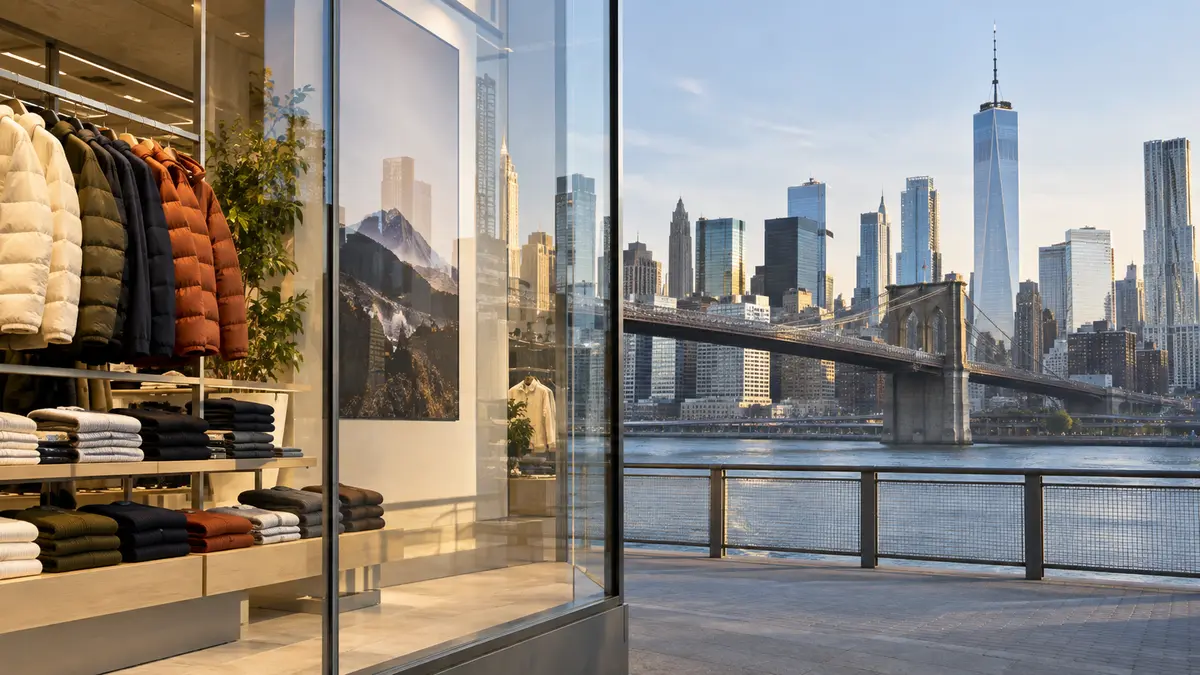
Fast Retailing, the Japan-based owner of the Uniqlo clothing chain, booked its third consecutive year of record earnings on October 10, 2024, crossing 3 trillion yen in revenue for the first time and using the result to declare an aggressive plan for global growth aimed at the West.
A third record year, and the numbers behind it
The fiscal 2024 result, covering the 12 months through August, put operating profit at 500.9 billion yen, about 3.35 billion dollars, up 31% year on year. The figure beat both the company's own forecast and the consensus of 478.3 billion yen compiled by LSEG from 15 analysts. Revenue passed 3 trillion yen, roughly 20 billion dollars, for the first time in the company's history. For a retailer that has spent a decade converting a domestic casual-wear chain into a global brand platform, the third straight record year is less a surprise than a confirmation: the model works across currencies and climates.
The company framed the year as a base, not a peak. Fast Retailing said it expects operating profit to climb further to 530 billion yen in fiscal 2025. Guidance of that shape matters in apparel, where a record year can be a one-off of pricing or currency; a guided increase says management sees the drivers as repeatable.
The Western bet
Chief executive Tadashi Yanai (Tadashi Yanai), who founded the Uniqlo brand 40 years ago, used the results to lay out the strategic direction for the next decade: domination in Western markets on the way to annual sales beyond 10 trillion yen. His formulation was blunt about what the ambition requires. If the company wants to be truly the top global brand, Yanai said, it would not be able to claim that unless it can become number one in both of those regions, North America as well as Europe.
The target repositions Fast Retailing's competition. Yanai has long aimed to make the company the world's biggest fashion retailer, with Inditex, the owner of Zara, and H&M standing in the way. His reading of the post-pandemic consumer supports the attempt: consumers, he has said, are more focused on value than luxury in a post-pandemic world, a trend that would work in Uniqlo's favour. Uniqlo's product identity, known for fleece jackets and inexpensive undergarments, is precisely a value proposition dressed in quality basics.
Margins as the proof
The financial evidence for the Western thesis sits in the segment margins. Chief financial officer Takeshi Okazaki (Takeshi Okazaki) said the company's operating profit margins improved to 15% or higher in all its international segments on the back of higher brand visibility. A uniform double-digit margin across international segments is the metric that separates a global platform from an export operation: it says the brand, not the home-market subsidy or a single lucky market, is carrying the profitability.
The yen, the tourists and the translation effect

Part of the fiscal 2024 result is macroeconomic. Uniqlo has benefited from a historically weak yen both at home and abroad. At home, a tourism boom in Japan led to a surge in duty-free shopping; abroad, revenue from the push into Western markets gets an added boost when translated back into yen. Revenue and profit in Japan set records on strong demand for summer items as well as sharply higher sales to overseas visitors.
This is the part of the story a strategist has to discount. A weak yen flatters both the inbound consumption line and the translated overseas line; neither is fully under management's control. What remains after the currency effect is the operational content: record Japan results on summer demand and tourist spending, and international margins above 15% attributed to brand visibility rather than price.
The China problem
The counterweight to the Western optimism is China, the company's biggest overseas market. With more than 900 stores on the mainland, Fast Retailing has long been seen as a bellwether for the retail sector in the world's second-biggest economy. Pandemic restrictions dragged on results there for years; the current challenge is a sluggish economy that has weighed on consumer confidence.
The Greater China segment saw a slight increase in annual profit for the year. The response is portfolio surgery rather than expansion: the company is scaling back store openings and adopting a scrap-and-build strategy to turn around underperforming locations. In apparel retail, scrap-and-build is an admission that density alone no longer produces growth; the quality of each location, and its economics, now decides the network's value.
Why the mix still works
The combination of a soft China and a strong West is exactly the mix the 10-trillion-yen ambition requires. If Greater China can hold a slight profit increase while underperforming stores are rebuilt, and the Western segments keep margins above 15% while adding stores and brand visibility, the group's growth engine shifts geography without losing profitability. The fiscal 2024 numbers show that this rotation has started: record consolidated results with a flat-ish China profit mean the incremental yen came from elsewhere.
The succession shadow
Above the strategy sits the governance question. Questions about who will succeed 75-year-old Yanai have swirled for years and gained traction of late amid a corporate governance push in Japan. Yanai said he wanted the next leader to come up the ladder of the company and for his two adult sons to be responsible for governance, separating management from ownership oversight.
The most visible candidate stood beside him at the results: Daisuke Tsukagoshi (Daisuke Tsukagoshi), promoted to president of the Uniqlo brand last year and spoken of as a possible successor. Yanai's public assessment was characteristically dry: I think he's doing a pretty good job. For investors, the succession plan matters because the Western bet is a decade-long commitment; it will outlive any single results cycle and needs a leadership line that will not reverse it.
Anatomy of the record: where the yen came from
A 31% rise in operating profit on a revenue base that crossed 3 trillion yen for the first time invites a decomposition, and the company's own account supplies the parts. The Japan side delivered record revenue and profit on two engines: strong domestic demand for summer items and sharply higher sales to overseas visitors, the duty-free channel that a weak yen and a tourism boom opened wide. The international side delivered margins: 15% or higher operating profit margins in all international segments, attributed by the CFO to higher brand visibility. The translation side delivered a bonus: Western revenue converted back into a weak yen arrives larger than it was earned. Three different mechanisms, one consolidated record.
The decomposition also shows what is durable and what is borrowed. Brand visibility and summer demand are operational achievements; the duty-free surge and the translation effect are macroeconomic gifts. A company that guides to 530 billion yen of operating profit for the next fiscal year is implicitly claiming that the operational part is large enough to carry the guide even if the gifts shrink. That claim, not the record itself, is the substantive content of the October 10, 2024 announcement.
The value thesis against the luxury cycle
Yanai's consumer reading gives the Western bet its timing. Consumers, he has said, are more focused on value than luxury in a post-pandemic world, a trend that would work in Uniqlo's favour. The fiscal 2024 context supports the reading from an unexpected direction: several leading international fashion houses, from Louis Vuitton to Christian Dior and Hugo Boss, faced sharp income declines during 2024, while a value-positioned basics retailer posted its third record year. The contrast is not proof of causation, but it locates Uniqlo on the right side of the current cycle: the wardrobe budget that leaves luxury does not leave clothing, and basics at credible quality is where part of it lands.
The store network as a portfolio
The scrap-and-build decision in Greater China deserves more weight than a footnote. With more than 900 stores on the mainland, the network itself is the company's largest single asset in its biggest overseas market, and scaling back openings while rebuilding underperformers converts that asset from a growth instrument into a yield instrument. Each rebuilt location must now earn its place by economics rather than by presence. The same discipline, applied in reverse, defines the Western expansion: new stores in North America and Europe are not openings for coverage but openings for brand visibility, the very variable the CFO credits for the 15% international margins. One portfolio, two opposite motions, the same metric.
This is also where the 10-trillion-yen target acquires a concrete meaning. Reaching it from a 3-trillion-yen base requires more than compounding: it requires the Western segments to grow from margin proof into volume engines while China stabilizes its yield. The fiscal 2024 result shows the first step of that rotation, with incremental profit arriving from outside a flat-ish Greater China.
Governance, succession and the decade horizon
The succession architecture Yanai sketched separates two functions that Japanese corporate governance reform has pushed companies to separate: executive management, to come up the ladder of the company, and ownership oversight, to sit with his two adult sons. The promoted Uniqlo brand president, Daisuke Tsukagoshi, embodies the first half of that design; his public evaluation by the founder, doing a pretty good job, is the closest thing to an endorsement the company's culture allows. For a strategy measured in decades, the architecture matters as much as the numbers: the Western bet must survive its author.
Investors reading the record year therefore hold two documents at once. The first is a set of results: 500.9 billion yen of operating profit, a beaten consensus, a raised guide, international margins above 15%. The second is a governance statement: an internal succession ladder, a family oversight role, and a brand president being tested in public. The first document says the company can fund its ambition; the second says the ambition has an institution to live in.
What the record does not change
The record year settles several questions and leaves four open. It does not settle China: a slight annual profit increase in Greater China, achieved while stores are being rebuilt, is a stabilization, not a recovery, and the sluggish economy that weighed on consumer confidence remains the binding constraint on the company's largest overseas market. It does not settle succession: an internal ladder and a family oversight role are an architecture, not a decision, and the 75-year-old founder's endorsement of his brand president remains deliberately provisional. It does not insure against the yen: the translation bonus and the duty-free surge that flattered fiscal 2024 can shrink in fiscal 2025 even if every operational line holds. And it does not convert the 10-trillion-yen ambition into a plan: between the 3-trillion-yen base and the stated target sits seven trillion yen of future execution in markets where the company is not yet number one.
What the record does change is the burden of proof. Before October 10, 2024, the Western bet was a strategy awaiting evidence; after it, the strategy carries a beaten consensus, a raised guide and international margins above 15% as its down payment. The fiscal 2025 guide of 530 billion yen is the only forward-looking number in the announcement, and it is the number against which the next twelve months will be judged: not whether Fast Retailing can post another record, but whether the operational engine can keep growing while the macroeconomic gifts normalize.
What the record year changes
- The competitive frame: Fast Retailing now measures itself against Inditex and H&M for the title of the world's biggest fashion retailer, not against its own history.
- The geographic centre of growth: with China in scrap-and-build mode, incremental expansion and margin proof move to North America and Europe.
- The margin benchmark: 15% or higher operating margins in all international segments become the standard the Western expansion must hold.
- The leadership horizon: a promoted Uniqlo brand president and a governance role for the founder's sons sketch the succession path for a decade-long plan.
Fiscal 2024 gave Fast Retailing the rarest of corporate positions: a record result, a beaten consensus, a raised guide and a stated ambition large enough to absorb all three. The 500.9-billion-yen operating profit is the receipt; the 10-trillion-yen target is the invoice. Whether the West can deliver the difference, while China is rebuilt store by store, is the question the next decade of results will answer.
Just Published

European housing prices and rents

Schneider–PTC: the industrial data integration test behind the deal
Avio USA starts work on its Virginia manufacturing site

One equity market, two currency measures

Russia’s draft budget raises spending and borrowing plans

Russia Sets the 2027 Minimum Wage at 28,935 Rubles, Up 6.8%, on the Way to 35,000 by 2030
Partner news digest
 Qatar LNG expansion: readiness, financing and the production test
 Pennon’s capital plan: turning finance into better water outcomes
 Italy’s diesel relief gap: taxes, price ceilings and implementation
 EU–China hybrid trade: from understanding to measurable implementation
 Schneider–PTC: the industrial data integration test behind the deal
 IKEA’s hybrid resale model: buyback, marketplace liquidity and furniture logistics
 Banking AI beyond the ranking: capability, execution and evidence of value
 Fishing labour beyond the product label: practical protection
 Rhenus and the Middle Corridor: terminals need coordinated connections
 Royal Mail restructuring: the test is reliable delivery
 Fuel Finder on Google Maps: when price transparency becomes useful competition
 Samsung’s memory profit surge: what the preliminary record explains
Leave a comment