
The 99.6 Percent Market: How Russia's Exchange Forex Trading Rebuilt Itself Around the Yuan After the June 2024 Sanctions
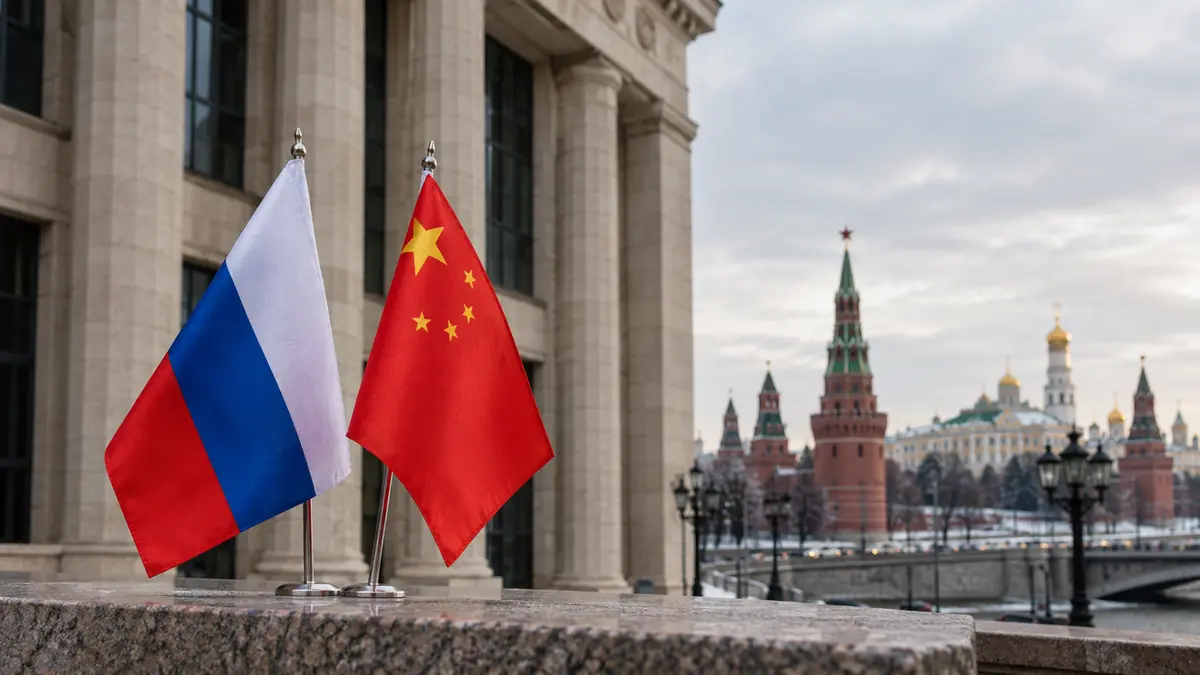
On 12 June 2024 the Office of Foreign Assets Control (OFAC), the sanctions arm of the US Treasury, placed the Moscow Exchange and two of its core institutions - the National Clearing Center (NCC) and the National Settlement Depository (NSD) - on the SDN sanctions list. The next morning the exchange stopped trading in US dollars, euros and, shortly afterwards, Hong Kong dollars. Within a month the Bank of Russia's financial market risk review recorded the result: the Chinese yuan accounted for 99.6% of all exchange forex trading in Russia. This is the anatomy of a currency market that was not destroyed by sanctions but rebuilt around a single remaining pillar - and of what that rebuilding did to volumes, participants and price discovery.
What exactly was sanctioned on 12 June
The designation targeted the plumbing rather than the façade of the Russian financial system. The Moscow Exchange is the visible marketplace, but the NCC acts as the central counterparty for forex transactions and the NSD as the settlement depository. Once OFAC listed all three, dollar trading on the exchange became impossible in practice: no clearing counterparty willing to touch US currency settlement could operate without exposing itself to American jurisdiction. Alongside the exchange group, the SDN List absorbed a wide set of companies from various sectors of the Russian economy, including the Russian National Reinsurance Company, SOGAZ, Tochka Bank, Goznak and its head Arkady Trachuk, Seligdar, Gazprom Invest, Uralredmet, the Amur Metallurgical Plant, GT Morstroy, Konar, Rusolovo, Sinara Transport Machines, Rusgazdobycha, several Novatek divisions (Murmansk LNG, Obsky LNG, Murmansk-Transgaz, Arctic LNG 1, Arctic LNG 3 and Novatek LNG fuel Kashira), and companies from the Colestar and Elgaugol groups.
OFAC simultaneously issued a license requiring that all operations with the Moscow Exchange, NSD and NCC be concluded by 13 August 2024, and another license setting a similar deadline for investors to exit their securities. The United States were not alone for long: on the same day the United Kingdom's Office of Financial Sanctions Implementation (OFSI) added the Moscow Exchange, NCC and NSD to the UK sanctions list. The euro followed the dollar out of the exchange's trading system because European Union countries were also complying with US sanctions, the Central Bank of Russia said. On 13 June the CBR decided to suspend trading in the Hong Kong dollar as well, in order to lower risks.
The clearing center as the pressure point
The mechanism deserves precision, because it explains everything that followed. A modern exchange-traded currency market is not a bazaar of bilateral deals; it is a system in which every transaction passes through a central counterparty that guarantees settlement. In Russia that counterparty was the NCC. Sanctions against it, in the formulation used by market participants at the time, made exchange trading in dollars impossible - not unprofitable, not inconvenient, but structurally impossible, because the entity that stood between every buyer and every seller could no longer lawfully intermediate US currency.
The Bank of Russia's immediate response defined the new architecture. Dollar and euro transactions would continue on the over-the-counter market, the CBR announced: companies and citizens could keep buying and selling US dollars and euros through Russian banks, and all funds in those currencies on accounts and deposits of citizens and companies remained safe, with previous withdrawal procedures in place. Crucially, the CBR took over the price-discovery function that the exchange had performed: official exchange rates of the dollar and euro versus the ruble would now be determined using bank reports and information received from digital over-the-counter trading platforms.
The first session: stocks fall, the schedule holds

The market reaction on 13 June was sharp but contained. Shares of the Moscow Exchange fell 15.8% at the start of trading to 212.04 rubles per share. Other newly sanctioned issuers fell with them: Novatek lost 6.8% to 1005 rubles, Seligdar dropped 10.3%, and Rusolovo sank 11.9% to 0.92 rubles per share. Yet the exchange itself kept working. Trading on the MOEX stock and money markets operated per the standard schedule; the foreign exchange and precious metals markets opened at 9:50 Moscow time, and the derivatives market began with its opening auction from 9:50 to 10:00 before the main session at 10:00. The institution had lost three currency instruments, not its function.
June by the numbers: a shrinking exchange, a stable OTC
One month later, the CBR's report on financial market risks quantified the reshuffle. Average daily forex trading volume on the exchange market fell 32.7% after the imposition of sanctions - to 282 billion rubles in the second half of June from 418 billion rubles in the first half. For the month as a whole, exchange forex volume fell 33.3% month on month to 6.3 trillion rubles.
The over-the-counter segment, by contrast, barely moved: OTC forex trading volume slipped only to 13.0 trillion rubles in June from 13.1 trillion rubles in May. That single comparison carries the main analytical conclusion of the episode. The OTC market was already more than twice the size of the exchange market before the sanctions; after them it absorbed the displaced activity with almost no loss of turnover. What vanished was not currency trading in Russia but one specific venue for it - the venue that happened to depend on a clearing entity inside American jurisdiction.
Who traded what, and where
The CBR's participant breakdown shows the flows relocating rather than disappearing:
- Non-financial organizations became the main net sellers of forex on the exchange market in June - 265.4 billion rubles, broadly in line with the 268.0 billion rubles of May. Exporters kept selling revenue; only the label of "main seller" changed hands.
- Systemically important lending institutions, traditionally the main agents for selling exporters' forex revenue on the exchange, slashed net forex sales to 126.8 billion rubles in June from 671 billion rubles in May - a contraction of more than five times in one month.
- Lending institutions not classified as systemically important increased exchange forex purchases to 335.8 billion rubles from 285.9 billion rubles in May.
- Nonresident banks cut net forex purchases on the exchange by 63%, to 139 billion rubles from 378 billion rubles in May - but on the over-the-counter market they increased net purchases to the equivalent of 440 billion rubles from 236 billion rubles. The same counterparties simply changed venues.
The nonresident line is the cleanest natural experiment in the dataset. Foreign banks did not exit the Russian currency market in June; they exited its exchange segment and nearly doubled their OTC buying. Where settlement no longer passed through a sanctioned central counterparty, business continued.
The 99.6 percent market
With the dollar, euro and Hong Kong dollar gone, the yuan accounted for virtually the whole volume of exchange forex trading after the imposition of sanctions - 99.6% of all transactions, according to the CBR. The renminbi was not a newcomer to Moscow: it had been the exchange's main "friendly" currency for years. What changed was its weight. A portion of the exchange market's liquidity moved from what officials called "toxic" currencies into the yuan, pushing yuan trading volume on the Moscow Exchange to record highs on some days - 509 billion rubles on 19 June, against a pre-sanctions maximum of 446 billion rubles.
The significance of the 99.6% figure is not that the yuan suddenly became the dominant currency of Russian trade - it had already been that for some time. The significance is that the exchange market's price-discovery function narrowed to a single currency pair. The ruble's most liquid quoted market price now forms in one cross, while the official rates of the two former anchor currencies are compiled administratively from bank reports and digital OTC platforms. Two different mechanisms now produce "the dollar price" in Russia: a thin, quoted, exchange-traded yuan cross on one side, and a survey-based official rate on the other.
What the new rate-setting machinery means
The CBR's decision to set official dollar and euro rates from bank reports and digital OTC platform data replaced a transparent order book with a statistical construct. This has practical consequences that go far beyond methodology debates. Contractual clauses, customs valuations, accounting revaluations and household expectations all reference the official rate; after June 2024 that reference price is one step removed from any single observable transaction, and its quality depends on the breadth and honesty of bank reporting.
The gap between the two worlds is visible in the participant data. Systemically important banks - the institutions closest to exporters' revenue flows - reduced their exchange net sales more than fivefold, which suggests that a large share of exporters' currency conversion migrated to bilateral and platform-based OTC channels where the big banks still intermediate, but invisibly to the order book. The exchange lost its role as the meeting point; the banking system kept its role as the pipe.
Five structural changes of one month
- Venue shift: exchange forex volume fell by a third, OTC volume held at 13 trillion rubles.
- Currency concentration: the yuan went from leading instrument to 99.6% of exchange forex trading.
- Price discovery split: quoted yuan cross versus administratively compiled official dollar and euro rates.
- Participant migration: nonresident banks moved from the exchange (purchases down 63%) to OTC (purchases up to 440 billion rubles).
- Intermediation re-centering: systemically important banks cut exchange sales from 671 to 126.8 billion rubles while the conversion business itself continued off-exchange.
Why only the yuan was left standing
The 99.6% concentration was not the product of a preference shock; nobody in June 2024 suddenly decided that the renminbi was the most attractive currency to trade in Moscow. It was an elimination result. Exchange-traded currency pairs survive only when their settlement chain can function under the sanctions regimes that matter to the clearing infrastructure. The dollar and the euro failed that test because their settlement ran through institutions now listed by OFAC and because European Union countries were complying with US sanctions, which is exactly why the euro, not just the dollar, left the trading system. The Hong Kong dollar was suspended by the CBR's own decision on 13 June to lower risks - an acknowledgment that even a currency not directly targeted carried unacceptable infrastructure risk once the exchange group itself was listed.
The yuan passed the test for the opposite reason: its clearing and settlement loop could be organized around institutions outside the reach of the June designations, and its trading on the Moscow Exchange had been built up over the preceding years to the point where record daily volumes - 509 billion rubles on 19 June against a pre-sanctions maximum of 446 billion rubles - were achievable within days of the shock. A market that is the only one left does not need to grow; it needs to absorb. The June data show it absorbing.
What companies and households actually faced
The CBR's communications in the first hours were addressed as much to households as to traders. Companies and citizens could continue to buy and sell US dollars and euros through Russian banks; all funds in dollars and euros on accounts and deposits of citizens and companies remained safe; the previously established issuance procedures for such deposits stayed in place. In other words, the currency did not disappear from the economy - it disappeared from one regulated venue. For an importer paying an invoice or a household holding a dollar deposit, the practical channel shifted from "exchange quote, executed through a broker" to "bank's own price, executed bilaterally".
That shift has a price, even when turnover statistics look calm. A bilateral quote embeds the bank's spread and its inventory risk; a transparent order book disciplines both. The June numbers hint at the widening: with systemically important banks cutting their exchange net sales from 671 to 126.8 billion rubles, the conversion of exporters' revenue moved into channels where the same banks still intermediate but no longer against a public book. The official rate, compiled from bank reports and digital OTC platform data, became the public reference point - useful for contracts and accounting, but one step removed from an executable price.
The derivatives and metals footnote
One detail of 13 June deserves note because it contradicts the "everything stopped" reading: the exchange's precious metals market opened at 9:50 Moscow time as usual, and the derivatives market ran its opening auction from 9:50 to 10:00 before the main session at 10:00. Instruments whose settlement did not depend on the sanctioned trio kept trading on schedule. The sanctions bit precisely at the clearing node, and precisely to the depth of that node - no further.
Outlook: what to watch after the reshuffle
Three questions define the next phase. First, whether the OTC market's stability persists once the wind-down deadlines pass - the OFAC license required all operations with the Moscow Exchange, NSD and NCC to be concluded by 13 August 2024, and a second license set the same horizon for investors exiting securities. Second, whether the yuan's record volumes prove durable or partly reflect one-off repositioning in June, when exporters and banks rebuilt their currency inventories around the only remaining exchange instrument. Third, how the survey-based official rates behave under stress: a methodology is tested not in calm months but in episodes of sharp ruble volatility, when the temptation to report convenient prices grows and the absence of a public order book removes the corrective.
What June 2024 demonstrated is narrower and harder than either of the two popular readings of it. It is not true that sanctions shut down currency trading in Russia - OTC turnover of 13.0 trillion rubles says otherwise. Nor is it true that the market simply shrugged - a third of exchange volume, the entire dollar and euro segment and a 15.8% collapse in the exchange's own share price are real costs. What happened is a relocation of the market's center of gravity: from a transparent, clearing-based, multi-currency exchange to an opaque, bilateral, single-currency system with an administrative benchmark layered on top. The yuan at 99.6% is the summary statistic of that relocation - and a reminder that in modern finance, sanctions bite hardest not where money is traded, but where trades are cleared.
For other markets watching the Russian precedent, the lesson is architectural. The resilience of a currency market under sanctions is determined less by the depth of its order book than by the jurisdictional exposure of its clearing and settlement layer. Russia entered June 2024 with a deep, liquid, multi-currency exchange market and left it with a single-currency exchange market sitting on top of a larger, less visible OTC system. The rebuild took weeks, not months - but the rebuilt market is structurally different: narrower in instruments, more concentrated in participants, more dependent on administrative benchmarks, and more expensive in the invisible currency of spread and opacity. Those are the permanent costs behind the temporary headline of a 99.6% yuan market.
Just Published

European housing prices and rents

Schneider–PTC: the industrial data integration test behind the deal

Avio USA starts work on its Virginia manufacturing site
One equity market, two currency measures

Russia’s draft budget raises spending and borrowing plans
Russia Sets the 2027 Minimum Wage at 28,935 Rubles, Up 6.8%, on the Way to 35,000 by 2030
Partner news digest
 Qatar LNG expansion: readiness, financing and the production test
 Pennon’s capital plan: turning finance into better water outcomes
 Italy’s diesel relief gap: taxes, price ceilings and implementation
 EU–China hybrid trade: from understanding to measurable implementation
 Schneider–PTC: the industrial data integration test behind the deal
 IKEA’s hybrid resale model: buyback, marketplace liquidity and furniture logistics
 Banking AI beyond the ranking: capability, execution and evidence of value
 Fishing labour beyond the product label: practical protection
 Rhenus and the Middle Corridor: terminals need coordinated connections
 Royal Mail restructuring: the test is reliable delivery
 Fuel Finder on Google Maps: when price transparency becomes useful competition
 Samsung’s memory profit surge: what the preliminary record explains
Leave a comment