
Russia's Titanium Champion Between Growth and Isolation: VSMPO-Avisma's 2024
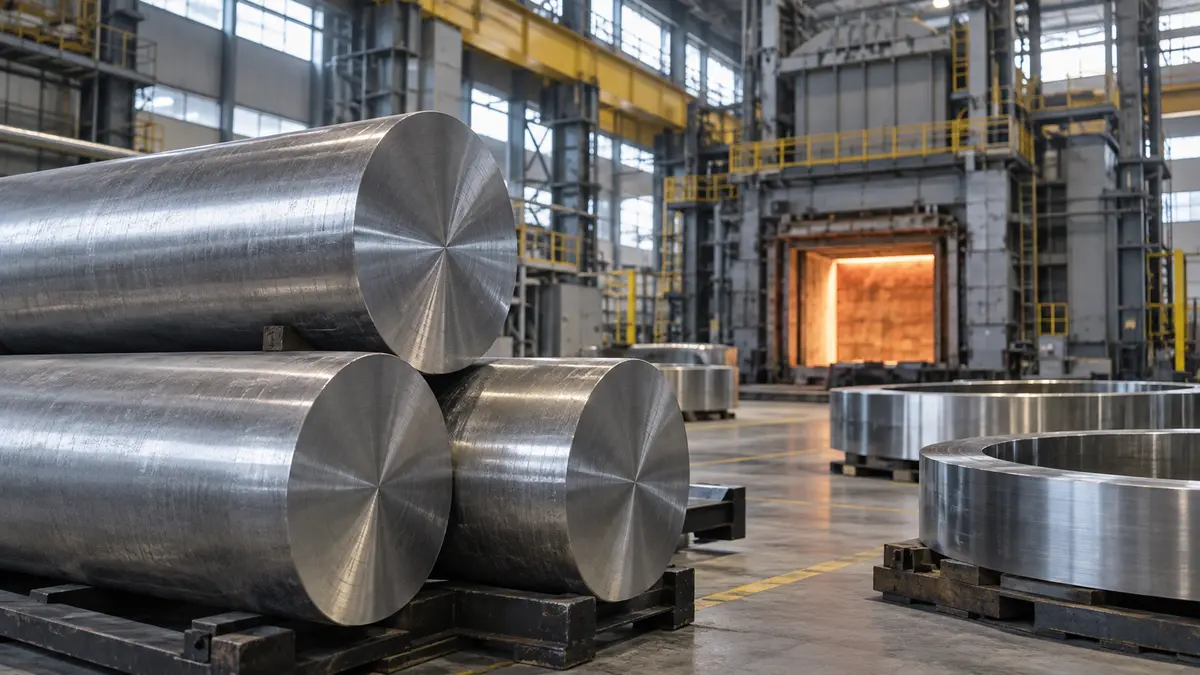
VSMPO-Avisma closed the first quarter of 2024 with double-digit revenue growth and a financial result a third lower than a year earlier, a combination that captures the year of Russia's titanium champion: a tariff shield around its raw materials, a Western aerospace market that stayed closed after the Boeing rupture, and former foreign assets moving through other states' privatization queues.
A quarter that grew on the top line
On April 18, 2024, PJSC VSMPO-Avisma Corporation reported revenue under Russian Accounting Standards of 24.045 billion rubles for January-March, up 13.4% year on year, according to the titanium producer's financial statement. The company did not disclose net profit for the period; the statement carried only the total financial result, which fell 34% to 4.598 billion rubles.
The cost lines explain part of the gap. Cost of sales rose 37.7% to 16.87 billion rubles, outpacing revenue growth by more than two to one. Other income decreased 41.2% to 7.37 billion rubles, while other expenses decreased 60% to 4.04 billion rubles. The balance sheet stretched in both directions: accounts payable increased from 35.31 billion rubles at the start of the year to 39.78 billion rubles as of March 31, and accounts receivable rose from 75.47 billion rubles to 79.95 billion rubles over the same interval.
What the undisclosed profit line conceals
The absence of a net profit figure is itself information. VSMPO-Avisma describes itself as a producer with the complete technological cycle, from raw materials processing to finished titanium products with a high degree of mechanical processing, and its website carries no information about shareholders. A company that reports revenue and cost lines but not profit, and that does not publish its ownership, is a company whose 2024 story has to be read through structure rather than through a single headline number.
Structurally, the quarter shows a producer selling more while each ruble of sales costs more to generate. Revenue up 13.4% against cost of sales up 37.7% means the mix or the input prices moved against the company, and the 34% fall in the total financial result confirms that the top-line growth did not travel down to the bottom of the statement. Receivables growing faster than payables adds a second signal: more of the quarter's sales sat unpaid at the end of March than at the start of the year.
The balance sheet lines deserve a second reading because they are the closest proxy the statement offers to an order book. Payables grew by 4.47 billion rubles between the start of the year and March 31, and receivables by 4.48 billion rubles: both sides of the working capital expanded almost symmetrically, which is the signature of a producer whose transactions are lengthening rather than shrinking. A company in decline compresses both sides; a company stretching its payment terms with suppliers while its customers stretch theirs is a company financing a larger flow of metal through the same pipes.
The tariff shield around the raw material

Three weeks before the quarterly statement, the Eurasian Economic Commission extended one of the quiet supports under the Russian titanium chain. On March 26, 2024, the EEC board kept the import customs duty at 0% on titanium waste and scrap, nomenclature code 8108 30 000 0, in force until February 28, 2026. The standard rate is 5% of customs value; the zero rate was first introduced in 2015-2016 and had been extended from 2021 to March 31 of that year.
EEC Trade Minister Andrei Slepnev framed the preference in industrial terms: metals enterprises of the Eurasian Economic Union that utilize titanium waste and scrap substantially cut costs and expedite the process of producing titanium semi-finished products, which in turn makes it possible to boost the output of finished products. Companies in the member states use both waste from their own production and imported raw materials from third countries, he said. The commission listed the end markets the preference serves: aerospace, energy, shipbuilding and medical industries.
The preference also defines what the region cannot yet do on its own. If EAEU converters needed the zero duty to make secondary raw materials economic, then the cost advantage of the union's titanium chain rests on imported scrap as much as on domestic sponge, and the commission's own wording admits as much. A shield that expires on February 28, 2026 is therefore a dated experiment in import-substituting conversion, and its renewal or lapse will be one of the few publicly observable policy variables in an otherwise opaque sector.
There is a third reading of the March package, and it is fiscal. A zero duty is forgone budget revenue, and extending it to February 2026 commits the union's budgets to subsidizing titanium conversion for two more years at a moment when member-state budgets are stretched. The commission justified the cost in output terms - more semi-finished products, more finished goods - which is an industrial-policy argument wearing a tariff instrument. Whether the forgone 5% returns as taxable output is the question the 2026 expiry will answer.
A second preference for the region
On March 4, 2024, the commission added a related measure at the initiative of Kazakhstan. Upon the request of the Kazakh delegation led by Deputy Prime Minister Serik Zhumangarin, the EEC Council extended duty-free imports for specific types of raw materials for the manufacturing industry, and from that year the preference area also included goods necessary for the country's electrical industry. Specifically, the temporary zero duty on imports of titanium dioxide to Kazakhstan was extended for another two years instead of the single customs tariff of 5%.
Read together, the two March decisions show where cost pressure sits in the titanium chain of the region: not in mining as such, but in feedstock and in the conversion steps between scrap and semi-finished product. A zero duty on secondary raw materials is a subsidy to conversion capacity, and conversion capacity is exactly what a full-cycle producer such as VSMPO-Avisma sells.
The Western door that closed in 2022
The demand side of the 2024 picture cannot be read without the rupture of 2022. Ural Boeing Manufacturing, the joint venture of Boeing and VSMPO-Avisma set up to machine titanium forgings for Boeing aircraft, suspended operations after Boeing struck the Russian producer off its list of approved suppliers in 2022, the venture said in its annual report. VSMPO-Avisma, a shareholder and the sole customer of the venture, wrote to it regarding temporary suspension of production until further notice. Work with core equipment became impossible because the use of those machines is restricted by export licenses from the United States and Japan.
The production ladder in the same report measures the rupture: 2,220 machined forgings in 2020, 559 in 2021 and 74 in 2022. Sales revenue plummeted 86.7% in 2022 to 42 million rubles, and the net loss was 658 million rubles against 840.23 million rubles in 2021. Boeing suspended titanium purchases from Russia in March 2022. At the time of that report the company's website named Mikhail Shelkov, deputy chairman of the board of directors, as the biggest shareholder with 65.27%.
Why the joint venture mattered
Ural Boeing Manufacturing was not a trading office but a machining step: it converted VSMPO-Avisma forgings into finished parts to Boeing's specifications inside the Titanium Valley special economic zone, the same Sverdlovsk region cluster where the producer's own capacities sit. That placement made the venture the physical bridge between Russian primary metal and Western airframe programs, and its suspension removed the bridge rather than the metal. The alternatives the venture itself listed - cutting tools and industrial equipment on machines not subject to export control - describe a downgrade from aerospace parts to general engineering, which is precisely the distance between the 2020 and 2022 forgings figures.
The licence wall of September 2023
A year and a half later the legal wall thickened rather than thinned. In September 2023 VSMPO-Avisma was placed on a list of export restrictions within the framework of the U.S. Export Administration Regulations, meaning that any export deal involving the company requires a separate license from U.S. authorities. For a producer whose most sophisticated products were historically built around Western aerospace programs, that rule converts commercial willingness on either side into a licensing procedure.
The venture's assets did not disappear. The investment in the technologies of Ural Boeing Manufacturing, founded in 2009 in the Titanium Valley special economic zone, has not stopped, the company's press service said later, adding that the enterprise is ready to resume work at full capacity in order to ensure a steadily high level of orders. Readiness, however, is not orders: the licence regime of September 2023 stands between the two.
Assets left behind abroad
The geography of the former Soviet titanium industry kept moving in 2024 without VSMPO-Avisma's consent. On July 10, 2024, the cabinet of ministers of Ukraine included 100% of shares in Demurinsky GOK, a mine and processing plant developing the Volchanskoye titanium and zirconium deposit and previously owned by the Russian titanium producer, in the list of assets slated for privatization. The plant had been transferred to state ownership by court order at the beginning of 2023. A source familiar with the situation told Interfax that VSMPO-Avisma had sold Demurinsky GOK several years earlier, so its seizure did not affect the Russian company; the buyer was not named. The same cabinet decision listed Aeroc, a former subsidiary of Russia's LSR Group seized in 2023.
The privatization listing also closes a loop that began before the war. Demurinsky GOK entered the VSMPO-Avisma perimeter as part of the integrated Soviet-era titanium-zirconium geography and left it through a sale the company never detailed publicly; its reappearance in a 2024 privatization list, alongside an aerated-concrete plant seized from a Russian construction group, shows that the redistribution runs across industries rather than targeting titanium specifically. For the Russian producer the practical consequence is simple: the raw-material optionality that once existed across borders no longer exists at all, and any future expansion of the conversion base must be financed from the protected home market alone.
The episode matters less for its financial effect, which the source described as nil, than for what it shows about the asset map: titanium and zirconium raw material bases that once belonged to a single integrated chain now sit under different flags, courts and privatization queues, while the operating core of the Russian producer continues to report quarters in rubles.
The ownership question that never gets answered
Every reading of VSMPO-Avisma's 2024 eventually reaches the same blank: who owns the producer. The February 2023 annual report of the Boeing venture cited the company's website as naming Mikhail Shelkov with 65.27%; by the April 2024 statement the website carried no shareholder information at all. In between, the company was placed on the U.S. export-restriction list, and its Ukrainian-era assets entered a foreign privatization queue. Ownership opacity of this degree is not a disclosure preference but a risk-management posture, and it has a cost: counterparties, analysts and governments must price the company without knowing whose decisions sit behind its order book, which in a licensed market multiplies the friction of every potential deal.
The titanium file in sequence
- March 2022: Boeing suspends titanium purchases from Russia.
- During 2022: Ural Boeing Manufacturing output falls to 74 machined forgings and its revenue drops 86.7%.
- September 2023: VSMPO-Avisma is placed on the U.S. Export Administration Regulations restriction list.
- March 4 and March 26, 2024: the EEC extends duty-free titanium dioxide imports for Kazakhstan and keeps the zero duty on titanium waste and scrap until February 28, 2026.
- April 18, 2024: the Q1 RAS statement shows revenue up 13.4% and the total financial result down 34%.
- July 10, 2024: Ukraine lists Demurinsky GOK, the former VSMPO-Avisma asset, for privatization.
Five pressures on the chain in 2024
- Cost inflation ahead of price: cost of sales grew 37.7% against revenue growth of 13.4% in the first quarter.
- Opacity of the result: no net profit disclosure, only a total financial result down 34%.
- Working capital strain: payables and receivables both expanded between the start of the year and March 31.
- The missing Western offtake: the Ural Boeing forgings ladder, from 2,220 pieces in 2020 to 74 in 2022, quantifies what the order book lost.
- Legal overhang on foreign assets: the Demurinsky GOK privatization listing and the U.S. licence regime of September 2023 both constrain optionality.
What the year set up
By the end of 2024 the configuration was fixed for the near term: a zero duty on titanium waste and scrap guaranteed until February 28, 2026; a licence wall on any U.S.-connected deal; former Ukrainian assets queued for privatization; and a first quarter showing that demand for the company's output exists at volumes the statement does not itemize by market. The tariff preferences of March 2024 are the policy half of that configuration, and they expire on a known date, which makes the second half of the decade a question of what replaces them.
The strategic conclusion for readers of the 2024 accounts is that VSMPO-Avisma entered the year as a full-cycle producer with a protected input base and a closed Western door, and left it with the same shape plus a longer queue of legal and political constraints. When the company later said it was ready to return to cooperating with Boeing and to develop the partnership, the sentence described an intention, not a contract: between the readiness and the order book stands the licence list of September 2023, and between the 2024 revenue growth and any profit story stands the cost line that grew three times faster.
Two years of distance make the shape of 2024 clearer than the quarter itself did. The revenue growth of the first quarter was real but narrow: it rested on a chain whose input costs were held down by a tariff preference with an expiry date, whose most valuable historical customer remained outside reach behind a licence list, and whose former raw-material base abroad was being sold off by a foreign cabinet. None of these three constraints is a market variable; all three are political instruments with calendars. That is the defining feature of the Russian titanium story in 2024 - a commercial report card graded by decisions taken in commissions, regulators and cabinets rather than by price and volume alone.
Just Published

European housing prices and rents
Schneider–PTC: the industrial data integration test behind the deal
Avio USA starts work on its Virginia manufacturing site

One equity market, two currency measures

Russia’s draft budget raises spending and borrowing plans

Russia Sets the 2027 Minimum Wage at 28,935 Rubles, Up 6.8%, on the Way to 35,000 by 2030
Partner news digest
 Qatar LNG expansion: readiness, financing and the production test
 Pennon’s capital plan: turning finance into better water outcomes
 Italy’s diesel relief gap: taxes, price ceilings and implementation
 EU–China hybrid trade: from understanding to measurable implementation
 Schneider–PTC: the industrial data integration test behind the deal
 IKEA’s hybrid resale model: buyback, marketplace liquidity and furniture logistics
 Banking AI beyond the ranking: capability, execution and evidence of value
 Fishing labour beyond the product label: practical protection
 Rhenus and the Middle Corridor: terminals need coordinated connections
 Royal Mail restructuring: the test is reliable delivery
 Fuel Finder on Google Maps: when price transparency becomes useful competition
 Samsung’s memory profit surge: what the preliminary record explains
Leave a comment