
Pertamina to Build 30 MW Waste-to-Energy Plant for Yogyakarta Area Handling Over 1,000 Tonnes of Waste a Day
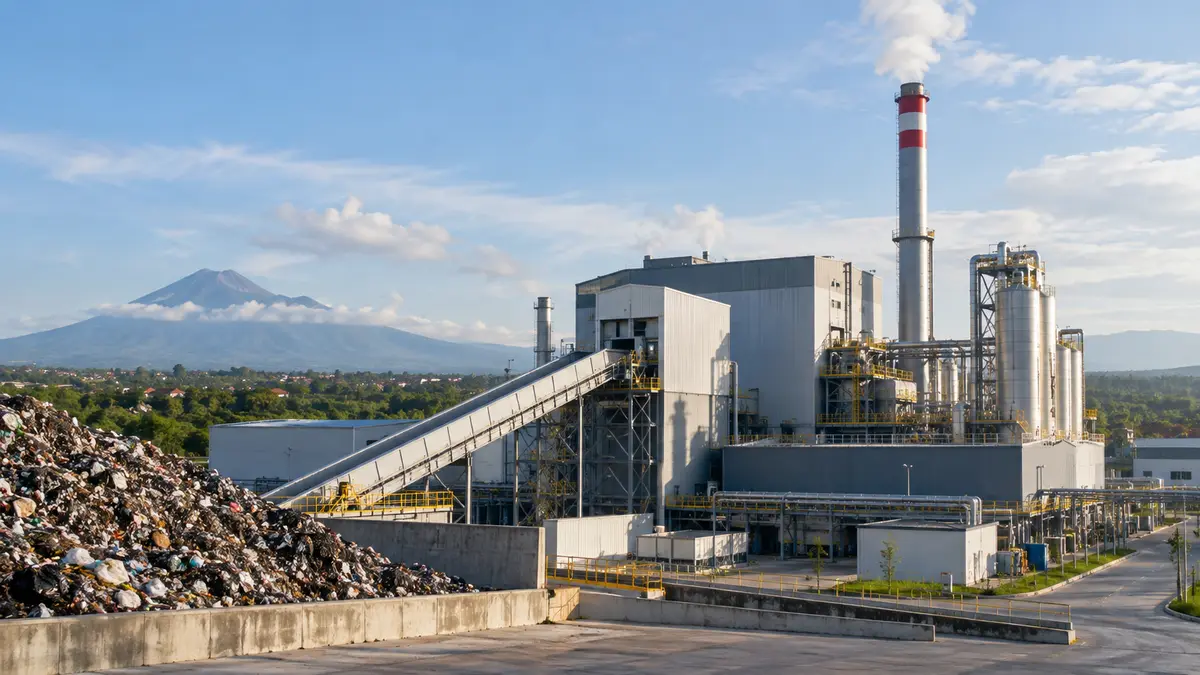
Summary: state-owned energy company PT Pertamina (Persero) is developing a new waste-to-energy (PSEL) plant in Yogyakarta with a projected capacity of 30 megawatts, taking more than 1,000 tonnes of municipal waste per day from Yogyakarta City, Sleman and Bantul and feeding the generated electricity into the regional grid of state utility PT PLN.
The project
Pertamina has been tasked with managing waste for Yogyakarta, Sleman and Bantul, an area generating over 1,000 tons of waste per day, the company's Director of Business Transformation and Sustainability, Agung Wicaksono (Agung Wicaksono), announced at the Waste to Energy Talks event in Jakarta on Thursday, 16 July 2026. To process the daily volume, Pertamina will deploy advanced incinerator technology to convert rubbish into electricity, which will then be fed directly into PT PLN's regional grid.
Technology and operating logic
Wicaksono explained that incinerator technology was selected because of its rapid waste-reduction capabilities and its ability to strictly regulate exhaust emissions, including toxic dioxins: with this technology the waste problem does not turn from a landfill into an airborne problem, he said. He added that proper waste sorting at the source remains crucial, as better-sorted waste will optimize processing efficiency and minimize technical challenges at the plant. To ensure seamless operation, Pertamina plans to collaborate with international partners to implement the PSEL technology and facilitate technology transfer to local Indonesian workers.
Key parameters of the Yogyakarta PSEL
- Projected electrical capacity: 30 MW.
- Feedstock: over 1,000 tonnes of waste per day from Yogyakarta City, Sleman and Bantul.
- Off-taker: PT PLN's regional grid under the national PSEL framework.
- Tariff basis: US$0.20 per kilowatt-hour under a 30-year power purchase agreement set by Presidential Regulation No. 109 of 2025.
- Partnerships: international technology partners with technology transfer to local Indonesian workers.
Strategy fit
The waste-to-energy project is part of Pertamina's dual growth and dual-track strategy, which aims to maintain its core oil and gas operations while simultaneously building low-carbon, environmentally focused businesses. In addition to dual growth, the company is addressing dual-track issues: addressing ecological problems with economical solutions, by turning waste into something economical, Wicaksono said. The project also showcases synergy between state-owned enterprises, with Pertamina acting as the developer and PLN serving as the primary electricity off-taker.
What the project changes
For Pertamina the Yogyakarta PSEL converts a waste-management mandate into a 30-year contracted power asset priced by regulation rather than by commodity markets. For the three administrations it replaces an open-ended landfill liability with a defined daily feedstock obligation. For Indonesia's waste-to-energy programme it adds a reference project in which the developer, the off-taker and the tariff all sit inside the state sector, the configuration the government has used to accelerate PSEL deployment under Presidential Regulation No. 109 of 2025. Company information: https://www.pertamina.com.
Company information
PT Pertamina (Persero) is Indonesia's state-owned energy company, headquartered in Jakarta, with operations across oil and gas, refining, petrochemicals and, increasingly, low-carbon and waste-to-energy businesses. Corporate website: https://www.pertamina.com.
Contact
PT Pertamina (Persero), Jakarta, Indonesia. Media and investor enquiries are handled through the corporate website https://www.pertamina.com.
Just Published

European housing prices and rents
Schneider–PTC: the industrial data integration test behind the deal
Avio USA starts work on its Virginia manufacturing site

One equity market, two currency measures

Russia’s draft budget raises spending and borrowing plans

Russia Sets the 2027 Minimum Wage at 28,935 Rubles, Up 6.8%, on the Way to 35,000 by 2030
Partner news digest
 Qatar LNG expansion: readiness, financing and the production test
 Pennon’s capital plan: turning finance into better water outcomes
 Italy’s diesel relief gap: taxes, price ceilings and implementation
 EU–China hybrid trade: from understanding to measurable implementation
 Schneider–PTC: the industrial data integration test behind the deal
 IKEA’s hybrid resale model: buyback, marketplace liquidity and furniture logistics
 Banking AI beyond the ranking: capability, execution and evidence of value
 Fishing labour beyond the product label: practical protection
 Rhenus and the Middle Corridor: terminals need coordinated connections
 Royal Mail restructuring: the test is reliable delivery
 Fuel Finder on Google Maps: when price transparency becomes useful competition
 Samsung’s memory profit surge: what the preliminary record explains
Leave a comment