
Russian Environmental Operator Plans 87 Waste Facilities for 2026 With 8.74 Mln Tonnes of Processing Capacity
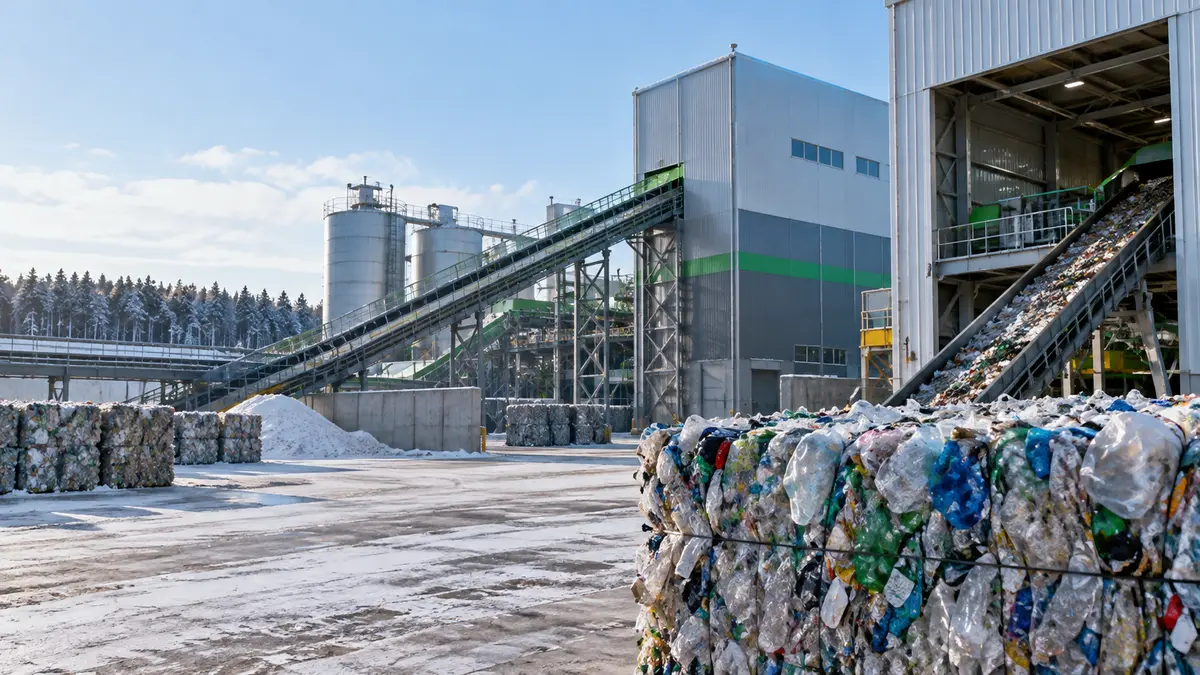
Summary: public-law company Russian Environmental Operator (PPK REO) said that by the end of 2026, 87 waste management infrastructure objects are to be commissioned in Russian regions as planned, with processing capacity of 8.74 million tonnes per year and recycling capacity of 3.66 million tonnes per year, the company's press service reported.
The 2026 plan
According to the PPK REO press service, the combined capacity of the new objects for waste processing is planned at 8.74 million tonnes per year and for recycling at 3.66 million tonnes per year. In addition, modern placement sites with a capacity of 5.96 million tonnes of municipal solid waste per year are to appear. The company describes the plans as a continuation of the large-scale infrastructure construction launched with the start of the waste reform.
Seven years of the reform in numbers
In 2019-2025, since the start of the waste reform, 372 municipal solid waste management objects were commissioned:
- 200 processing objects with a combined capacity of 24.68 million tonnes;
- 113 recycling objects with a capacity of 7.56 million tonnes;
- 20 neutralization objects with a capacity of 0.48 million tonnes;
- 39 waste placement objects with a capacity of 7 million tonnes.
In total, from 2025 through 2030, another 408 integrated municipal solid waste objects will be commissioned in the regions thanks to various support measures. This made it possible to form the infrastructure framework, the key direction of the industry's formation, and modern infrastructure becomes the support for building a circular economy in the country, noted Denis Butsaev (Denis Butsaev), Deputy Minister of Natural Resources of the Russian Federation.
The national project frame and regulatory fixes
Since 2025 the country has been implementing the new national project Ecological Wellbeing. Under one of its directions, the task is set to form a circular economy ensuring by 2030 the sorting of 100 percent of annually generated municipal solid waste, the burial of no more than 50 percent of such waste, and the involvement of at least 25 percent of production and consumption waste into economic turnover as secondary resources and raw materials.
The construction of waste infrastructure in the regions remained an acute topic discussed at various levels throughout the past year. The State Duma adopted a bill extending, until 1 January 2028, the operating term of waste placement objects that lack the required documentation and were to close from 1 January 2026. In addition, at the beginning of the current year the Ministry of Natural Resources proposed adjusting the rules for granting subsidies to projects for the construction or reconstruction of integrated municipal solid waste objects under concession agreements; the measures are meant to help regional authorities cope with the rising cost of building materials, machinery and equipment.
What the plan changes for the company
For PPK REO the schedule of 87 objects for 2026 is an operational test of the entire model: concession subsidies, the extension of undocumented landfills and the national project targets converge in a single calendar year. The company, acting as the operator of federal municipal solid waste infrastructure, receives the densest commissioning schedule since the reform began, while regions receive obligations whose execution will be measured in tonnes of processing and recycling rather than in announcements. More information about the company is available on its website: https://reo.ru.
Company information
Public-law company Russian Environmental Operator (PPK REO) is the federal operator of municipal solid waste infrastructure, created to form an integrated municipal solid waste management system and a circular economy in Russia. Corporate website: https://reo.ru.
Contact
PPK Russian Environmental Operator, Moscow, Russia. Media and partner enquiries are handled through the company's press service and corporate website https://reo.ru.
Just Published
European housing prices and rents
Schneider–PTC: the industrial data integration test behind the deal
Avio USA starts work on its Virginia manufacturing site

One equity market, two currency measures

Russia’s draft budget raises spending and borrowing plans

Russia Sets the 2027 Minimum Wage at 28,935 Rubles, Up 6.8%, on the Way to 35,000 by 2030
Partner news digest
 Qatar LNG expansion: readiness, financing and the production test
 Pennon’s capital plan: turning finance into better water outcomes
 Italy’s diesel relief gap: taxes, price ceilings and implementation
 EU–China hybrid trade: from understanding to measurable implementation
 Schneider–PTC: the industrial data integration test behind the deal
 IKEA’s hybrid resale model: buyback, marketplace liquidity and furniture logistics
 Banking AI beyond the ranking: capability, execution and evidence of value
 Fishing labour beyond the product label: practical protection
 Rhenus and the Middle Corridor: terminals need coordinated connections
 Royal Mail restructuring: the test is reliable delivery
 Fuel Finder on Google Maps: when price transparency becomes useful competition
 Samsung’s memory profit surge: what the preliminary record explains
Leave a comment