
Samsung E&A Wins 4.7 Trillion-Won EPC Contract for SABIC Fertilizer Plant in Saudi Arabia
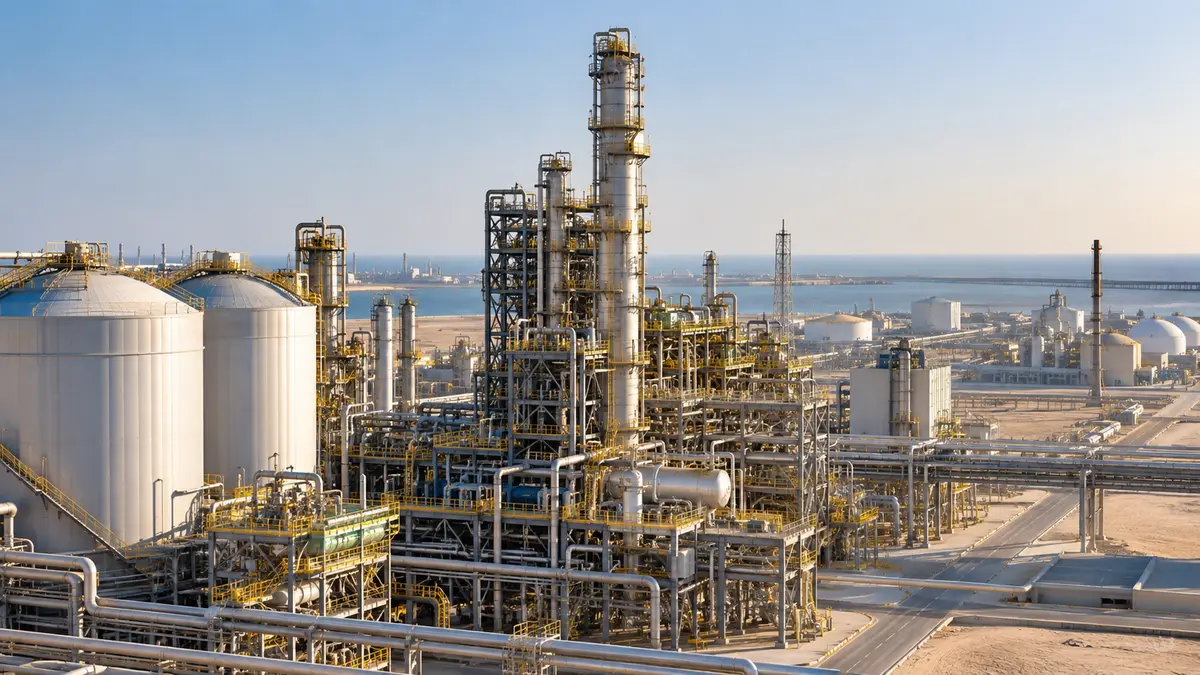
Summary: Samsung E&A Co., the engineering and construction arm of Samsung Group, has won a 4.7 trillion-won (US$3.5 billion) engineering, procurement and construction (EPC) contract for a fertilizer plant in Saudi Arabia, the company said on September 11, 2026. In a regulatory filing, Samsung E&A said it signed the EPC contract for the SAN-7 project with SABIC Agri-Nutrients, the fertilizer arm of Saudi petrochemical giant SABIC; the plant in Jubail Industrial City is scheduled for completion in 2030.
The contract
The 4.7 trillion-won (US$3.5 billion) EPC contract was disclosed in a regulatory filing by Samsung E&A on Friday, September 11, 2026. The scope covers engineering, procurement and construction for the SAN-7 project, signed with SABIC Agri-Nutrients, the fertilizer arm of SABIC, the Saudi petrochemical giant. For an EPC contractor, a package of this size combines design authority, procurement margins and multi-year construction revenue in a single award.
The SAN-7 project in Jubail
The plant will be built in Jubail Industrial City in eastern Saudi Arabia and is scheduled for completion in 2030. Once completed, it will produce 3,500 tons of ammonia and 7,700 tons of urea fertilizer per day, with all of the fertilizer to be exported. An export-only offtake profile makes the facility a hard-currency asset for its owner and a reference project for the contractor in the Gulf fertilizer segment.
The carbon capture loop
The facility will also use a carbon capture system to reuse carbon dioxide from ammonia production to make urea fertilizer, reducing emissions and improving efficiency, Samsung E&A said. The design ties the plant's emissions stream back into its product: CO2 generated in ammonia synthesis becomes a feedstock for urea synthesis rather than a release, which is the efficiency claim embedded in the process configuration.
Parties and signing
The contract was signed by Samsung E&A President Namkoong Hong (Namkoong Hong) and SABIC Agri-Nutrients President Fahad Misfer Al-Battar (Fahad Misfer Al-Battar) at a signing ceremony on September 11, 2026, according to a photo released by Samsung E&A. The filing identifies the customer as SABIC Agri-Nutrients and the project as SAN-7.
Key parameters
- Contract value: 4.7 trillion won (US$3.5 billion), EPC scope.
- Project: SAN-7 fertilizer plant for SABIC Agri-Nutrients.
- Location: Jubail Industrial City, eastern Saudi Arabia.
- Completion: scheduled for 2030.
- Output: 3,500 tons of ammonia and 7,700 tons of urea fertilizer per day, all for export.
- Process feature: carbon capture reusing CO2 from ammonia production to make urea.
What the contract means
For Samsung E&A, the SAN-7 award converts Gulf fertilizer demand into a booked EPC backlog running to 2030, with the carbon-capture configuration positioning the company in the lower-emissions segment of ammonia-urea engineering. For SABIC Agri-Nutrients, the plant adds export-oriented urea and ammonia capacity in Jubail, the kingdom's principal industrial cluster, with the captured CO2 loop reducing the emissions intensity of the new tonnage.
Company information
Samsung E&A Co., Ltd. (Samsung E&A, formerly Samsung Engineering) is the engineering and construction arm of South Korea's Samsung Group, a specialised EPC company for the plant industry headquartered in Seoul, South Korea. Corporate website: https://www.samsungena.com.
Contact
Samsung E&A Co., Ltd., Seoul, South Korea. Media and investor relations enquiries are handled through the corporate website https://www.samsungena.com.
Just Published
European housing prices and rents
Schneider–PTC: the industrial data integration test behind the deal
Avio USA starts work on its Virginia manufacturing site

One equity market, two currency measures

Russia’s draft budget raises spending and borrowing plans
Russia Sets the 2027 Minimum Wage at 28,935 Rubles, Up 6.8%, on the Way to 35,000 by 2030
Partner news digest
 Qatar LNG expansion: readiness, financing and the production test
 Pennon’s capital plan: turning finance into better water outcomes
 Italy’s diesel relief gap: taxes, price ceilings and implementation
 EU–China hybrid trade: from understanding to measurable implementation
 Schneider–PTC: the industrial data integration test behind the deal
 IKEA’s hybrid resale model: buyback, marketplace liquidity and furniture logistics
 Banking AI beyond the ranking: capability, execution and evidence of value
 Fishing labour beyond the product label: practical protection
 Rhenus and the Middle Corridor: terminals need coordinated connections
 Royal Mail restructuring: the test is reliable delivery
 Fuel Finder on Google Maps: when price transparency becomes useful competition
 Samsung’s memory profit surge: what the preliminary record explains
Leave a comment