
Celltrion Completes Acquisition of Eli Lilly's New Jersey Biopharmaceutical Plant
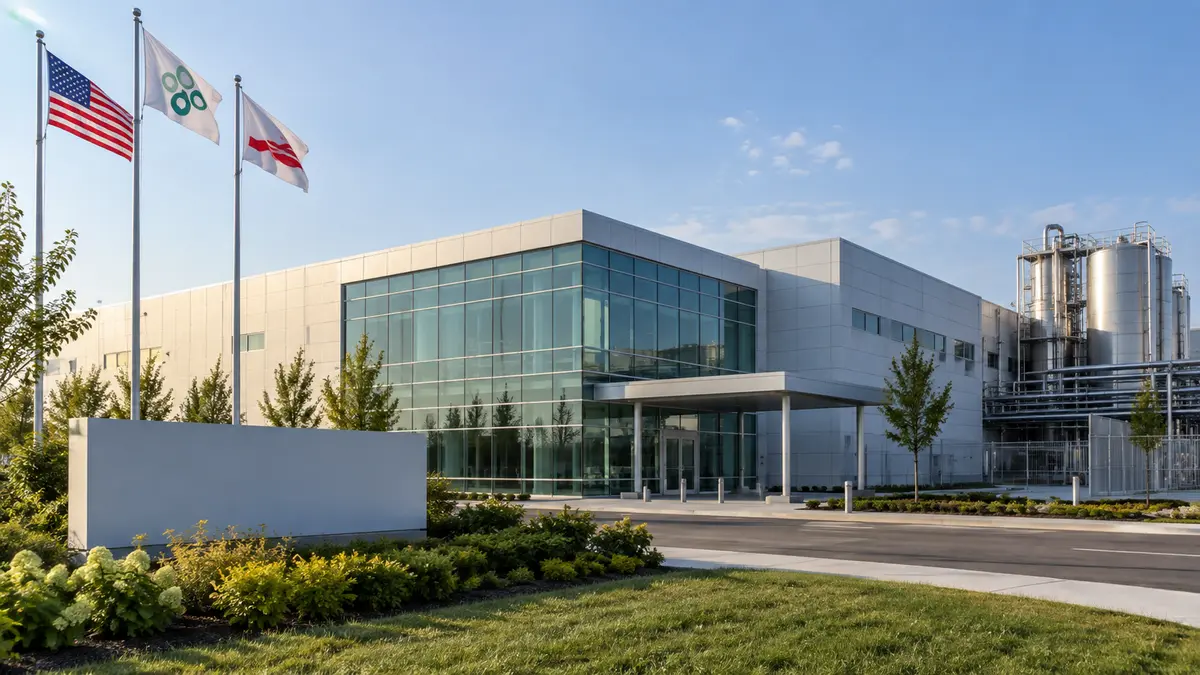
Summary: Celltrion Inc., a major South Korean biopharmaceutical company, has completed the acquisition of a biopharmaceutical manufacturing plant in the United States, buying the 460 billion-won (US$317 million) New Jersey facility from Eli Lilly and Company through its U.S. unit Celltrion USA Inc., and signed a 678.7 billion-won contract manufacturing agreement with Lilly for three years through 2029, Yonhap News Agency reported on January 2, 2026.
The acquisition
Celltrion USA Inc. finalized the deal to acquire the facility in New Jersey from U.S. drugmaker Eli Lilly and Company, the company said in a press release. Following the acquisition, Celltrion signed a contract manufacturing organization (CMO) agreement worth 678.7 billion won to produce biopharmaceutical products for Eli Lilly for three years through 2029. The completion paves the way for local contract manufacturing deals under tariff-free conditions.
The strategic logic, in the company's own words, is defensive and offensive at once: the U.S. acquisition was aimed at proactively responding to rapidly changing biopharmaceutical markets, and Celltrion plans to expand the facility to secure additional global CMO contracts, a company official said.
The wider 2026 agenda
The plant deal lands inside an ambitious year. On the Wednesday before the announcement, Celltrion projected its annual operating profit would exceed 1 trillion won for the first time in 2026, driven by strong sales of high-margin biosimilar products. In his New Year's message, Chairman Seo Jung-jin said the company will use the three-year period through 2028 to pursue innovations aimed at achieving a quantum leap in business performance.
Two operational levers support that target. Celltrion plans to adopt an artificial intelligence platform to improve efficiency across its operations, from research and development and clinical trials to production and sales. It also said it will establish business entities in China and India to explore opportunities in biopharmaceuticals and other promising sectors in those countries.
Portfolio and pipeline
- Approved biosimilars increased from six to 11 as the company expanded its global portfolio.
- Targets: 18 biosimilars commercialized by 2030 and 41 by 2038.
- Only original drug: Zymfentra, sold in the United States for autoimmune diseases and marketed as Remsima SC in Europe and other regions.
- U.S. footprint: the acquired New Jersey plant plus the 678.7 billion-won CMO contract with Eli Lilly through 2029.
Company information
Celltrion Inc. is a South Korean biopharmaceutical company developing and manufacturing biosimilars and biologic medicines, headquartered in Incheon, South Korea, with its main production campus in Songdo. Corporate website: https://www.celltrion.com.
Contact
Celltrion Inc., Incheon, South Korea. Media and investor relations enquiries are handled through the corporate website https://www.celltrion.com.
Just Published

European housing prices and rents
Schneider–PTC: the industrial data integration test behind the deal
Avio USA starts work on its Virginia manufacturing site

One equity market, two currency measures

Russia’s draft budget raises spending and borrowing plans

Russia Sets the 2027 Minimum Wage at 28,935 Rubles, Up 6.8%, on the Way to 35,000 by 2030
Partner news digest
 Qatar LNG expansion: readiness, financing and the production test
 Pennon’s capital plan: turning finance into better water outcomes
 Italy’s diesel relief gap: taxes, price ceilings and implementation
 EU–China hybrid trade: from understanding to measurable implementation
 Schneider–PTC: the industrial data integration test behind the deal
 IKEA’s hybrid resale model: buyback, marketplace liquidity and furniture logistics
 Banking AI beyond the ranking: capability, execution and evidence of value
 Fishing labour beyond the product label: practical protection
 Rhenus and the Middle Corridor: terminals need coordinated connections
 Royal Mail restructuring: the test is reliable delivery
 Fuel Finder on Google Maps: when price transparency becomes useful competition
 Samsung’s memory profit surge: what the preliminary record explains
Leave a comment