
PhosAgro Boosts Fertilizer Exports 10% in Five Months of 2025, Adding India and Africa
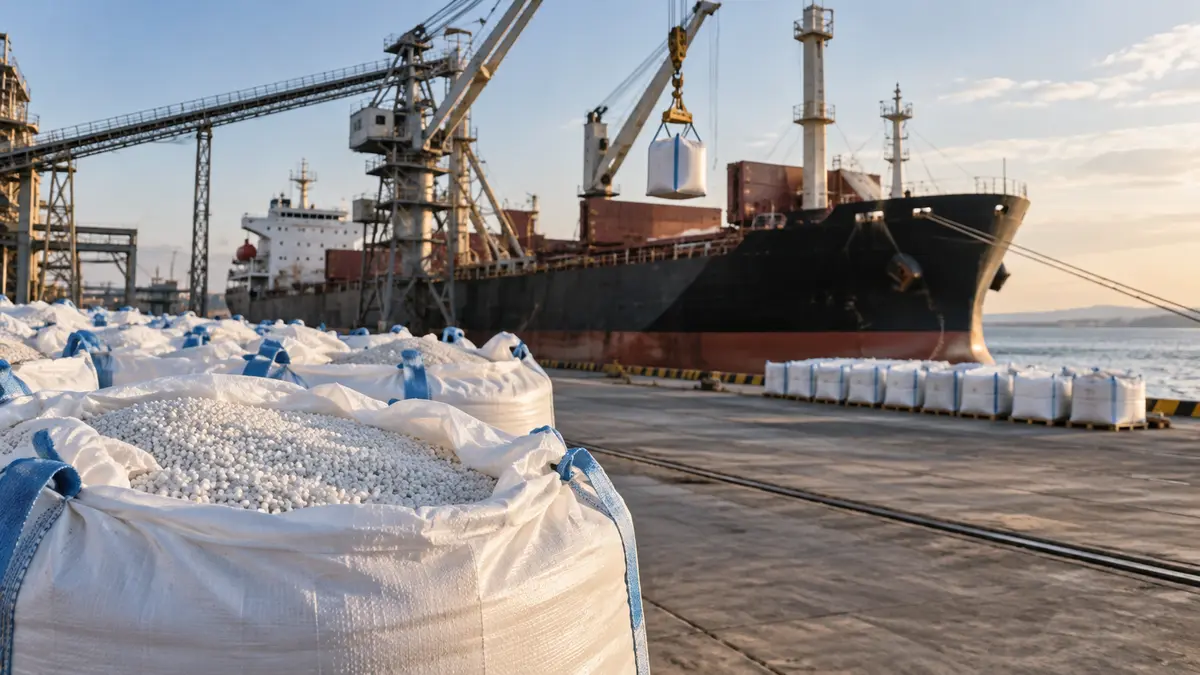
Summary: PhosAgro boosted fertilizer exports by approximately 10%, or 400,000 tonnes, to 4.3 million tonnes in the first five months of 2025 after fully covering the needs of Russian farmers, with almost 1 million tonnes supplied to India and exports to Africa up by a third, CEO Mikhail Rybnikov (Mikhail Rybnikov) told journalists at the St. Petersburg International Economic Forum (SPIEF 2025).
The export result
"After fully covering the needs of Russian farmers, we increased exports by approximately 10% or 400,000 tonnes to 4.3 million tonnes in the first five months of 2025. This includes almost 1 million tonnes supplied to India compared to 700,000 tonnes the previous year, and exports to Africa also grew by a third," Rybnikov said. The formula matters: the growth came after, not instead of, domestic supply — the sequence Russian fertilizer policy has enforced through export quotas and price freezes since 2021.
The domestic market held its trend
Supply to the domestic market was following the same trends as the previous year, according to the CEO. "We are not seeing any reduction in consumption. The overwhelming majority of agricultural companies have an annual purchasing plan and annual fertilizer budget. We don't expect purchasing to decrease before the end of this year," Rybnikov said.
European tariffs and the logistics bill
The increase in EU import duties on fertilizers from Russia and Belarus starting from July 1, 2025 would cause market prices to rise, he argued, citing the American precedent: "On the U.S. market, when they brought in import duties for Russian products, prices rose $100 above global prices at one stage. The same thing will happen on the European market, which is also in need of urgently reorganizing its logistics. Plus, alternative suppliers will probably raise prices. At first, this will all be paid for by European farmers — or the state, if it grants subsidies to farmers — and then after that they will have to try and find ways to cope."
Europe had been decreasing fertilizer consumption for many years, Rybnikov said, and that trend carries an agronomic consequence: "This compromises the quality of wheat and means that Europe may gradually move from being an exporter to being an importer [of wheat]."
Netback logic: where the tonnes go next
If exporting to the European market ceases to be worthwhile due to increased import tariffs, the company could redirect these products to more marginal markets. "We work on the basis of where the best netbacks are. If European markets close, then we will move on to the markets with the best netbacks at that moment, whether that be Africa, Brazil or India. We also have high hopes for the development of the Russian market in future. The Agriculture Ministry plans growth [in fertilizer consumption] from 5.5 million tonnes to 8 million tonnes [of active ingredient] by 2030," the CEO said.
A world market turning up
Fertilizer prices were growing across the world at the time of the forum "due to European tariffs, the situation in the Middle East and decreased stocks in India," Rybnikov said. The phosphate and nitrogen benchmarks he cited:
- Diammonium phosphate: previously forecast around $500 per tonne, but risen above $700 per tonne.
- In America, CFR prices above $800 per tonne, with India approaching the same level due to low stocks.
- Urea: prices grew from $350 per tonne to $450 per tonne in the last week of the period, due to the situation in Iran.
What the numbers describe
The January-May result is a portfolio shift expressed in tonnes. India took almost 1 million tonnes against 700,000 a year earlier — a 43% increase in a single season — while African exports grew by a third, exactly the two directions PhosAgro's netback logic names as substitutes for a closing European market. The company is monetizing the tariff wall it criticizes: EU duties push Russian tonnes toward the buyers with the fastest-growing demand, and the price rally Rybnikov described — DAP above $700, urea jumping $100 in a week — improves the margin on every redirected cargo. The domestic anchor remains untouched: consumption follows last year's trend, and the Agriculture Ministry's plan to lift application from 5.5 million to 8 million tonnes of active ingredient by 2030 promises the home market the growth the European one will not provide.
Company information
PhosAgro is a Russian producer of phosphate-based fertilizers; its shares trade in Moscow. Corporate website: https://www.phosagro.com.
Contact
PhosAgro, Moscow, Russia. Media and investor relations enquiries are handled through the corporate website https://www.phosagro.com.
Just Published

European housing prices and rents

Schneider–PTC: the industrial data integration test behind the deal

Avio USA starts work on its Virginia manufacturing site

One equity market, two currency measures

Russia’s draft budget raises spending and borrowing plans

Russia Sets the 2027 Minimum Wage at 28,935 Rubles, Up 6.8%, on the Way to 35,000 by 2030
Partner news digest
 Qatar LNG expansion: readiness, financing and the production test
 Pennon’s capital plan: turning finance into better water outcomes
 Italy’s diesel relief gap: taxes, price ceilings and implementation
 EU–China hybrid trade: from understanding to measurable implementation
 Schneider–PTC: the industrial data integration test behind the deal
 IKEA’s hybrid resale model: buyback, marketplace liquidity and furniture logistics
 Banking AI beyond the ranking: capability, execution and evidence of value
 Fishing labour beyond the product label: practical protection
 Rhenus and the Middle Corridor: terminals need coordinated connections
 Royal Mail restructuring: the test is reliable delivery
 Fuel Finder on Google Maps: when price transparency becomes useful competition
 Samsung’s memory profit surge: what the preliminary record explains
Leave a comment