
Fast Retailing Posts Record FY2025 Profit and Forecasts a Fifth Straight Record Year
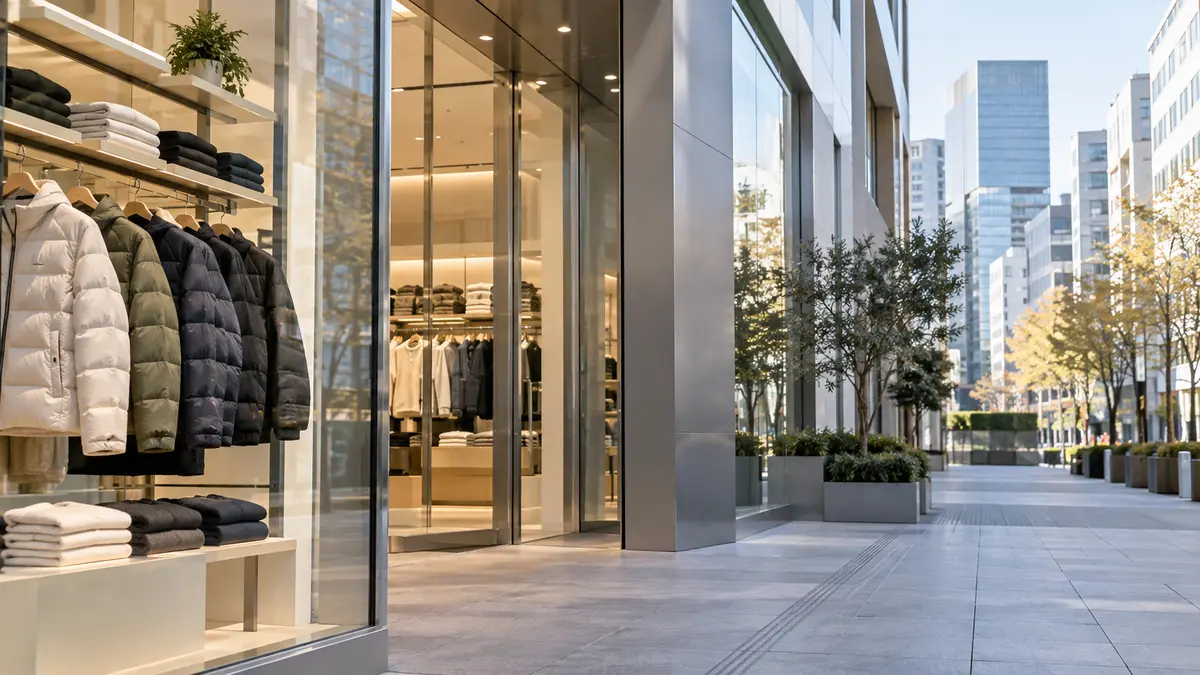
Summary: Fast Retailing, the Japanese owner of global clothing brand Uniqlo, reported record high operating profit of about 564.3 billion yen ($3.69 billion) for the 12 months ended August 31, 2025, up roughly 13% and beating expectations, and forecast a fifth straight year of record profit in fiscal 2026 on its aggressive expansion in North America and Europe, the company said on Thursday, October 9, 2025.
The results
Fast Retailing said operating profit jumped about 13% to 564.3 billion yen in the fiscal year ended August 2025, beating both its own forecast of 545 billion yen and the average estimate of 546 billion yen from 16 analysts polled by LSEG. Revenue in Japan was boosted by buoyant sales to tourists, while the international segment posted record performance: North America revenue and business profit grew 24.5% and 35.1% respectively. The Greater China market continued to struggle, with declines in sales and profits as consumer appetite stayed subdued amid a sluggish economy and weak consumer confidence.
The guidance and the tariff shadow
For the year to August 2026, Fast Retailing forecast operating profit of another record 610 billion yen. The outlook is set against a complicated tariff backdrop: the company warned in July 2025 that U.S. tariffs would start to have a significant impact on its operations later in the year, yet price increases and cost-cutting helped it increase U.S. sales and profit for the finished year. Tokyo and Washington later agreed a 15% tariff on most Japanese imports, less than the 25% initially imposed; how that affects Uniqlo goods sold in the United States, which are primarily produced in South and Southeast Asia, remains uncertain.
The regional map and the store pipeline
From one store in Hiroshima 41 years ago, Uniqlo has grown to more than 2,500 locations worldwide, selling clothing made primarily in China and other Asian manufacturing hubs. When operations in China suffered during strict COVID-19 curbs, Fast Retailing shifted focus to North America and Europe, and with China's economy cooling it has doubled down on that strategy; China nonetheless remains the retailer's biggest overseas consumer market with some 900 Uniqlo stores on the mainland. Fast Retailing surpassed 1 trillion yen in sales in Japan for the first time in the finished year and aims to hit that mark in both the U.S. and Europe "in the near future". For fiscal 2026 it plans flagship stores in Frankfurt, Warsaw, Chicago and San Francisco.
The competitive field
- Founder and chief executive Tadashi Yanai (Tadashi Yanai), Japan's richest man, has long aimed to make the firm the world's biggest fashion retailer, with Zara owner Inditex and H&M standing in the way.
- In recent years the company has faced fierce price competition from Chinese online retailers Shein and Temu.
- A weak yen, at its lowest since February against the dollar and a record low versus the euro, supports both duty-free tourist spending at home and translated Western revenue.
Yanai's framing
"The global economy is now in a critical state, with many companies pessimistic about the future and increasingly reluctant to make proactive investments," Yanai said at a briefing. "It is precisely during such times of stagnation that chances arise to create something new." On the U.S. tariff regime he repeated his criticism: "Imposing tariffs is a type of confrontation. If mishandled, it could potentially lead to war."
Company information
Fast Retailing Co., Ltd. is a Japanese apparel group and the owner of the Uniqlo clothing brand, operating more than 2,500 Uniqlo stores worldwide. Corporate website: https://www.fastretailing.com.
Contact
Fast Retailing Co., Ltd., Japan. Media and investor relations enquiries are handled through the corporate website https://www.fastretailing.com.
Just Published

European housing prices and rents

Schneider–PTC: the industrial data integration test behind the deal

Avio USA starts work on its Virginia manufacturing site

One equity market, two currency measures

Russia’s draft budget raises spending and borrowing plans

Russia Sets the 2027 Minimum Wage at 28,935 Rubles, Up 6.8%, on the Way to 35,000 by 2030
Partner news digest
 Qatar LNG expansion: readiness, financing and the production test
 Pennon’s capital plan: turning finance into better water outcomes
 Italy’s diesel relief gap: taxes, price ceilings and implementation
 EU–China hybrid trade: from understanding to measurable implementation
 Schneider–PTC: the industrial data integration test behind the deal
 IKEA’s hybrid resale model: buyback, marketplace liquidity and furniture logistics
 Banking AI beyond the ranking: capability, execution and evidence of value
 Fishing labour beyond the product label: practical protection
 Rhenus and the Middle Corridor: terminals need coordinated connections
 Royal Mail restructuring: the test is reliable delivery
 Fuel Finder on Google Maps: when price transparency becomes useful competition
 Samsung’s memory profit surge: what the preliminary record explains
Leave a comment